
Seven Deep Dish Dungeon Mistakes to Fix Before You Leave Camp
Seven early Deep Dish Dungeon habits for food, inventory, torches, landmarks, and movable puzzle objects before another expedition unravels.
Deep Dish Dungeon does not ruin an expedition with one dramatic mistake. It lets six inventory slots fill up, a meal burn, a torch become awkward, and a familiar hallway turn into the wrong route. By the time the problem is obvious, the return trip is already longer than it needed to be.
These seven early-game habits come from six validated creator transcripts, the current Steam page, and Behold Studios' June demo update and design notes. Most creator footage came from the demo, so this is an early-expedition guide rather than a claim about the full dungeon's late-game meta. Behold says the launch build includes quality-of-life work across exploration, crafting, cooking, camp management, and multiplayer.
Set camp up before the dungeon sets the pace
1. Do not leave camp on an empty stomach
Cook and eat before committing to a longer route. Food is tied to health and stamina, and the official Steam description calls it progress rather than optional flavor. A creator playthrough also shows individual foods changing those bars, which means a meal affects how long you can fight, block, climb, and retreat before the expedition gets ugly.
Do not wait until both resources are already low. Return to camp, restore the food effects you actually need, and then choose the next objective. The point is not to stuff every ingredient into your character. It is to leave with enough health and stamina to survive the route back as well as the route in.
2. Stop treating raw food like permanent storage
The June update added spoilage: one food item can spoil at a time, usually after roughly 20 minutes, while Food Baskets keep items fresh for at least an hour. Raw food and some ingredients can spoil; herbs and some dry ingredients are exceptions. That makes a pile on the camp floor or in an ordinary chest a timer, not a pantry.
Build a Food Basket when the recipe becomes available and reserve ordinary storage for materials that do not rot. If food does spoil, the same update says Rotten Food can still fuel a campfire. That is a consolation prize. Keeping useful ingredients fresh is better than turning dinner into firewood.
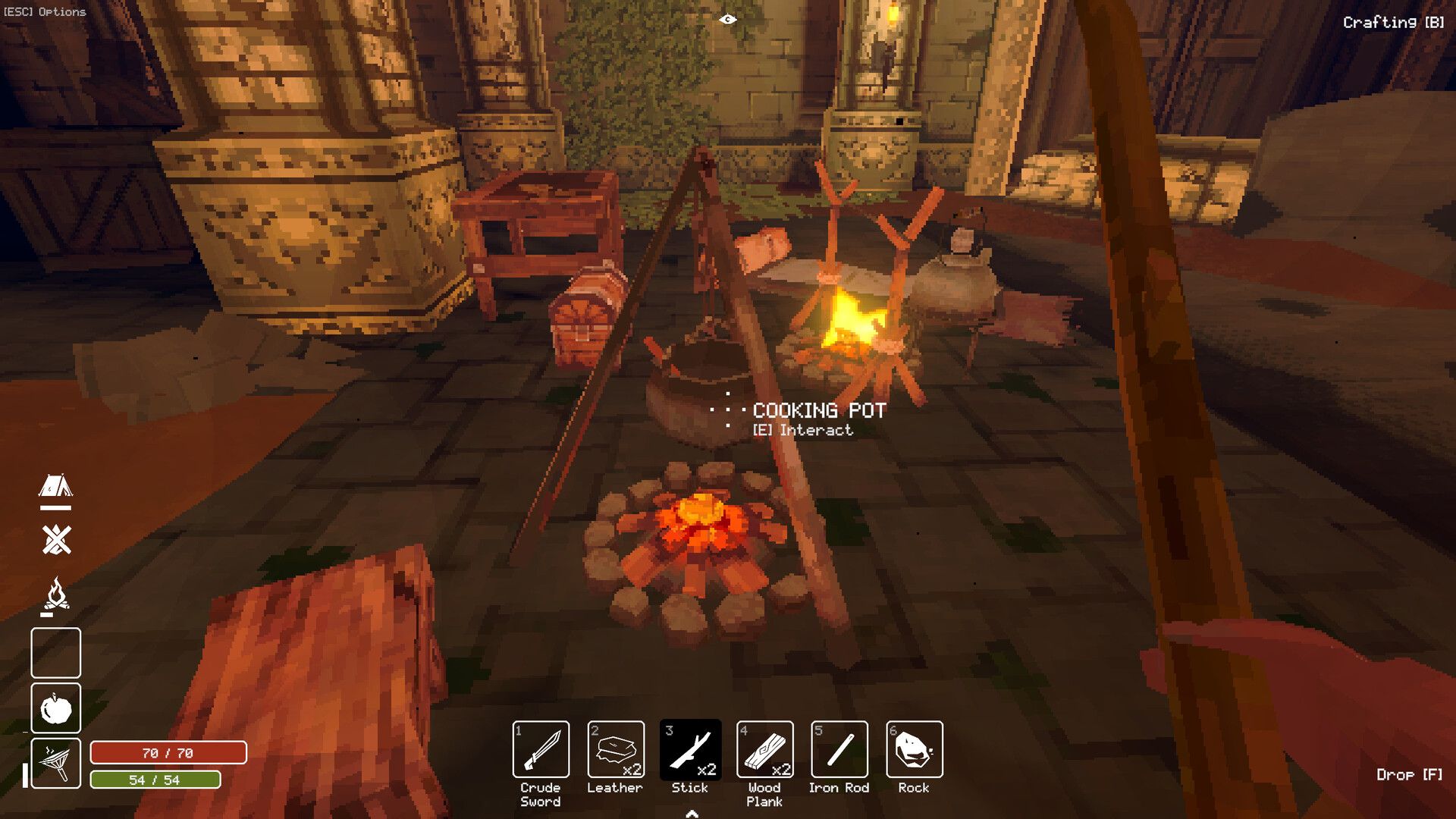
3. Stay close enough to hear dinner burn
Food left on a rotisserie now burns if it sits too long. The update added effects and sounds for food becoming ready or burning, so use them. Put food on when you are actually working around camp, not when you are about to disappear down another corridor.
Cook in small batches, clear the finished items, and only start the next batch when someone can watch it. In co-op, make that responsibility explicit. Three players assuming someone else heard the cue is how a useful stack of food becomes charcoal.
Pack for one objective, not the whole dungeon
4. Do not fill all six slots with “maybe later” loot
Several creator playthroughs hit the same wall: the starting inventory is tiny. Six slots disappear quickly once a weapon, shield, torch, food, key, and crafting material all start competing for space. Picking up everything feels efficient until a key item appears and there is nowhere sensible to put it.
Name the objective before leaving camp. Carry the light, food, and tools that serve that route, then leave speculative materials in the camp chest. When the bag fills, turn back before dropping important equipment in a dark room and trusting yourself to remember exactly where it landed.
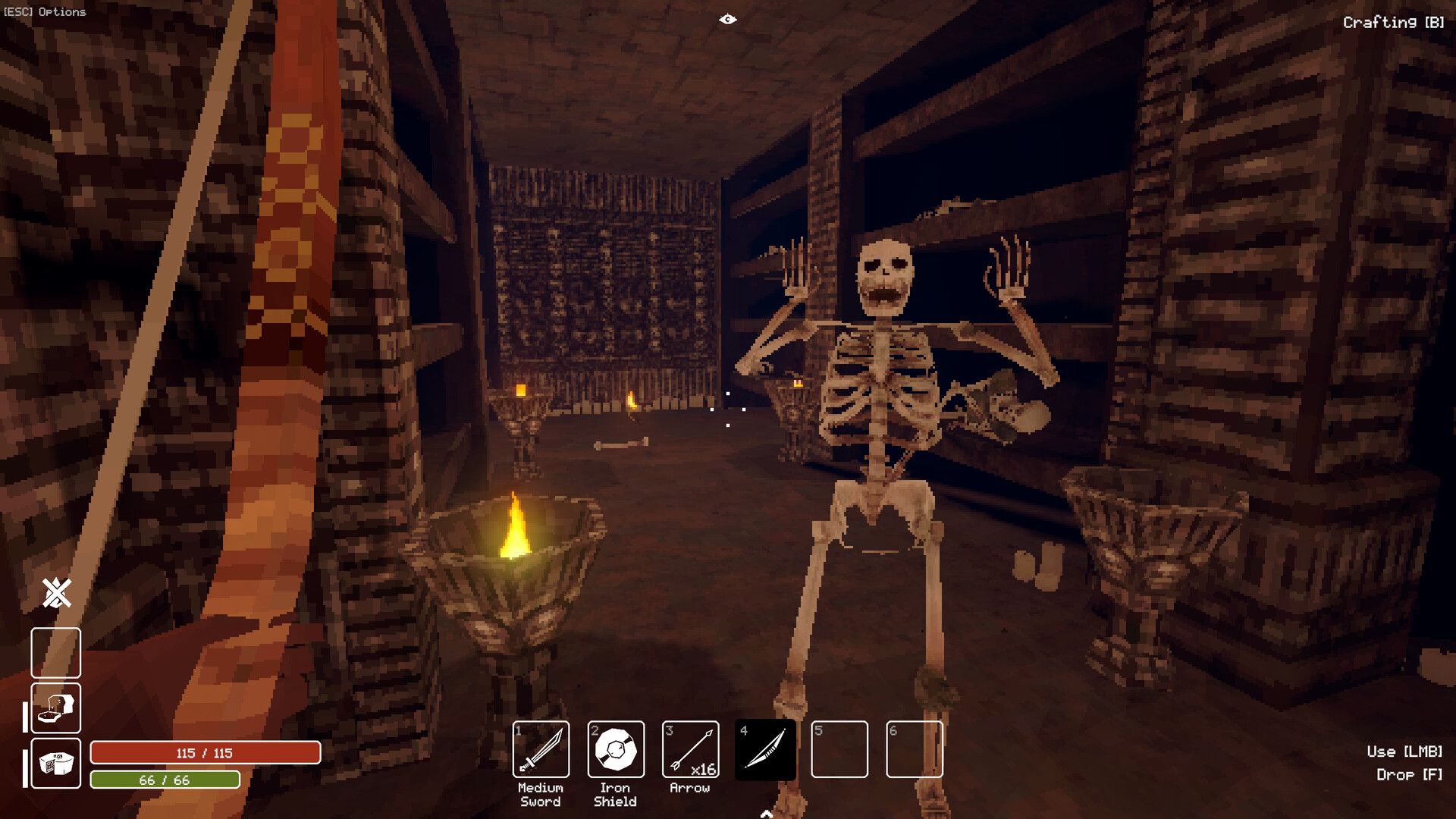
5. Plan around the torch taking a hand
Darkness is not cosmetic here. One creator described complete blackness without a torch, while another repeatedly struggled to tell darkness from a pit. A torch also changes what you can hold at the same time. That trade becomes painful when a fight starts and the safe setup was a weapon plus shield.
Place torch holders on routes you expect to reuse and carry enough material to replace light when needed. In co-op, let one player handle the torch while the others keep weapons ready. Solo players should light the space first, check the floor, and then swap equipment. Charging forward blind saves seconds right up until the floor is missing.
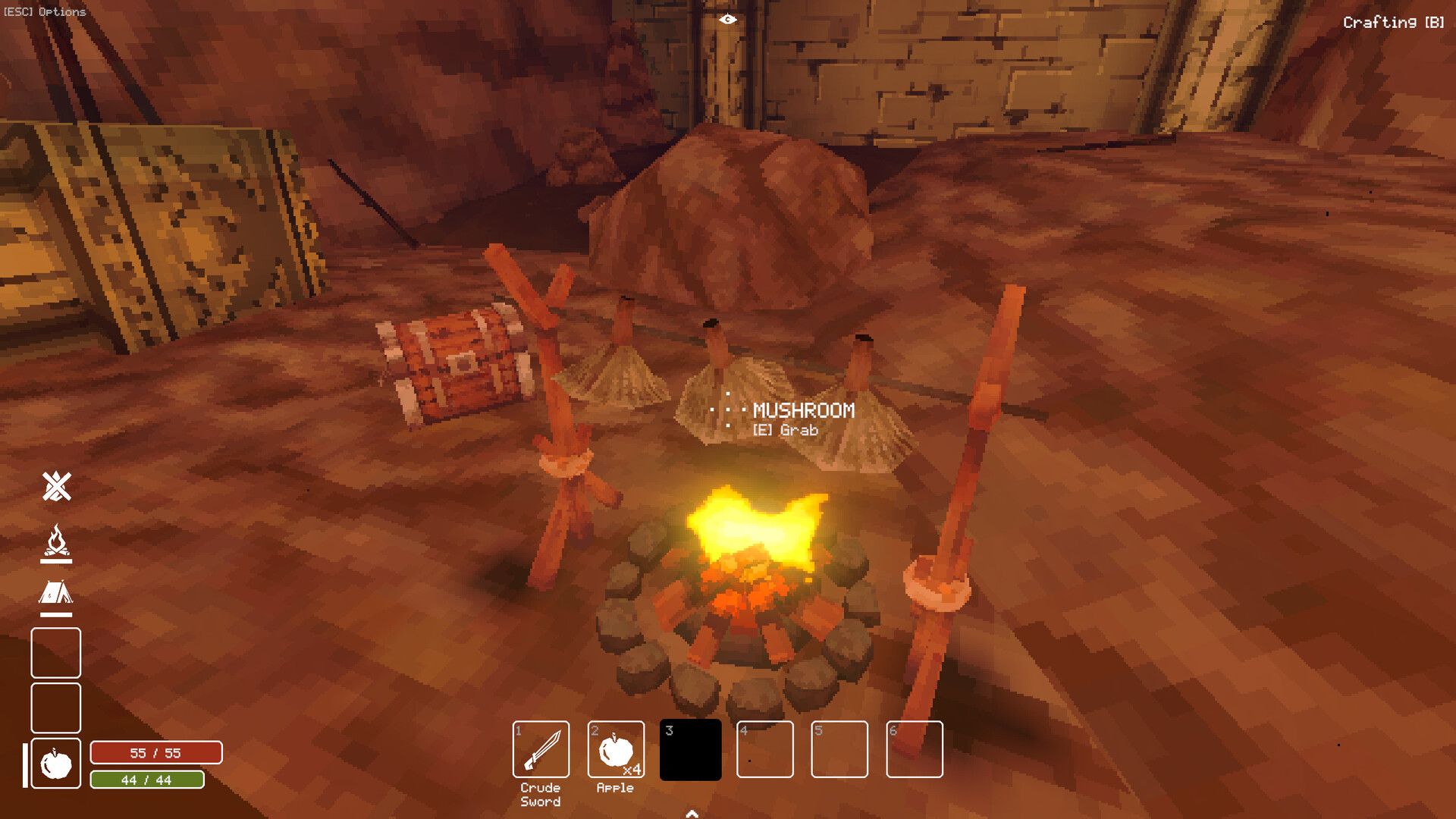
Learn the dungeon instead of waiting for a waypoint
6. Build a mental map from landmarks and shortcuts
Deep Dish Dungeon deliberately has no map or compass. Behold Studios says rooms use distinct silhouettes, landmarks, lighting, and layouts so players can orient themselves, while meaningful shortcuts connect previously distant areas. The dungeon expects you to notice those cues instead of following a marker.
At every major junction, identify one detail you can recognize from the return direction: a camp, a large door, a vertical shaft, a bridge, or a lighting change. Open shortcuts as soon as you understand what they connect. Getting lost is part of the design; repeatedly missing the same turn is just unpaid overtime.
7. Use movable objects before abandoning them
Planks, crates, stools, and other physical objects are not background clutter. Creator footage shows planks bridging gaps and portable objects helping players reach doors, ledges, and puzzle positions. The current Steam description also tells players to investigate shadows, solve puzzles, and use resourcefulness rather than wait for explicit instructions.
Before leaving an object behind, look up, across, and back toward the last blocked route. A plank may be worth more as a bridge than as material, and a crate may solve a height problem without spending a recipe. If progress feels impossible, check the room again before deciding the missing answer must be somewhere else.
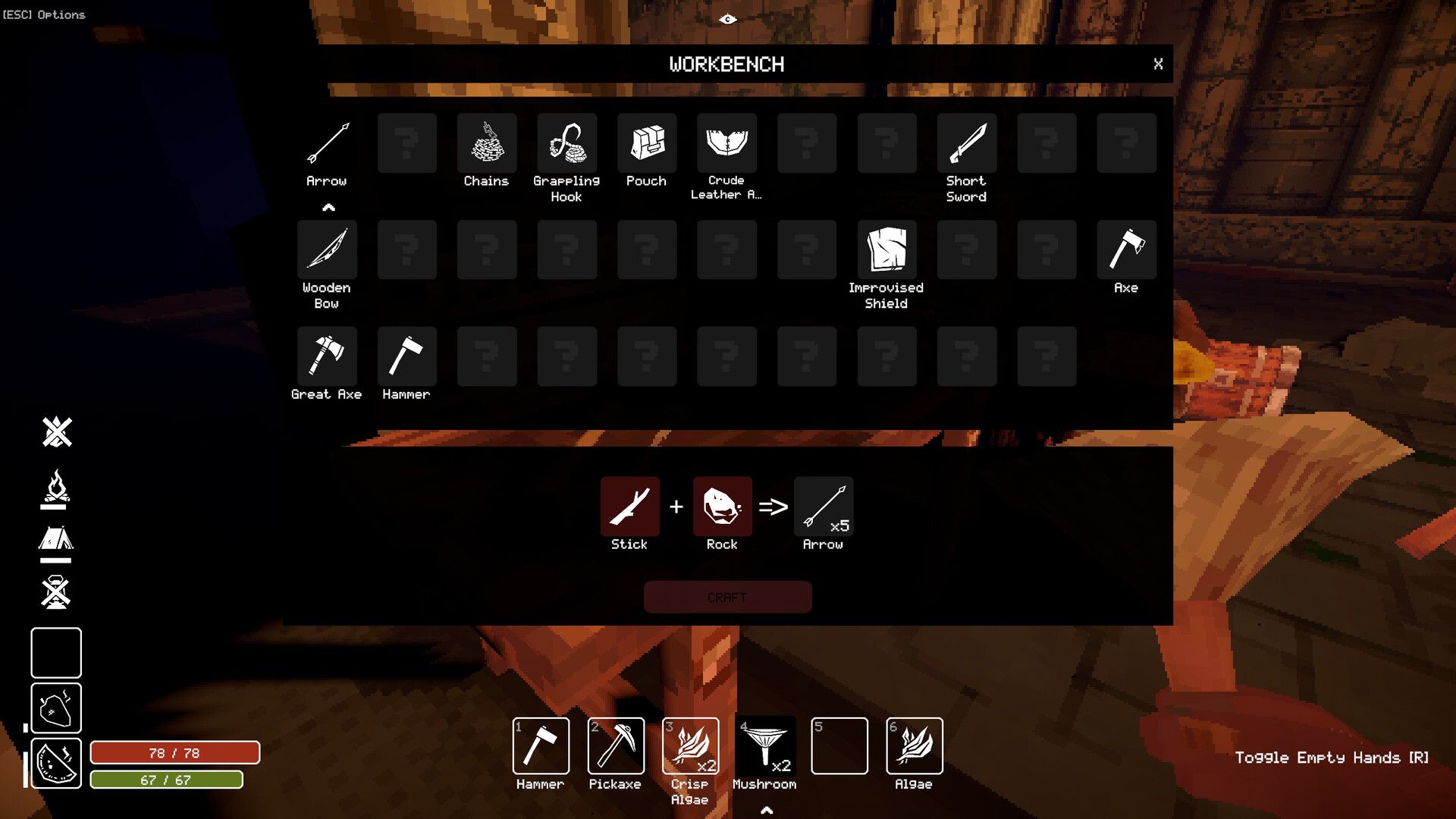
What to verify in the launch build
The full game unlocks on October 13, 2026, and the developers say they continued polishing systems after the demo. The core advice above is supported by current official descriptions and developer notes, but exact recipes, item placement, timing, and later-dungeon behavior can differ from the creator footage used for discovery.
Start with the habits that survive those changes: cook before a long push, protect food, keep inventory space available, respect the torch, mark routes with landmarks, and test the objects already in the room. Deep Dish Dungeon is built to reward patience and resourcefulness. Going faster without either one just creates a quicker walk back to camp.
Behold Studios' June demo update
The Singleplayer Squad launch guide
Chill Dad Gaming co-op breakdown