
Frostpunk Heat Guide: Build A Reserve Before The Temperature Drops
The city survives cold snaps by storing coal, planning heat zones and protecting workers before the forecast becomes an emergency.
Frostpunk punishes cities that solve cold after people are already sick. The correct time to adjust heat is when the forecast changes. Build coal reserves, inspect every housing ring and decide which workplaces can pause before the temperature falls.
Read the forecast as a deadline
Count how many levels the temperature will drop and when. A one-level change may be covered by existing heating. A larger fall can require generator power, heaters, insulation or a temporary shutdown. Start construction before workers become patients.

Protect homes and medicine first
Cold homes create illness throughout the night, while cold medical buildings cannot repair the damage efficiently. Keep housing and treatment functional before heating a low-priority resource site. A workplace can close for a shift; a full medical queue creates a longer labor shortage.
Treat coal as time
Current production is not enough. Store enough coal to cover a failed workday, a sick workforce or a route that stops during a storm. Check consumption at the generator setting planned for the cold snap, not the cheaper setting used today.
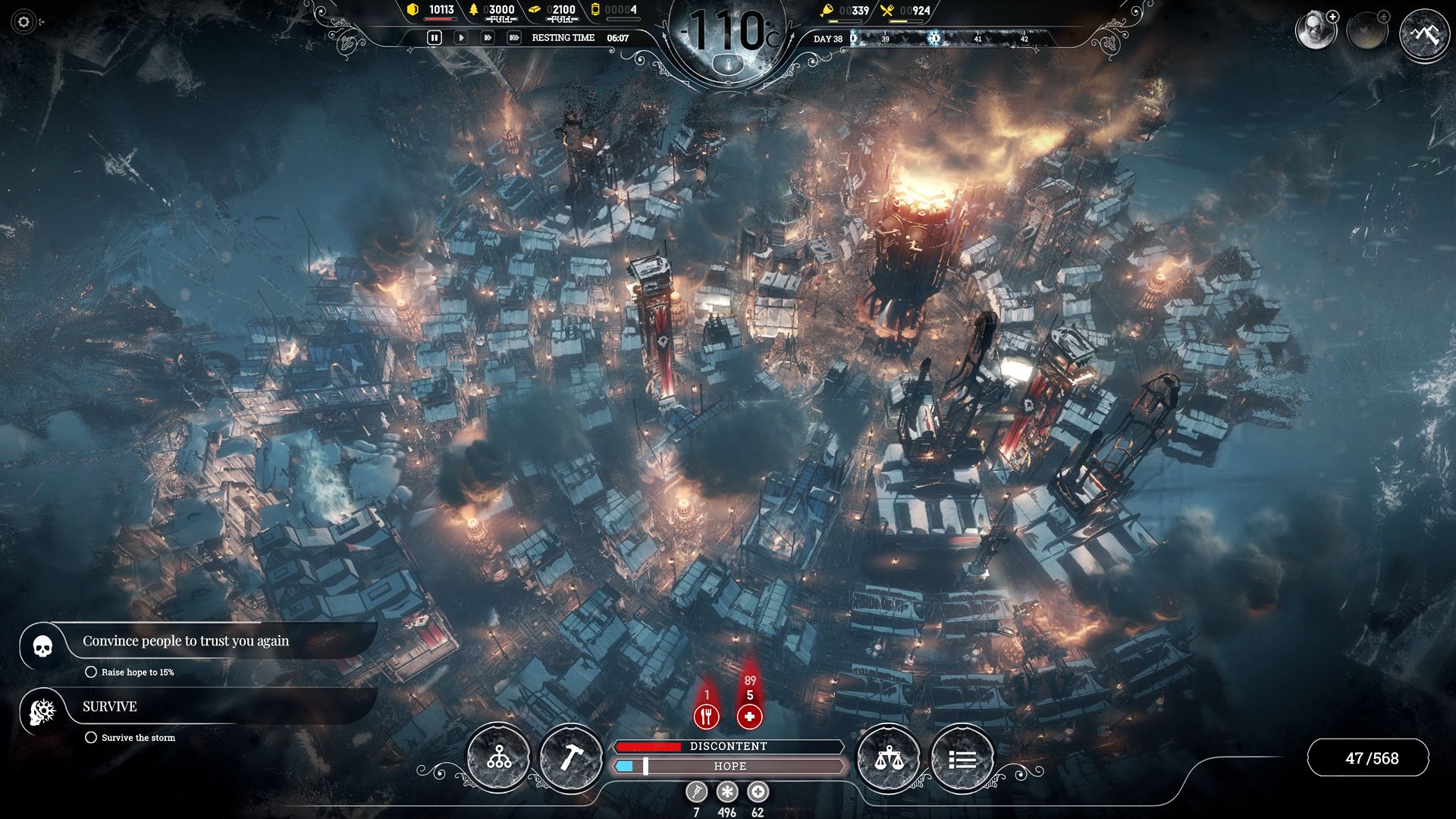
Use heat zones deliberately
Steam hubs are useful when several buildings share the same operating hours. Do not run a workplace hub through the night unless it also heats homes or treatment. Overlapping zones burn coal without making the center warmer. Inspect coverage and schedules after every expansion.
Upgrade insulation before maximum power
Generator power solves an immediate drop but permanently raises consumption while active. Insulation improves the building without increasing coal use. Prioritize housing and medical insulation when research time allows, then use generator levels to cover the remaining gap.
Close work before people collapse
If the reserve is failing, pause the least important cold workplace and move labor toward coal, food or medical recovery. Extended shifts in unsafe cold create patients faster than they create resources. The city needs a smaller working economy more than a fully staffed collapse.
The heat plan is simple: forecast, reserve, priority buildings, then expansion. A city with spare coal and empty medical beds can recover from a bad decision. A city operating at the limit cannot.