
Into The Breach: Five Decisions To Check Before Ending A Turn
Check targets, push destinations, affordable damage, passive effects and next-turn positions before committing a move.
Preventing a building from being hit is worth more than damaging the Vek aimed at it. In Into the Breach, telegraphed attacks let you judge what will happen before the enemy acts. A successful turn can leave several enemies alive.
These five decisions form two passes over the board: resolve the immediate threats, then inspect the consequences of the moves that resolve them. They apply to the core game and Advanced Edition without relying on a particular squad ranking.
Resolve the attacks that can still cause damage
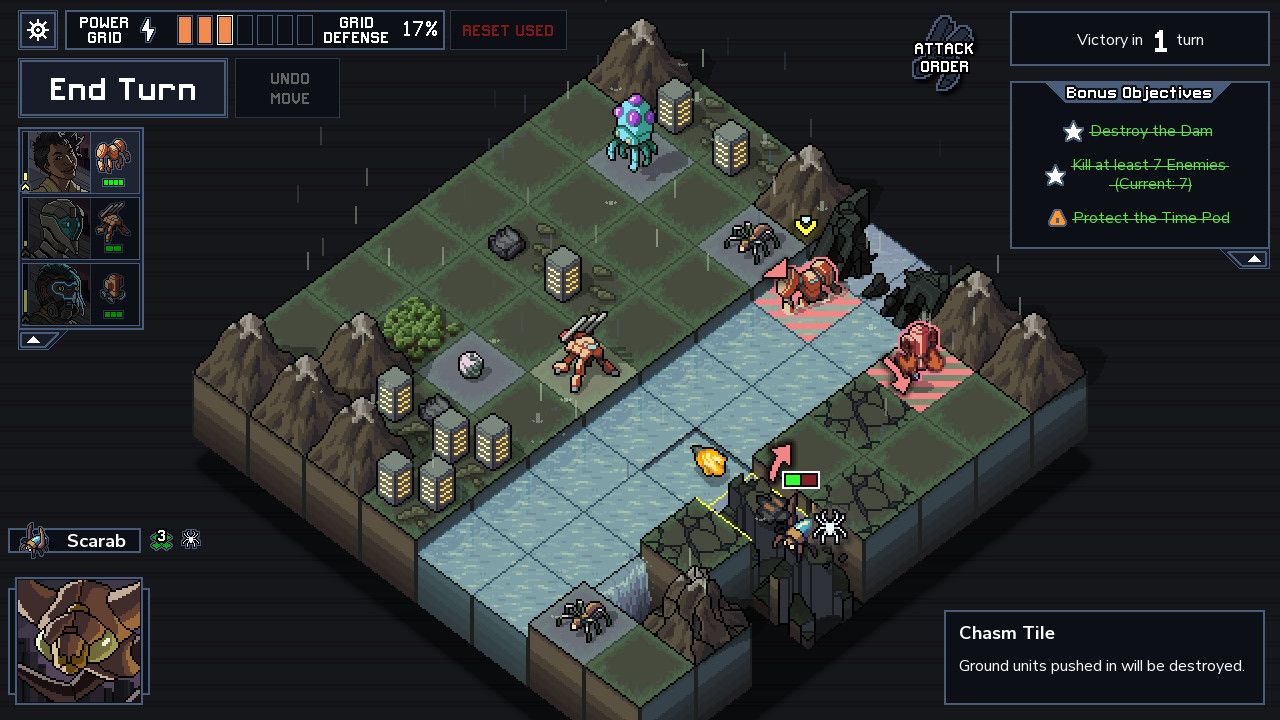
1. Check the actual target and the attack order. A Vek aiming at your mech may need no attack in response: moving the mech can leave the targeted tile empty. An enemy that dies to an earlier event may never perform its own attack. Inspect the order display before spending one of the squad's actions on a threat already handled by the sequence.
This matters when several buildings appear endangered. Counting warning icons alone overstates the work if some attacks can be avoided without firing. Start with the attacks that still reach something valuable after movement and earlier events are considered.
2. Follow every push to its destination. A shove can move an attack away from a building, redirect it into another Vek or cause collision damage. Pushing a non-flying enemy into water can remove it outright. Flying enemies do not drown simply because they move over water.
The destination can also make matters worse. A Vek previously aimed at empty ground can become a building threat after you move it. Read the changed attack marker along with the damage preview; a higher damage number is not proof of a safer board.
3. Decide which damage you can afford. Civilian buildings supply the power grid, whose losses persist beyond one battle. A mech that survives a hit can absorb damage that is preferable to losing grid power. Check remaining health before treating that option as safe: a destroyed mech can cost its pilot.
Mission objectives have their own conditions too. An objective that survives one hit may allow you to solve a more urgent grid threat elsewhere. Read its actual health and requirement instead of assuming every objective needs perfect protection or can be ignored.
Check what the solution leaves behind
4. Include passive effects and environmental timing. Psions can change how other enemies behave or what happens when they die. Removing one may solve several problems, but it is not an unconditional first move. Consider the immediate targets and any explosive consequence before choosing a kill.
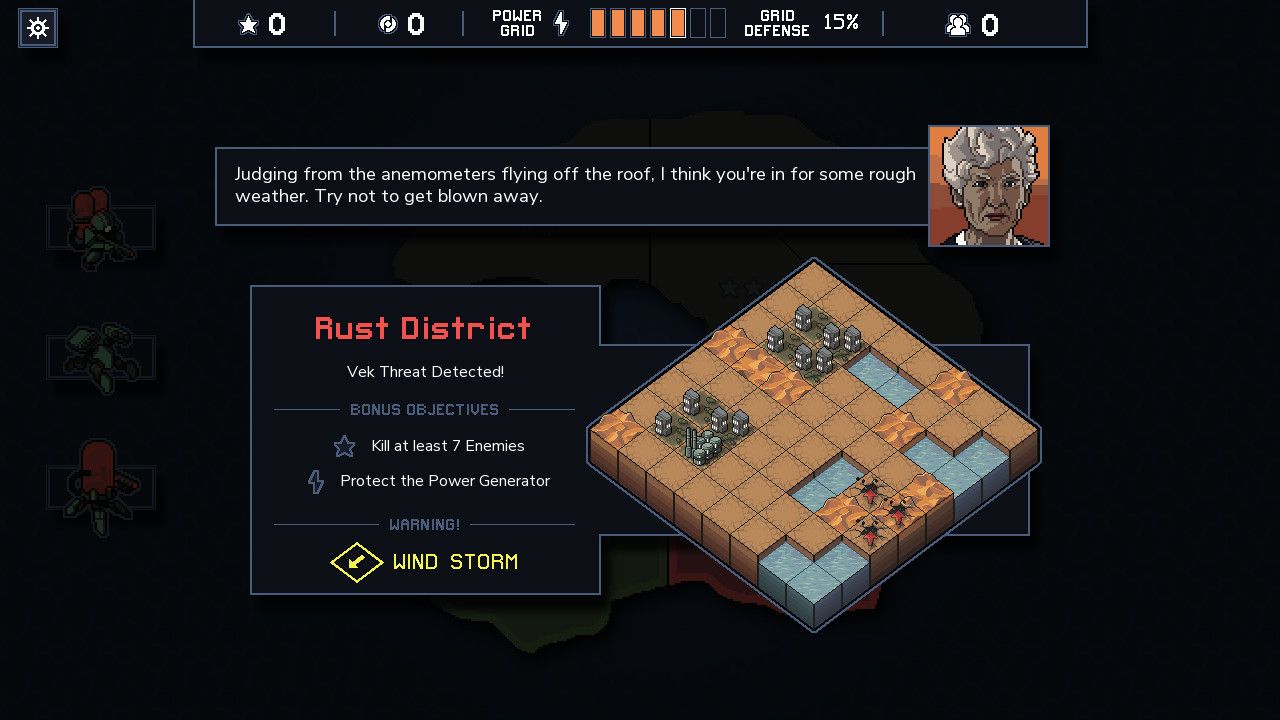
Scheduled hazards also need their place in the sequence checked. Some events resolve before particular attacks; others do not. The displayed order settles the case on your board more reliably than a blanket rule to trust environmental damage or eliminate support enemies first.
5. Preserve reach and an affordable response to the next wave. A move can protect the city now while leaving a mech trapped by terrain or too far from the next threat. Inspect each mech's finishing tile and the emerging-enemy markers together.
Blocking an emergence can prevent another Vek joining the fight, but the blocker takes damage. Spend that health only when the mech can afford it and its position remains useful. Reducing next turn's enemies is valuable; losing a pilot or all useful movement to do it may be a worse exchange.
Use movement undo before committing an action and the standard limited turn reset when a sequence needs reconsidering. Before pressing End Turn, follow every remaining attack marker through to its result, including changed targets and passive effects. Leave a Vek alive when its scheduled attack is harmless and another problem deserves the action.