
How Do You Keep an Over the Hill Convoy Moving?
Seven practical convoy rules for route choice, recovery, tools, repairs, and weather when Over the Hill turns a relaxed drive into a group rescue.
Over the Hill looks peaceful until one truck noses into soft ground, a second vehicle blocks the only clean approach, and the player carrying the repair kit is already over the next ridge. The game is built for unhurried exploration, but a convoy still works best when everyone treats recovery as part of the route rather than an interruption.
Early coverage from several creators points to the same habits. Low range matters when the terrain pushes back. A winch is most useful when another vehicle stays somewhere stable. Camp tools work better when the group divides them deliberately. The goal is not to turn every drive into a strict operation. It is to keep small mistakes from trapping the whole crew.
1. Choose the Line Before the Convoy Commits
The lead vehicle should read the ground before every truck follows it into the same problem. Over the Hill has deformable terrain, mud, steep climbs, gaps, and routes that become more technical as the crew explores. A direct line may be shorter, but it can also leave several vehicles stacked behind the same obstacle with no room to recover.
Slow down at the edge of difficult terrain and look for three things: a firm exit, a usable winch point, and enough space for the next vehicle to stop. If any of those are missing, send one truck through first. The rest of the convoy can wait on solid ground while the scout tests traction and confirms that the route continues.
This small pause protects the entire group. A failed scout still has several possible anchors behind it. A convoy that commits at once can turn every potential rescue truck into another vehicle that needs rescuing.
2. Use Low Range Before Momentum Becomes Panic
High range suits ordinary ground and open stretches. Low range is the better choice when the climb steepens or the surface starts taking traction away. It gives the driver finer control over the power reaching the wheels and makes it easier to adjust without charging deeper into a bad line.
Shift before the truck bogs down. Waiting until the wheels are spinning wastes the advantage because the vehicle has already disturbed the surface and lost momentum. Approach slowly, select low range, and make small steering corrections. If progress stops, release the throttle and reconsider the route instead of digging in.

The whole convoy does not need to use the same gear at the same time. The important thing is for each driver to match the vehicle to the ground beneath it. Return to high range once the route opens up so the group does not crawl across easy terrain for no reason.
3. Keep One Recovery Truck on Firm Ground
Every difficult section needs an anchor. That can be a tree, a portable anchor point, or another truck positioned where it still has traction. The safest convoy habit is to keep one vehicle out of the obstacle until the first truck is clear.
Over the Hill allows multiple winches to connect to a vehicle or objective, and trucks can be daisy-chained. That creates powerful recoveries, but only if the chain starts somewhere stable. Two trucks spinning in the same mud do not become a useful team merely because a cable connects them.
Park the recovery vehicle straight, leave room to reverse, and attach from a point that helps the stuck truck follow the intended line. Wind the cable in gradually while the trapped driver applies controlled power. Once the first vehicle reaches firm ground, swap roles before the next truck attempts the section.
4. Split the Tools Across the Crew
Do not let every player pack the same emergency item. The available tools solve different failures: portable anchors create a winch point where the landscape offers none, planks help bridge awkward ground, a jack can right a rolled vehicle, repair kits restore condition, and campfires move time forward.
Assign jobs before leaving a safe area. One driver can carry recovery equipment, another can bring repairs, and a third can cover camping or weather control. A smaller crew should prioritise tools that prevent a complete stop: a winch solution, a way to repair, and something suited to the route ahead.
Tell the group who has what. A perfect tool is useless when the carrier disappears down another trail. Simple roles also make mixed-experience groups easier to manage because a new player has one clear responsibility rather than an inventory full of unfamiliar options.
5. Repair Before Damage Removes Your Options
Vehicle damage becomes most expensive when it arrives during a difficult climb or far from a safe house. Safe houses restore a vehicle and work as checkpoints and fast-travel points, so use them as preparation stops rather than places the convoy remembers only after something breaks.
Check the group before a demanding trail. If one vehicle is already struggling, repair it while the convoy is together. Carry a repair kit when the route will take the crew away from support, and avoid spending it on minor damage if a safe house is close enough to reach safely.
The same rule applies to upgrades. Better tires, suspension, engine performance, and other changes can make a vehicle more capable, but they do not replace careful driving. Build for the terrain ahead, then keep enough condition in reserve to survive the recovery that nobody planned.
6. Use Camp to Reset a Bad Situation
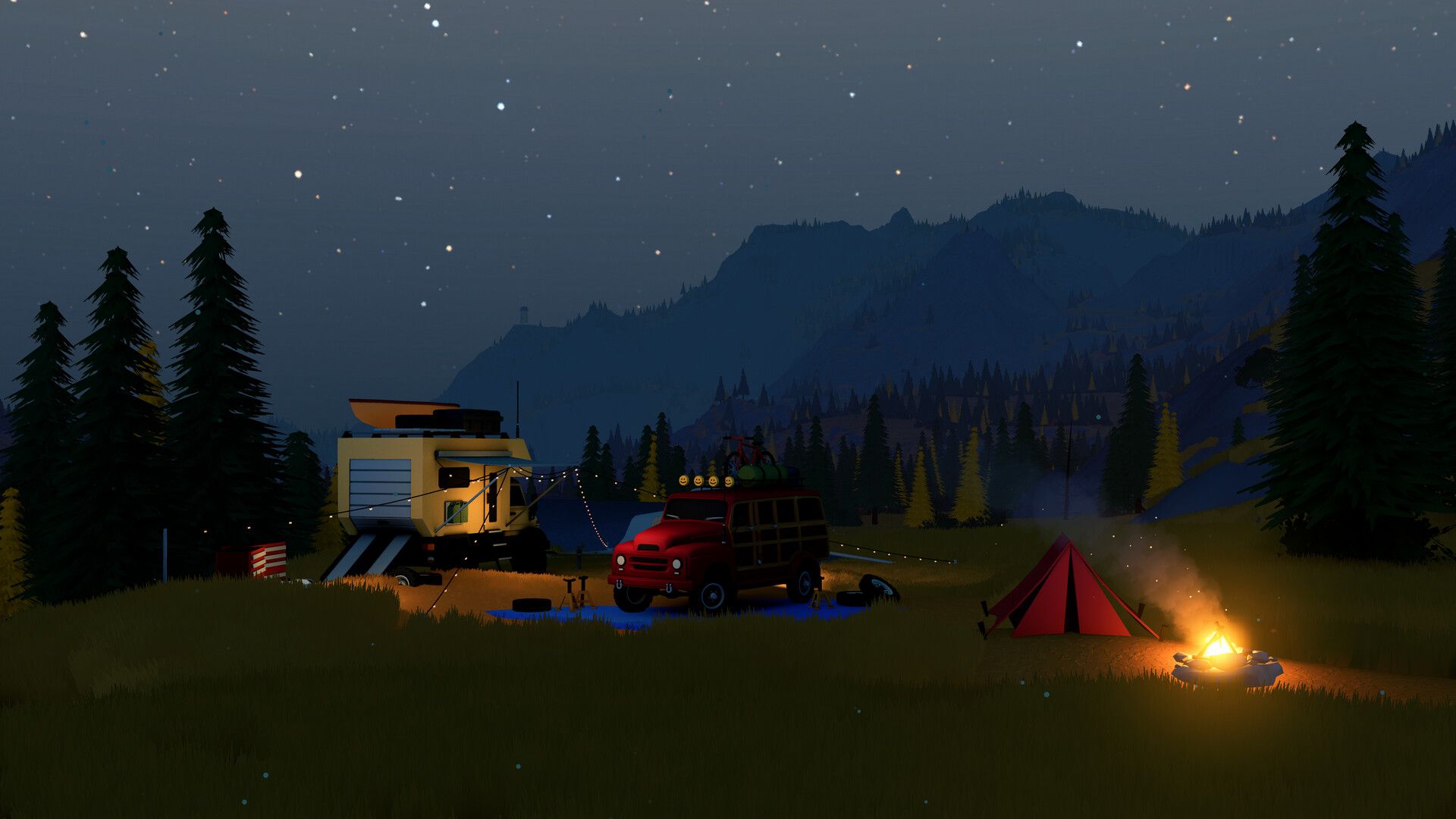
Night and dynamic weather can change an easy route into a visibility problem. A campfire lets time pass quickly, which can move the convoy beyond poor light or unfavorable conditions. That makes camp a practical recovery tool, not just a scenic break.
Regroup before using it. Over the Hill expects players to be together for camping, so call everyone back instead of making the separated driver solve the same route alone in the dark. Use the pause to confirm repairs, redistribute tools, and choose the next shared destination.

There is no prize for forcing progress through conditions that remove useful information. If the crew cannot read the terrain, see an exit, or keep track of one another, waiting is often faster than recovering several avoidable rolls.
7. Regroup at Every Safe House and Major Junction
An open map encourages players to peel away toward points of interest, wildlife, meteorites, and harder trails. That freedom is part of the appeal, but a convoy stops being a convoy when its recovery tools and capable vehicles are scattered across the region.
Use safe houses and large junctions as planned meeting points. Everyone does not need to follow the same tire tracks between them, but the group should arrive before committing to the next technical trail. Shared progression means cooperative exploration still benefits each player's solo file, so there is little reason to race ahead and leave the crew's support behind.
When someone does split off, agree on the next rendezvous and say which tools are leaving with them. A clear destination prevents the familiar co-op problem where half the session becomes a search for the player who thought everyone else was following.
Over the Hill works because getting stuck can be funny rather than punishing. Good convoy habits preserve that mood. Scout the route, keep an anchor behind, divide the tools, and meet again before the next difficult trail. The crew will still roll trucks and make questionable decisions, but those mistakes will become stories instead of session-ending traffic jams.