
Portal 2 — Six Puzzle Elements That Change How A Room Works
Understand lasers, light bridges, funnels and three gels through the connections, support and movement they change in Portal 2.
Portal 2's added test elements change what a pair of portals can connect, carry or support. Understanding those jobs is more useful than remembering the solution to one room. A laser can control timing, a bridge can hold a cube, and a funnel can deliver the material needed for a different route.
These six mechanics are an unranked selection from Valve's sequel, not a complete inventory or a chamber walkthrough. The useful question for each is what changes elsewhere when you move a portal.
Thermal Discouragement Beams make interruption useful
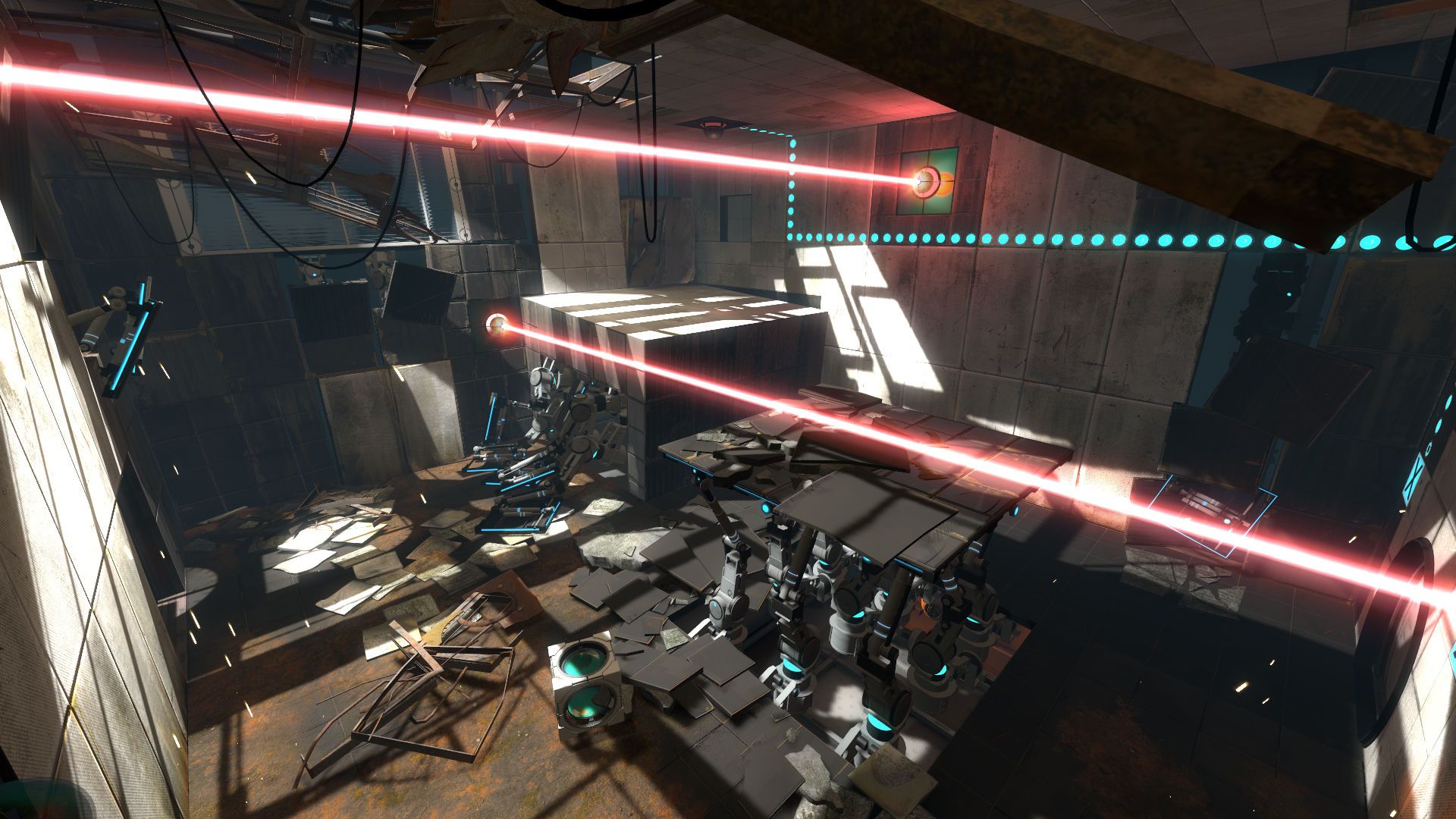
The laser activates receivers and can pass through relays, with portals and redirecting cubes changing its path. That makes its connection to a door, platform or other device easy to recognize. Keeping the connection active is only one possible job.
Blocking the beam can hold a device in a different state until the player is ready. An object may need to interrupt it temporarily rather than merely sit somewhere out of the way. Before completing a laser path, check where that will leave both the mechanism and the player.
This distinction also stops a common unproductive approach: aligning every visible beam immediately, then discovering that something moved before you could use it. Trace the connection first and decide when its effect is needed.
Hard Light Bridges provide removable support
A Hard Light Bridge is a solid surface. Depending on its orientation, it can supply a crossing, act as a barrier or hold a cube above another part of the chamber. It also offers protection against turrets when placed between them and the player.
Its dependence on portal placement makes removal an active choice. Take away the supporting bridge and an object can fall without you standing beside it. A surface first understood as somewhere to walk becomes a way to control an object's position remotely.
That is useful only if you check what else relies on the bridge. Moving one portal may remove your own footing or expose a route to danger. The important property is temporary support, with all the consequences that follow from taking it away.
Excursion Funnels carry more than the player
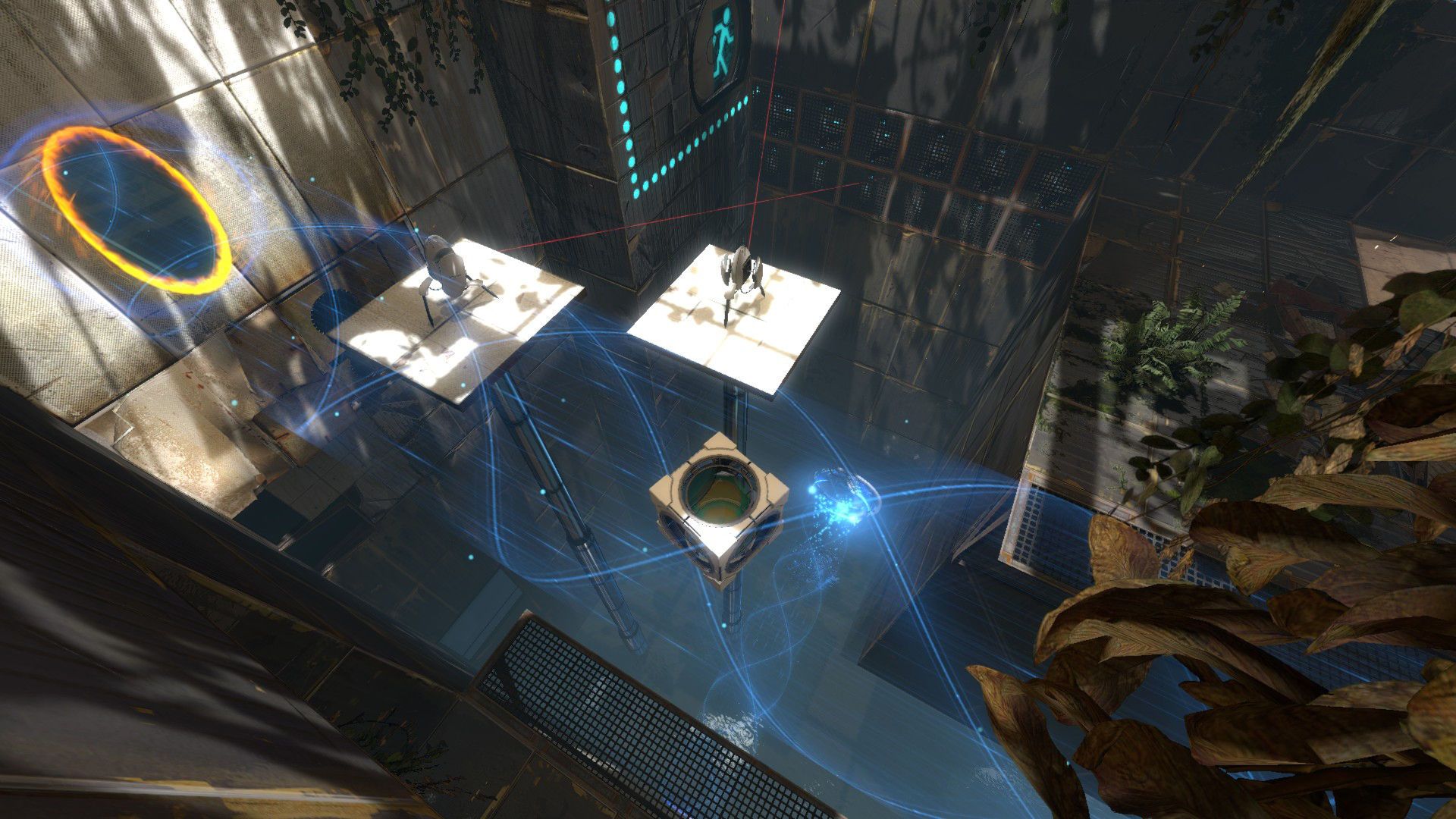
The funnel transports cubes and gel as well as people. Passing it through portals changes where its contents travel, and some chambers provide a way to reverse the flow. Destination and direction are separate parts of the problem.
When a funnel does not offer an obvious ride to the exit, inspect what it could carry instead. Delivering gel to a useful surface may prepare a later crossing. Moving a cube may change a connection that the player cannot adjust by hand from the current position.
Avoid deciding that transport must mean personal transport. The source, the cargo and the point where that cargo leaves the flow all deserve attention. A funnel can serve several jobs at different stages of one solution.
Repulsion Gel makes the approach affect the bounce
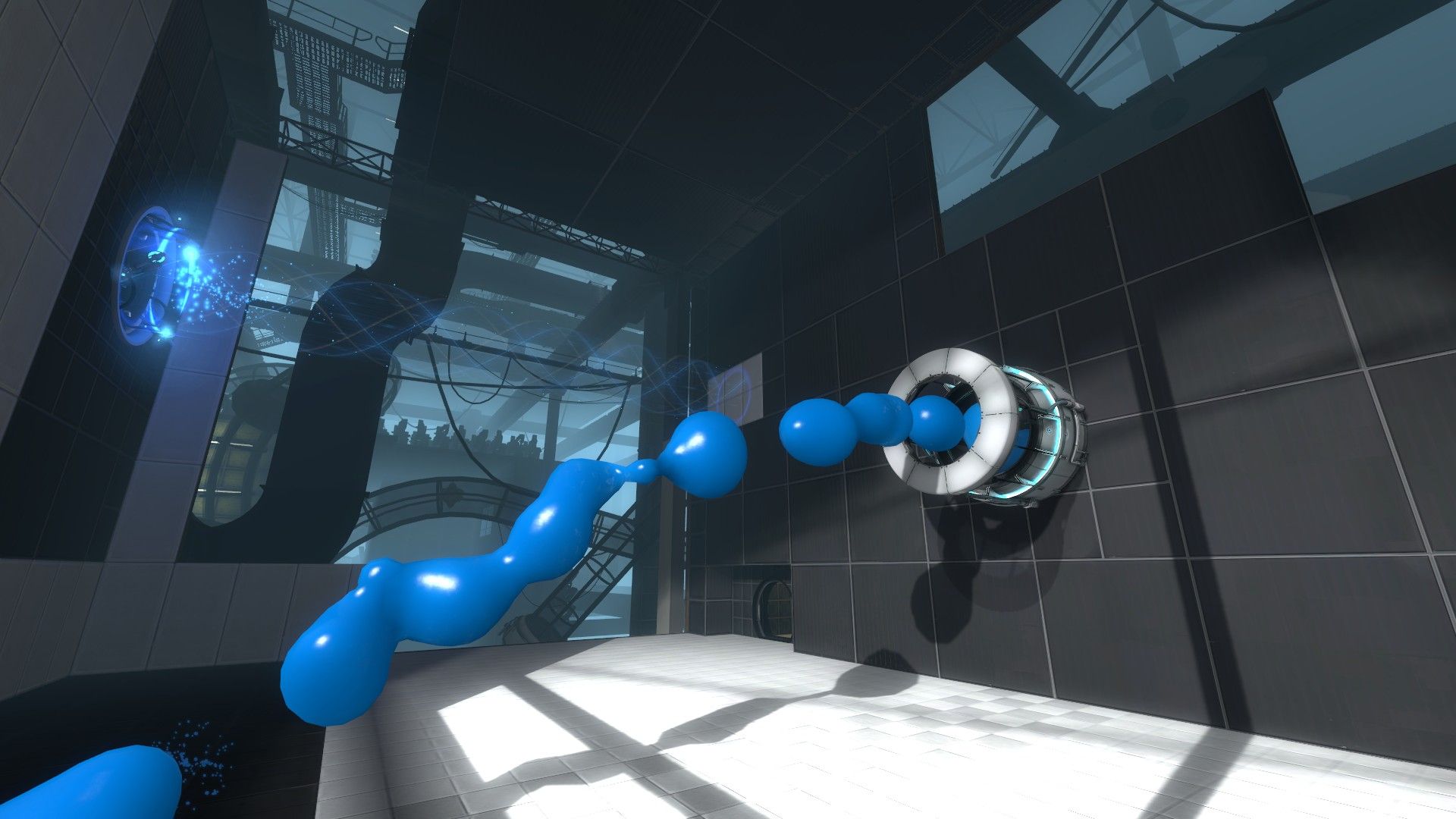
Blue gel reacts to a jump or landing. The height and movement of the approach matter, rather than every contact producing an identical hop. Valve's developer commentary explains that the system was adjusted to work with gaining and preserving height through portals.
That gives a high approach a different purpose from simply reaching the painted floor. Look at where the player will rebound and whether the available height supports the next move. Merely walking across a patch is not the same action as jumping from it or falling onto it.
The gel can also change the movement of coated objects. A cube that was easy to position can become difficult to keep still. Painting it therefore creates a behavior to use or manage, not an unconditional upgrade to the object.
Propulsion Gel needs a prepared route
Orange gel enables a faster run along a coated surface. Its value depends on where the player accelerates and how that route ends. A portal or a combination with blue gel can turn the speed into useful distance.
Plan the approach before starting it. The relevant surface needs coating, the exit needs alignment and the next part of the movement needs to be reachable. A small patch of speed does not solve those arrangements on its own.
This is where the gels become more than separate color-coded effects. Orange changes how the player reaches a blue surface or portal; the next element changes what happens afterward. The puzzle concerns the prepared combination, not just finding the correct color.
Conversion Gel creates another place to put a portal
White gel makes suitable coated surfaces accept portals. It changes the available connections before the player makes the final journey. A place that previously could not participate in the route can become useful once the material reaches it.
Redirecting the stream may create a new portal position that helps send gel farther. Consider that intermediate position separately from the final destination. The nearest useful coating can matter because it enables the next one, not because it leads directly to the exit.
The rule has boundaries: do not assume every arbitrary object or piece of scenery becomes a valid portal surface. Examine what the chamber actually permits. Across all six elements, the productive habit is the same: identify what a connection currently supplies, then check what changing it would remove as well as what it would add.