
Prey: Buy It For The Station And The Freedom To Experiment
Prey excels at exploration and flexible problem-solving. Weak shooting and repeated late travel narrow its ideal audience.
Buy Prey if exploring a room and discovering an unexpected way through it sounds as rewarding as finishing a fight. Talos I is an excellent setting for that kind of play: tools affect both enemies and architecture, routes remain useful, and a character build changes what Morgan Yu can reach. Weak shooting and repetitive late travel make it a poor recommendation for someone seeking a streamlined action game.
The judgment here concerns Arkane's 2017 base campaign, including its later free modes. Mooncrash is a separate expansion. The base game cost $29.99 on the US Steam listing when checked on September 20, 2026. At that price, players already attracted to self-directed exploration have a good reason to buy. If inventory work and an open-ended pace sound uncertain, wait for a sale.
A blocked route invites an experiment
Prey's strongest decisions concern access. A locked door may have a keycard somewhere else, but it may also have a reachable control on the other side of a broken window. A foam dart can operate that control. A vent can bypass the entrance, a human ability can shift an obstruction, or an alien power can make Morgan small enough to fit through a gap.
The alternatives change what the player spends and when a place becomes reachable. Looking for credentials can take time; fighting through another route can consume ammunition; an ability can make a once awkward approach straightforward. The result is more substantial than a menu offering several names for the same outcome. Knowledge of the room becomes a resource alongside equipment.
The GLOO Cannon makes that relationship especially clear. It can restrain enemies, help deal with hazards and form footholds on suitable surfaces. A weapon slot therefore creates options outside combat. Looking upward, checking a wall and considering an inconvenient ledge can be more useful than searching for the next obvious doorway.
Its limits are part of the appeal. GLOO does not attach to glass or simply stack onto itself into unrestricted construction. The player still needs to understand the surface and the distance involved. Broad utility works because the rules remain specific enough to reason about.
That freedom is available without guaranteeing that everyone will use it equally. A player can invest in familiar weapons and solve many encounters conventionally. Prey allows the choice, but the campaign becomes less distinctive when the only question is how much damage a target needs. The tools deserve experimentation even when the simplest available method would work.
Talos I is worth learning, and sometimes hard to read
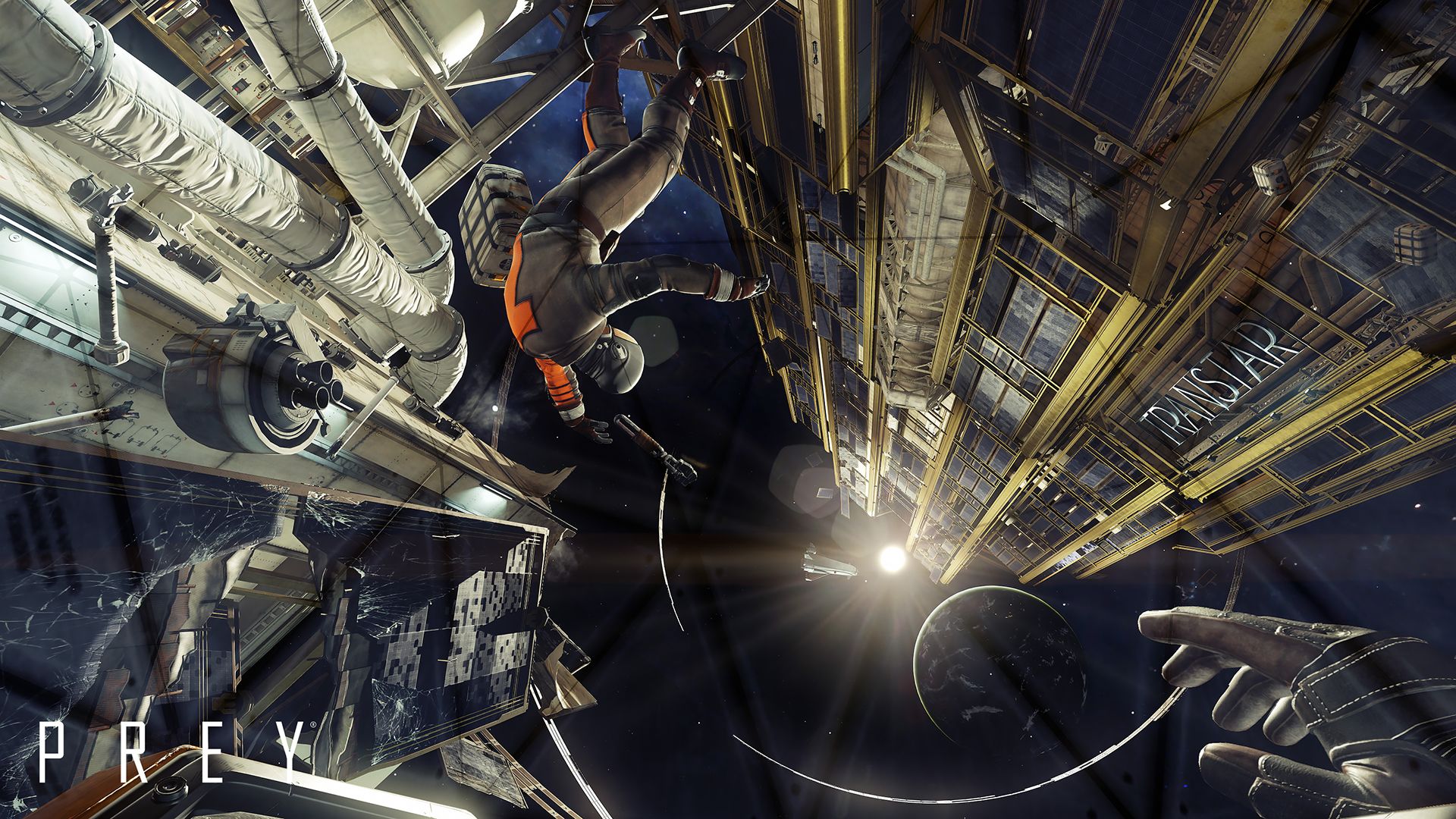
The station's public rooms, crew spaces and industrial departments have different purposes as well as different appearances. Expensive corporate interiors communicate one version of TranStar; machinery, laboratories and service routes expose what maintaining that image involves. The spaces support the setting's ideas before a conversation has to explain them.
Their relationships also matter mechanically. A new entrance can make an old destination easier to reach, and a shortcut can affect several later journeys. Exterior airlocks connect an outside view of the station to places explored within it. Talos I feels physically consistent because the game keeps asking the player to use those relationships.
Consistency is not the same as effortless navigation. A convincing arrangement of departments can still be difficult to remember. Loading transitions break journeys into separate areas, and following several tasks can produce more checking and retracing than discovery. Confusion is a real cost, even when the building itself makes architectural sense.
The best return trips offer a new reason to inspect a familiar place: another access option, something previously out of reach, or a connection that changes the route. The weaker trips require the same passage again while new enemies slow it down. Late travel increasingly interrupts exploration instead of rewarding it.
Useful upgrades can make combat too routine
Neuromods connect character progression to practical opportunities. Human abilities can improve hacking, weapon handling, survivability and the ability to move heavy objects. Researching the Typhon opens a different set of powers, including transformation. Enough investment in alien abilities also changes how automated station security treats Morgan.
Those consequences make a build more than a list of damage bonuses. An investment can open a route, alter the use of a room or change the behavior of security equipment already encountered. Choosing an ability can make a previously blocked entrance usable, as well as reducing the number of attacks required to defeat an enemy.
Recycling and fabrication give exploration a related purpose. Collected objects become materials that support equipment and supplies. Finding a useful plan can change what a player can sustain; missing it can leave the same route much less comfortable. Optional rooms contribute to progression as well as to the background story.
The economy is therefore variable in a meaningful way. A thorough player who avoids expensive fights can build a very different inventory from someone who follows the main route and attacks every threat. Promising either constant scarcity or effortless abundance would hide that difference. Resource pressure reflects choices, discoveries and costs already incurred.
The drawback is that efficiency can narrow play. An upgraded conventional weapon combined with a reliable way to disable enemies may remain an effective answer across many encounters. More elaborate combinations become something the player chooses for interest, without a strong reason to prefer them. Prey permits inventive play more consistently than its enemies require it.
That limitation belongs partly to encounter design. It is not enough to tell a bored player to be more imaginative. A rich toolkit benefits from situations that make different options advantageous, and the campaign does not maintain that variety throughout. Sorting inventory and revisiting recyclers can similarly shift from meaningful preparation to repeated maintenance once a familiar routine is established.
The first threats are more distinctive than the later pressure
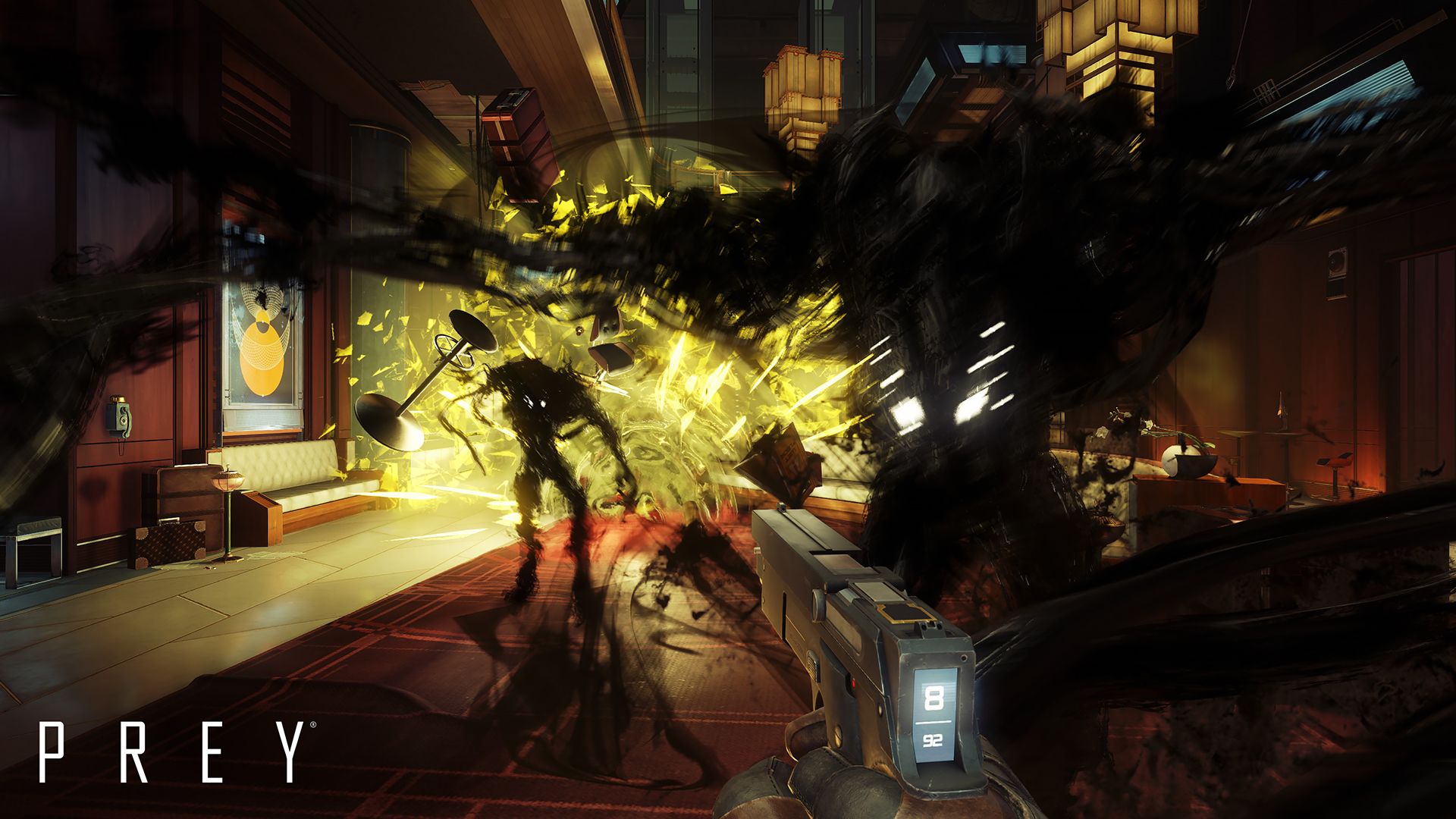
Mimics are a particularly good fit for this game. By copying everyday objects, they make observation part of survival. A room's clutter is useful to inspect for supplies and possible access, but it can also contain a threat. The enemy design supports the same attentive behavior that exploration already rewards.
The effect changes with familiarity. Recognizing the trick and gaining scanning options reduces the uncertainty. Fighting a small, fast target can then become more irritating than frightening, especially when weapon feedback lacks the force expected from a dedicated shooter. The idea behind the encounter is stronger than every moment spent resolving it.
Later aliens have different capabilities, but their variants do not supply enough fresh decisions to match the breadth of Morgan's powers. Disabling a target and finishing it efficiently can become a dependable routine. Combat preparation remains interesting longer than the direct exchange of attacks does.
Late repopulation of familiar areas makes that weakness more visible. Another enemy in a known corridor may consume ammunition and time without revealing a new part of the station or demanding a substantially different solution. The campaign would benefit from tighter use of those return trips. More resistance is not automatically more worthwhile play.
Difficulty options help with the amount of pressure. They do less for its repetition. A player interested in the setting can reduce combat demands, but that does not remove loading boundaries, shorten every task or make a previously explored route surprising again. It is useful to distinguish an encounter that is too hard from one that has become too familiar.
The crew gives the ethical questions substance
Prey's writing is strongest when it makes the people aboard Talos I understandable through ordinary details. Emails, private spaces and personal possessions reveal lives that continue beyond the immediate crisis. Corporate messaging and troubling research share the station with recognizable work, friendships and routines.
That arrangement makes concern for others more than a response to a dramatic instruction. Learning about someone can change how a later decision feels. Helping can cost time, resources or effort within the same systems used for survival. The ethical interest is supported by actions the game makes possible, not only by dialogue explaining what Morgan should believe.
Live characters and the central plot are less even. Someone whose records were intriguing can become a conventional source of errands. Later explanations can feel abrupt relative to the detailed place built around them. The final dramatic resolution does not consistently match the quality of the environmental setup.
The ending still has a defensible concern with empathy and responsibility. Recognizing that purpose does not require declaring every twist satisfying, and finding the resolution unsatisfying does not erase the choices made throughout the station. The game deserves both judgments: its ethical argument has substance, and some of its delivery is awkward.
Presentation helps the quieter material. Public luxury and exposed infrastructure communicate different priorities, while sound supports awareness of spaces and threats beyond the immediate view. Uneven impact in the combat audio stands out because the surrounding atmosphere is so effective. The station often communicates more convincingly through its construction than the main plot does through explanation.
The current purchase includes more choice than the launch version
The free 2018 update added Story, Survival and New Game Plus modes. Story mode is a sensible starting option when the main attraction is exploring with less combat pressure. Survival adds complications for players who want greater demands. New Game Plus provides a way to revisit the campaign with developed abilities. These are base-game options; the separately sold Mooncrash expansion should be considered on its own merits.
For replay, the meaningful attraction is trying a different set of abilities or approach to access. A restrictive challenge can reveal how interconnected the tools are, but it can also amplify inventory and travel friction. Another run is most appealing when the player has a concrete idea to test, rather than an expectation that repeating the plot will make the late pacing better.
Performance advice needs platform and date attached. Historical PC testing included good results on relatively modest hardware as well as severe slowdown and crashes in particular late areas on other configurations. That evidence establishes variation at launch; it does not establish a September 2026 benchmark or prove that every old fault persists. Current hardware should not receive a blanket guarantee based on the age of the game.
Console options also changed. Xbox officially added FPS Boost support for Prey on Series X and Series S in 2021. Original Xbox One frame-rate impressions therefore do not describe every current Xbox option. Likewise, an old console loading complaint is not a measurement of a modern PC installation. Pick the platform with those distinctions in mind.
The base campaign offers substantial optional exploration, but hours alone are a poor measure of its value. The important question is whether finding another way into a room remains enjoyable after the main objective could already be advanced. For that player, the station and its tools justify the purchase. For someone who mainly wants forceful shooting and steady forward momentum, they do not.
Buy Prey for deliberate exploration and experiments with its systems. Wait for a sale if that style is unfamiliar. Skip it if the purchase depends on polished gunplay: the combat and late repetition are substantial weaknesses, even in a game whose freedom is otherwise excellent.