
Slay The Spire 2 Is Excellent, Even While Balance Keeps Moving
The sequel adds meaningful characters and co-op without replacing the original structure. Early Access balance remains the price of entry.
Slay the Spire 2 is already an excellent deckbuilder and not yet a finished sequel. Its new characters, cards and co-op mode create decisions the original cannot reproduce. Its structure remains so familiar that experienced players can solve early runs with old habits, and balance patches have exposed how difficult it will be to preserve strange combinations without letting infinite loops dominate. Buy it in Early Access if iteration is part of the appeal. Wait for version 1.0 if balance changes ruin the fun.
This is a research-based Game Pelt review using five long-form video sources, five written sources, official patch notes, current Steam sentiment and specialist community analysis. Game Pelt is not claiming a private playthrough. Repeated observations carry more weight than one creator's preferred strategy, and Early Access defects are separated from intentional systems that are unlikely to disappear.
The original structure still works
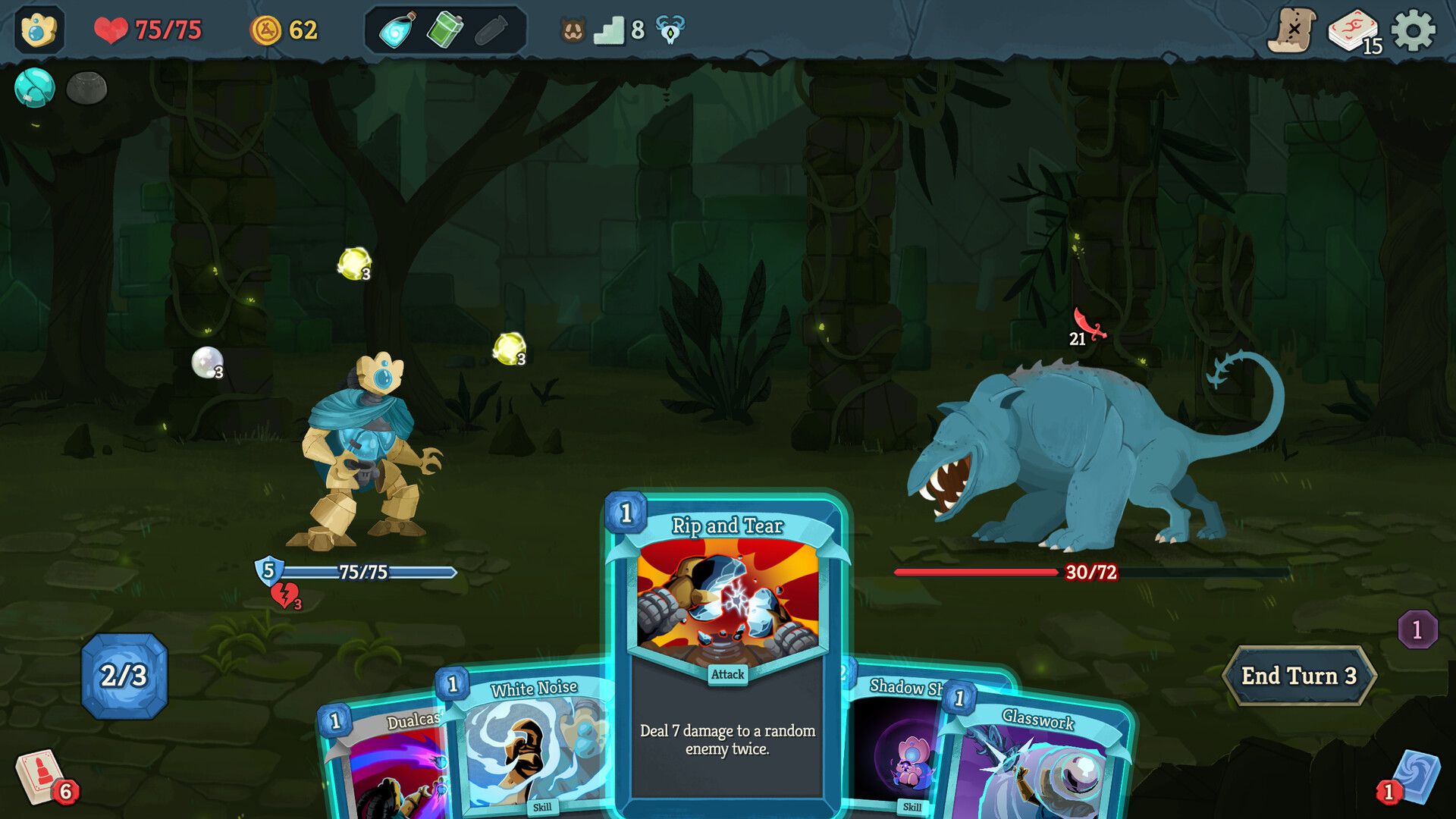
The basic run remains clear. Pick a route, fight enemies, add cards, manage health and build enough consistency to survive bosses. Enemy intent keeps the calculation readable without making it automatic. A block card played now may preserve health, but a damage card may end the fight before a worse attack arrives. The best choice depends on the deck, relics, draw pile and path ahead.
That structure has been copied for years because it exposes consequences without explaining the answer. Slay the Spire 2 does not abandon it. IGN and specialist coverage consistently describe the sequel as immediately familiar, then increasingly different as new characters, cards and interactions appear. The familiarity is a strength for basic play and a weakness when the first acts feel like a polished expansion.
Map decisions remain important because a powerful deck can still lose through bad resource planning. An elite may provide the relic that completes a build, but the fight can remove the health needed for the next act. A shop is valuable only if enough gold survives the route. The game keeps strategic pressure outside combat instead of treating every reward screen as progress.
New characters change what a deck is for
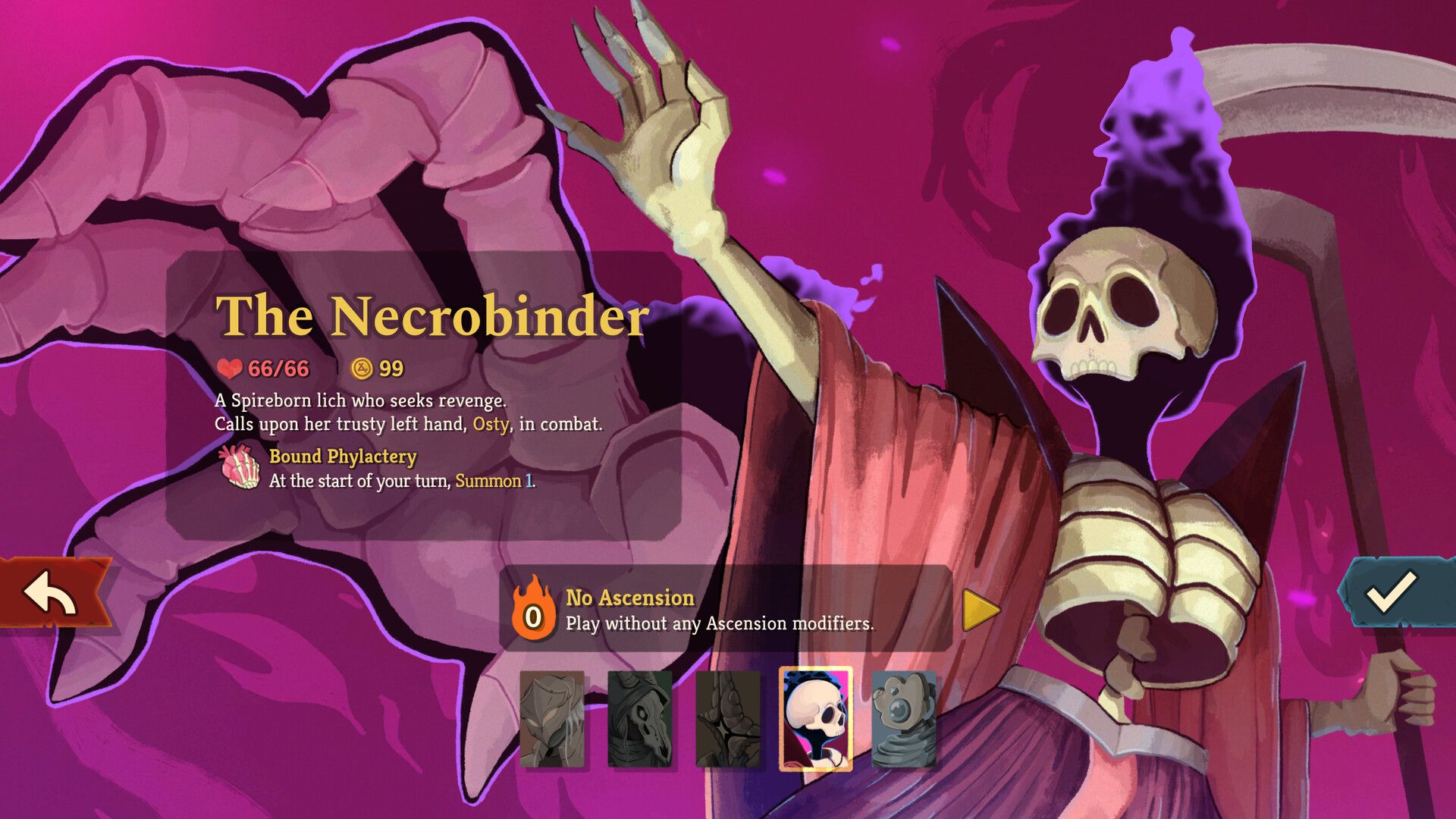
The returning characters preserve recognizable identities while new characters challenge assumptions learned from the first game. The useful change is not simply more cards. It is more reasons to value timing, discard, setup and shared resources differently. A card that appears weak in isolation can become essential when another mechanic changes what counts as waste.
This is where the sequel earns its name. StopGame's long review and high-level creator analysis both emphasize that the new kits require fresh evaluation rather than a larger tier list from the first game. Some old archetypes still work, especially on returning characters, but the strongest new interactions depend on mechanics that did not exist before.
Unlock pacing can temporarily hide that breadth. Early runs do not show every card, relic or character interaction, and a player who judges the game after one clear may see only the familiar shell. The design expects repeated runs and gradual discovery. That is appropriate for the genre, though Early Access makes it harder to know which missing option is locked and which is not implemented.
Co-op changes communication more than difficulty
Co-op is the largest structural addition. Players need to explain what their decks are trying to do, coordinate route risk and decide when one character should absorb a cost for the group. The mode works because the base game already makes intent and resources visible. It does not need real-time reactions or a separate combat system.
The danger is downtime. A player familiar with every card can solve a turn quickly, while a new player may need to read several descriptions and compare draw outcomes. Voice chat helps, but it can also turn one experienced player into the person making every decision. Good co-op groups agree that each player controls their own deck and reserve group discussion for route choices, shared resources and lethal threats.
Balance is not identical to solo play. Combinations across characters can create defenses or damage loops that one deck cannot build alone. That is part of the appeal, but it also means a patch aimed at solo infinites may affect co-op in unexpected ways. Mega Crit needs separate data and clear notes when a change is primarily targeting one mode.
Balance patches are the real Early Access cost
The first major balance controversy produced thousands of negative reviews before every change reached the main branch. Some reaction was distorted by regional review activity and off-topic filtering. The underlying disagreement was real: players feared that removing easy infinites would also remove the experimentation that makes a deckbuilder interesting.
Mega Crit has to control degenerate combinations because one deterministic loop can erase the rest of a run. It also has to avoid balancing every strange card around the strongest players. A card can be inefficient and still create a memorable deck. If every unusual interaction is flattened into the same safe value, the sequel becomes cleaner and less interesting.
The current Very Positive English Steam rating shows that the game recovered from the sharpest review swings. It does not prove every patch was correct. Early Access buyers should expect card text, numbers, encounters and unlocks to change. Anyone who builds attachment to a specific combination needs to treat the current version as temporary.
The sequel is conservative in presentation
Animation, backgrounds and effects are more detailed, but the interface stays close to the original because readability matters more than spectacle. Enemy intent, block, energy and card costs remain easy to scan. New visual detail rarely covers information needed for a turn.
The art direction has more movement and character without losing the board-game clarity of the first release. Audio gives attacks enough weight to distinguish a successful sequence from routine card play. Neither element is the main reason to buy the game, but both make long sessions less flat.
Performance is light by modern PC standards, and the game runs on modest hardware. Network conditions matter more in co-op than GPU power. Early Access bugs, disconnect recovery and synchronization deserve attention because a long run is more frustrating to lose to a session problem than a demanding action game checkpoint.
Content is broad, but comparison with years of mods is unfair
The first Slay the Spire has years of balance work, community knowledge and Workshop content. The sequel cannot match that accumulated volume at launch. Players moving directly from heavily modded runs may mistake a smaller option pool for weak design. The fair comparison is the quality and interaction of the official systems available now.
Those systems are substantial enough for many runs. Five characters, co-op and new encounters create more than a short preview. The question is not whether Early Access contains a game. It does. The question is whether a player wants to learn a system while its edges are still moving.
Mega Crit's willingness to change infinites, cards and encounter pressure suggests the studio is treating Early Access as development rather than marketing. That produces instability and better odds of a stronger final game. Buyers cannot demand both permanent builds and meaningful iteration.
Strategy information goes stale quickly
Tier lists and launch guides should be treated as dated documents. A card's value depends on its current text, available relics and the enemies in the build. Players should check the patch version before following a precise combo. General principles such as draw consistency, energy efficiency and route planning survive updates better than one numerical ranking.
The game is also better when it is not reduced to one solved build. Early ascensions give enough room to test a questionable card and see why it fails. That learning process is the durable progression. Unlocks expand the pool, but player understanding is what makes later difficulty possible.
Who should buy it now
Buy Slay the Spire 2 now if the original's decision structure is still appealing, co-op is useful and balance changes are interesting rather than irritating. The current build is polished enough to support serious play, and the new mechanics provide more than a cosmetic sequel.
Wait for version 1.0 if completed balance, fixed strategies, console availability or a stable long-term meta matters. Skip it if repeated card evaluation and failed runs feel like homework. The sequel has more variety, but it has not changed the fundamental work of building and testing a deck.
Game Pelt verdict: 9/10 for the current Early Access build. Slay the Spire 2 preserves the best deckbuilding structure in the genre and adds meaningful characters and co-op. Familiar early acts and unstable balance keep it from being a definitive replacement for the completed original yet.