
TCG Card Shop Simulator Guide: Build Your First Profitable Shop Without Bricking Cash Flow
A practical early-shop route for TCG Card Shop Simulator focused on shelf flow, pricing, pack opening, singles, and avoiding expansion traps.
Your first goal is boring: keep product moving
TCG Card Shop Simulator gets messy when you start roleplaying as a collector before your shop can actually breathe. The early route is simple: keep shelves stocked, keep customer paths clean, and sell the products that move reliably. Fancy layouts can wait until the register is not screaming.
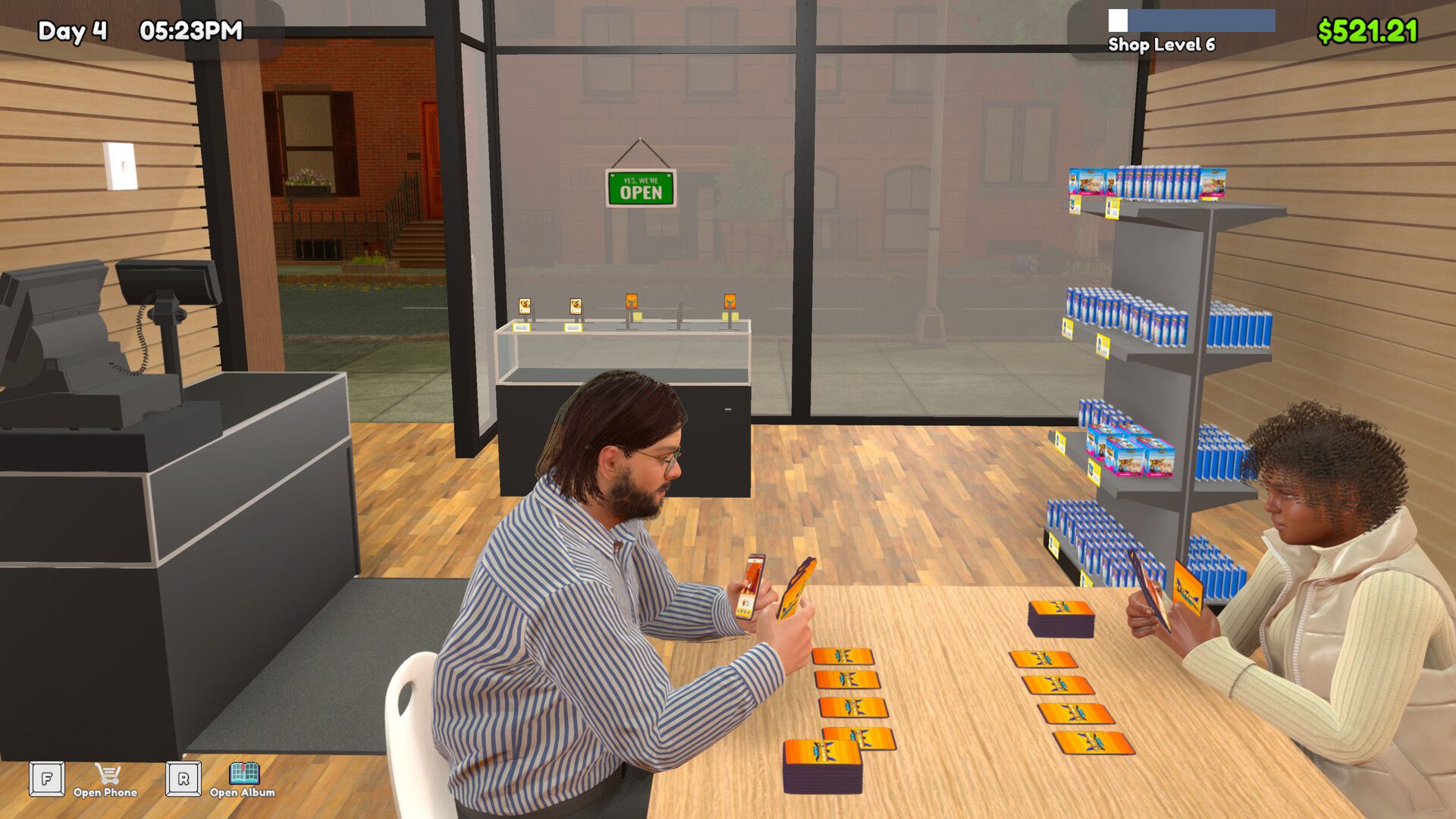
Price for the thing you need right now
The common guide advice splits pricing into two lanes. If you need cash, small markup is fine. If you are deliberately trying to push volume and shop XP, discounting can make sense. What usually hurts is drifting between both without a plan: products are too expensive to move fast, but too cheap to fund the next restock.
Start with a mild profit-first setup. Once you know which shelves empty fastest, adjust from there. The best price is not the biggest number; it is the number that keeps money and customers moving at the same time.
Open packs during downtime, not instead of running the shop
Pack opening is useful because it feeds singles, collection value, and XP. It is also the easiest way to lose the plot. Open packs when the floor is stable. If shelves are empty, customers are waiting, and boxes are sitting around, cracking more packs is just procrastination with shiny animations.
Do not buy space you cannot operate
Expansion feels great until the new space makes your shop harder to manage. Add room when you already know what will go there: more of a proven product, a cleaner checkout lane, a singles setup, or tables that actually support your current money plan. Empty square footage is not progress.
Hire when the bottleneck is obvious
Workers are strongest when you know exactly what they are solving. If your register is the choke point, hire for that. If restocking keeps falling behind, fix that. Hiring early just because the button exists can quietly eat the profit you were supposed to use for products.
The clean early loop
Restock the reliable shelf. Check prices. Serve customers. Open packs only when the floor is calm. Sell useful singles without turning the whole shop into a spreadsheet. Then expand around the products that are already working. That route is not flashy, but it keeps your shop alive long enough for the fun systems to matter.