
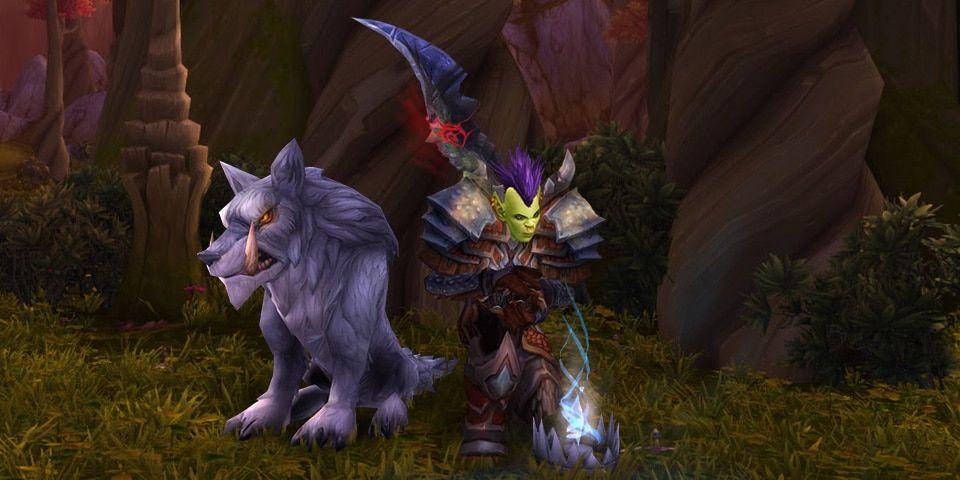
WoW Forever Hunter Pets: Healing Pressure, Control and Survival
Pick a Hunter pet for the problem you need to solve, not an unsupported best-pet ranking. Family effects matter, but your actual abilities need checking.
First pet: unlock and train it
1. Reach level 10 and follow your starting-area Hunter class quest chain. Complete the Taming the Beast trials using the supplied Taming Rod on the creatures named in each quest.
2. Finish Training the Beast too. Follow its trainer referral, then check your spellbook for Beast Training, Feed Pet and Revive Pet. Taming and training are separate steps.
3. Use Tame Beast for your permanent companion. Choose a tameable beast at or below your level, start at full health and let the channel finish without moving or attacking.
4. Feed it food its family accepts. Visit a pet trainer for Growl and trainer-taught skills; use Beast Training to teach eligible skills to your active pet.
5. For a wild skill donor, stable your keeper first. Tame the donor, let it use the skill until you learn it, then retrieve your keeper and teach it the compatible rank. Check pet level and training points.
Missing Beast Training? Check the follow-up quest and its referred trainer before replacing your pet.
A Hunter pet in WoW Forever is more than a damage companion. Pick the family that solves your immediate problem: enemy healing, dangerous casting, movement, or keeping the pet alive. A favorite-looking tame can still be worth keeping, but looks do not tell you which tool it brings.
This guide combines situational pet utility with a level-10-30 pickup plan and beta-listed skill donors. It is not a best-pet ranking or a verified route to every rank. Check the beast and your training book before making a detour.
PvE pet picks while you level
PvE focused Solo questing and dungeons, levels 10-30. No PvP rankings.
Start locally: a Nightsaber in Teldrassil, Snow Leopard in Dun Morogh, or Boar in Elwynn. Train its attacks.
Attack check: Bite II or Claw II at pet level 8+. Learn only the compatible attacks your keeper needs.
Questing picks: damage or several targets
 Nightsaber StalkerTeldrassil | Beast 7-8Train Bite + ClawNight Elf starter. Learn attacks from donors.Beta-listed
- Snow LeopardDun Morogh | Beast 7-8Train Bite + ClawLocal Cat for Dwarves. Check its attacks first.Beta-listed
 Rockhide or Stonetusk BoarElwynn Forest | Beast 7-8Charge INearby Human starter; quick engagement.Beta-listed
- Scarred Crag BoarDun Morogh | Beast 9-10Charge IBoar alternative to a Cat. Keep it trained.Beta-listed
Skill upgrades: borrow, learn, return to your keeper
 Starving Winter WolfDun Morogh | Beast 8-9Bite IICheck this Classic-route donor before traveling.Classic-route check
 Webwood SilkspinnerTeldrassil | Beast 8-9Bite IICheck this Classic-route donor before traveling.Classic-route check
 Young Forest BearElwynn Forest | Beast 8-9Claw IILocal rank-up candidate; inspect the learned rank.Classic-route check
 Strigid HunterTeldrassil | Beast 8-9Claw IILocal rank-up candidate, not a Screech donor.Classic-route check
Solo questing: use Growl. With a dungeon tank: turn Growl autocast off unless the group agrees otherwise. Avoid area attacks near enemies you do not want to pull.
Tame only beasts at or below your Hunter level. Beta-listed and reported pickups can change; Classic-route checks are not confirmed Forever donors. Inspect the learned rank before a detour. "Train" means teach the skill, not that the tame already knows it. These are practical recommendations, not tested DPS rankings.
For ordinary questing, start with something close to your route. A Boar with Charge is a practical choice when you want the pet on the target quickly. A Bear with Swipe is an option for fights with several enemies. Neither is a universal damage or survival winner.
The Crocolisk and Bat detours are more specialized. Dismember matters when the enemy receives healing; Sonic Blast matters when dangerous spells have a cast time. Those skills do not justify abandoning a comfortable questing pet for every fight. Dungeon travel is easier to justify when you already planned to run the instance.
Avoid camping a rare for an assumed damage advantage. This route uses named, ordinary pickups where possible and does not rank pets by unverified attack-speed claims.
Skill checks at levels 10, 16, 24 and 30
Use pet level, not Hunter level, for the ability requirements below. These are beta spell requirements, not automatic unlocks or promises that a trainer sells the rank. Your companion still needs the skill learned, the right family eligibility and enough training points.
| Pet level | Check first | How to act |
|---|---|---|
| 10 and your first permanent pet | Growl; a usable Bite or Claw; food and happiness | Visit a pet trainer for trainer-taught abilities. Inspect your pet's spellbook; tame a listed donor if its basic attack is missing. |
| 16 | Bite III or Claw III, if available to your pet | The rank requirement is 16, but donor levels can be higher. Deviate Crocolisk is a listed Bite III option at beast level 18-19, not a level-16 pickup. |
| 24 | Bite IV or Claw IV; current family ability rank | Check the current training book and donor before traveling. No guaranteed basic-attack rank-IV donor route is established here. Elder Gray Bear's Swipe II pickup begins at beast level 25. |
| 30 | Dash or Dive I where learnable; any reachable utility upgrade | Movement rank I has a listed level-30 requirement. That does not establish a reachable donor. Do not chase a level-32 beast or assume every movement skill is trainable at the cap. |
Learn the skill without losing your favorite
Stable the companion you want to keep before making room for a temporary tame. Dismissing a pet is not the same as storing it, and abandoning a pet is not a safe storage step.
After taming the donor, inspect its pet spellbook. Let it use the desired ability in suitable fights and wait for the learned-ability notification. Then check your Hunter's Beast Training list. Do not assume that seeing the button on the donor means your Hunter has learned it.
Retrieve your keeper and verify that the ability appears as trainable for that family and rank. Check pet level and training points, teach it, then confirm it appears in the pet spellbook. Keep the donor until you have verified the transfer; do not abandon a useful animal just because one notification flashed.
Growl and trainer-taught passives are a different errand from finding a wild skill donor. For solo questing, keep the relevant Growl rank available. In a dungeon with a designated tank, turn its automatic use off unless the group has specifically agreed that your pet should control a target.
Before you spend an evening chasing a skill
Check the live client first. If a learned rank disappears or a compatible pet cannot train it, document the problem rather than repeatedly abandoning and replacing pets. The October 1 beta update fixed beasts carrying ability ranks above their level; it does not prove every training issue is resolved.
The useful leveling plan is a steady companion, regular skill checks and a few purposeful donor stops. Exact coordinates, rare timers, a complete level-60 route and unverified higher-rank sources are intentionally not promised here.
Pressure against healing and casting
Crocolisks have Dismember, which deals damage and reduces the target's healing received by 50%. Bats bring Sonic Blast, a damaging spellcasting slow. Birds of Prey have Mine!, which deals damage and disarms the target.
Those are three different jobs. Against healing, investigate the Crocolisk. Against a caster, consider the Bat. Against an opponent whose weapon attacks are the immediate threat, look at the Bird of Prey. These are starting points for choosing utility, not promises that one family wins the matchup.
Do not confuse a casting slow with an interrupt. Planning around a slower spell is different from stopping it. Likewise, a disarm should not be treated as a universal answer to every enemy's damage. Check what the target can still do.
Compare pet choices against the fights you expect. Gear, opponents, and available abilities can change the value of an effect, so choose for your own setup rather than assuming one family always wins.
Control when distance matters
Spiders use Web to immobilize a target and apply damage over time. Crabs have Pinch for damage and a movement slow. Boars use Charge to close distance, immobilize the target, and strengthen their next pet attack.
For a control-focused setup, compare what you want to accomplish before choosing among them. Do you need the target held in place, slowed while it moves, or reached quickly by the pet?
Plan the follow-up too. A control effect is not a substitute for positioning. Know where you intend to stand and what you will do if the target reaches you anyway. Do not spend the entire fight waiting for a pet button to repair a bad approach.
Beta tooltips matter here. Confirm the ability's current cooldown, range, duration, and restrictions rather than carrying numbers over from an older game version or a different rank.
Survival and fights with several enemies
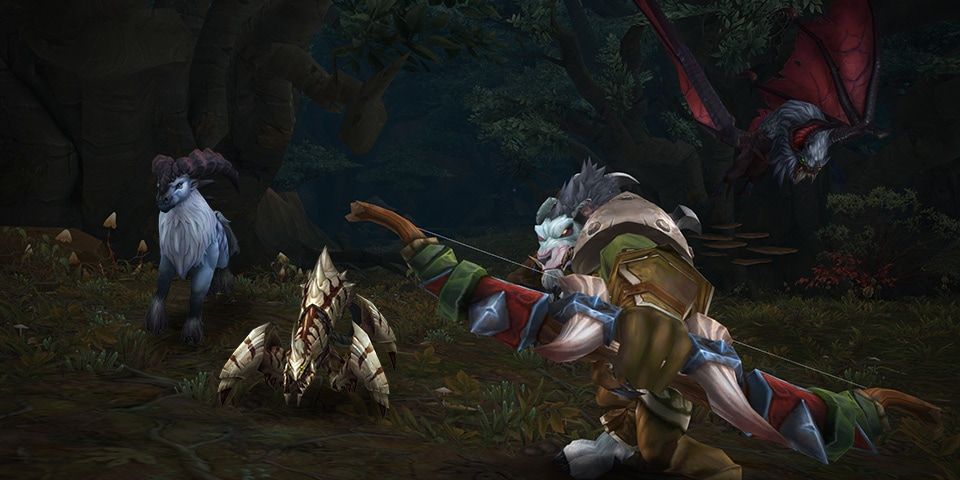
Turtles gain Shell Shield, trading attack speed for reduced damage taken. Foxes have Trickster's Dance for increased dodge and attack speed. Bears have Swipe, which damages three targets, while Gorillas have the area attack Thunderstomp. Carrion Birds damage nearby enemies and reduce their melee Attack Power with Demoralizing Screech.
Start by separating survival from damage coverage. Keeping a pet alive through a difficult solo target is not the same problem as attacking several enemies. Choose for the encounter you expect, rather than treating every area ability as permission to pull another pack.
None of these descriptions establishes a tank ranking. Enemy damage, your gear, available ability ranks, and how you manage the pull can change the outcome. A family name alone does not make a risky fight safe.
Check the pet you have, not just the family name
Forever pets gain stats from Hunter gear, and player buffs that increase stats no longer apply to them. Blizzard also broadens access to basic attack and movement abilities across families. That does not make every family's special utility interchangeable.
Before committing to a pet, check its ability list in the current client. Read the rank you actually have, confirm how the ability is activated, and make sure your control setup will let you use it when needed.
Do not travel for a particular tame on the assumption that it teaches the rank you want. Verify the creature, level requirement, and current learning process first. The beta can change those details independently of the family's general identity.
Keep one practical rule: choose the effect you need, then verify that your actual pet can deliver it. Healing pressure, casting control, movement control, and survival are different reasons to keep a companion. There is no need to force them into one permanent winner.