
Hades II Review: Deeper Combat, Busier Progression
Two excellent routes, deliberate combat and a huge cast make Hades II a superb sequel, even when crafting and currencies crowd the way.
Hades II is an excellent action game carrying more systems than it needs. Melinoe is a sharper, more deliberate fighter than Zagreus, the two routes give successful runs real variety, and Supergiant still writes failure better than almost anyone. The weaker part is the scaffolding around those runs. Gathering plants, tracking currencies and unlocking another layer of progression can make a confident sequel feel busy for the sake of being bigger.
This is a research-based Game Pelt review. The verdict draws from five established video creators, five written reviews, current patch information, platform coverage and long-term player discussion. Game Pelt is not claiming a private playthrough. Repeated observations carry more weight than one score, and points that changed after early access are treated as historical context rather than current defects.
Melinoe changes the rhythm
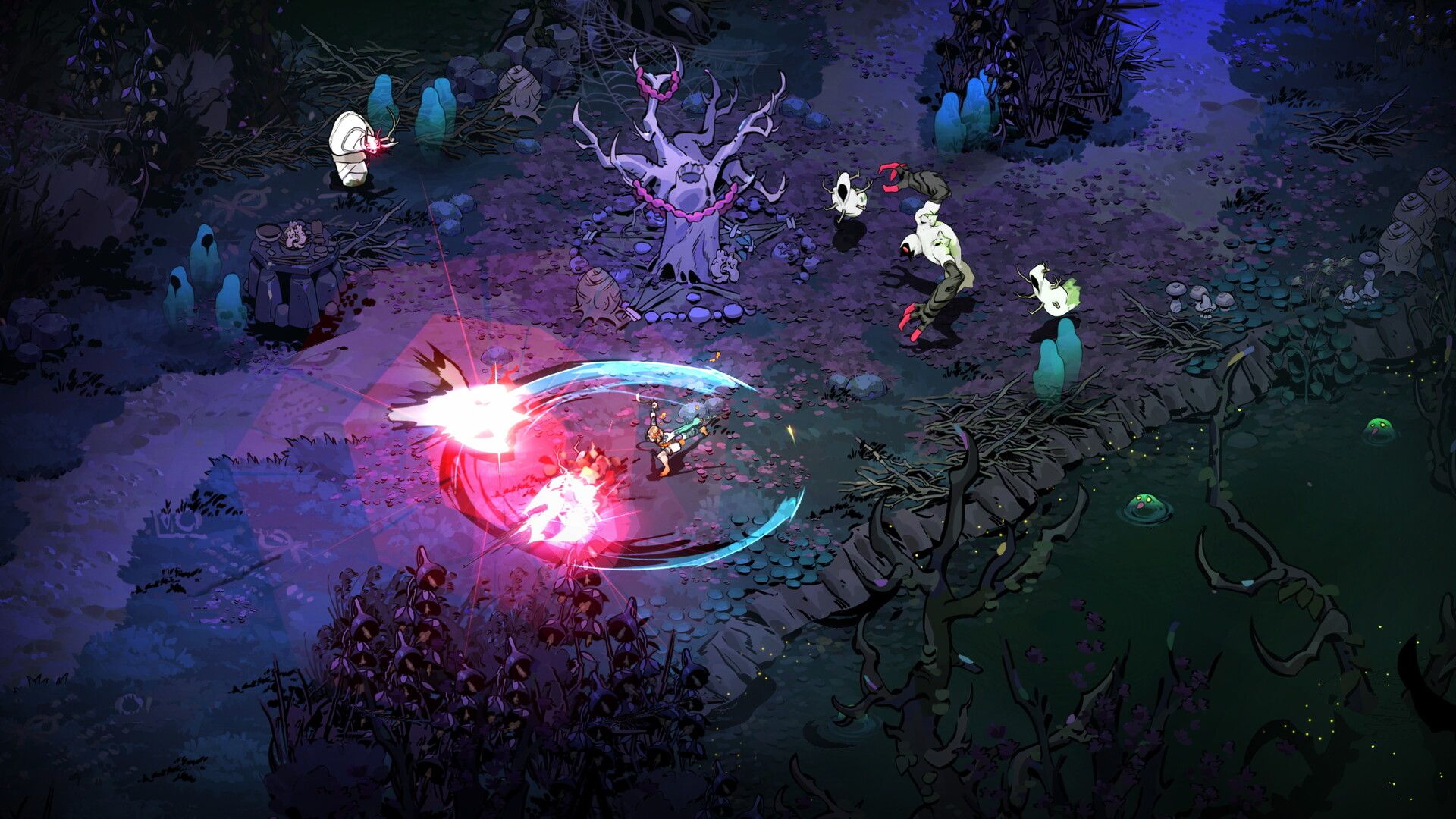
The first Hades encouraged aggressive dashes and fast contact. Hades II asks the player to control space. Melinoe can hold enemies inside a cast, charge Omega attacks with Magick and build around weapons that operate at different ranges. A strong run still produces speed and spectacle, but the decisions before that point are more deliberate.
That distinction prevents the sequel from becoming a content expansion. The six weapons are not simple replacements for the original arsenal. The staff supports safe control, the sister blades reward close positioning, the axe trades speed for reach and impact, the torches build pressure at range, the skull turns ammunition recovery into part of the fight, and the coat supports direct, flexible offense. Their aspects change the plan further.
Gameranx, IGN, GameSpot and Mortismal all emphasize the combat depth, while specialist creator Haelian was more useful on where the systems become muddy. That mix matters. Broad reviews establish that the combat works; specialist criticism identifies why some boons, Hexes and upgrade paths are harder to read than their equivalents in Hades.
Two routes solve the sequel problem
The Underworld route is a direct pursuit of Chronos. The surface route pushes toward Olympus through a different set of areas, enemies and bosses. They share the same home base and progression, but they do not feel like mirrored versions of one journey.
This is the sequel's best structural decision. Hades eventually asked the player to repeat one route under new conditions. Hades II can alternate the destination before modifiers enter the discussion. A build that feels comfortable below may struggle with the open spaces and pressure above, so changing routes also changes which weapons and boons look attractive.
The larger scope has a cost. Story gates, resource requirements and route-specific materials can interrupt momentum when the player wants to pursue one objective. The game usually gives several useful tasks at once, but it occasionally confuses having options with having direction.
The combat has more answers and more clutter
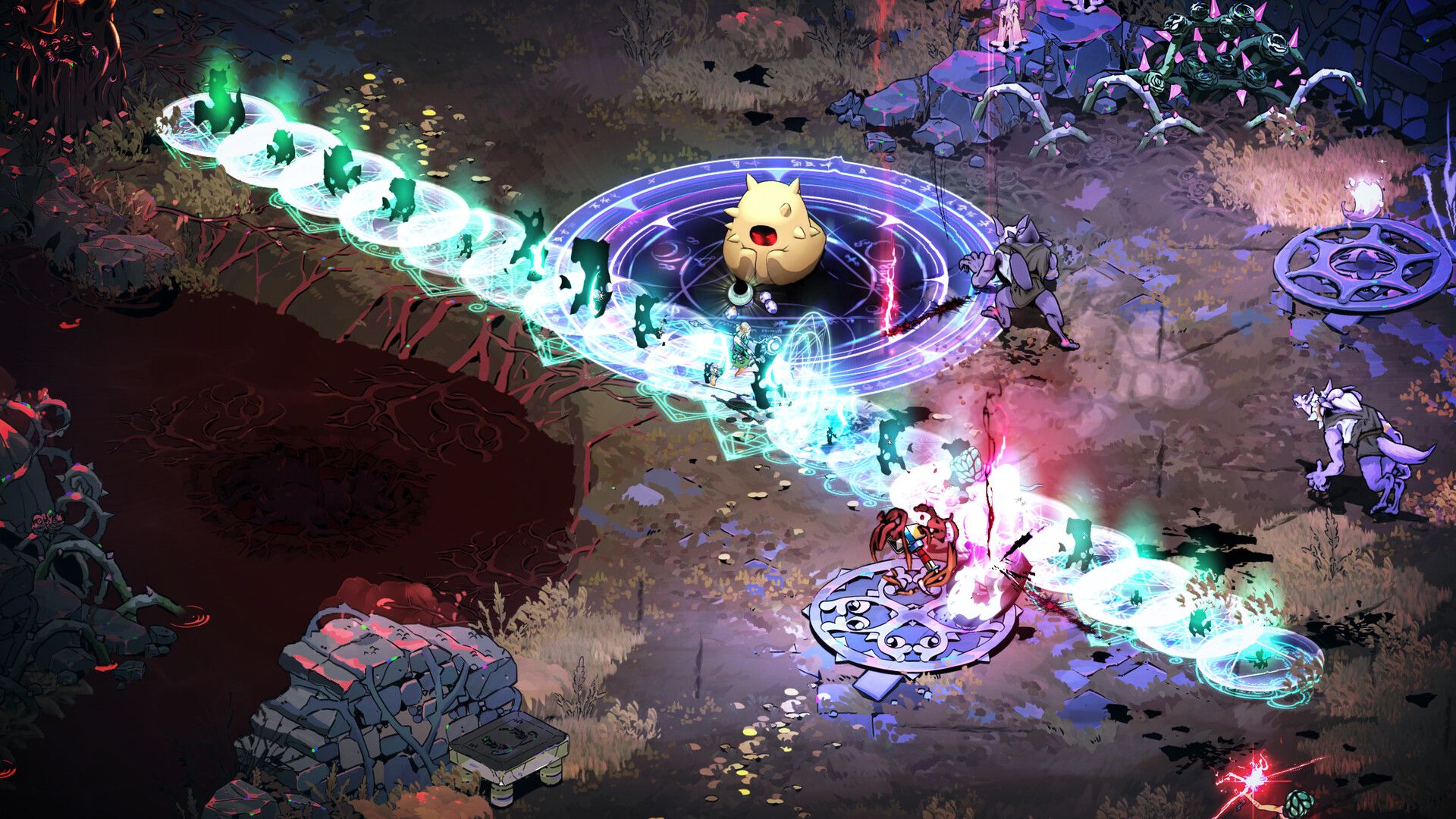
Arcana cards provide a flexible foundation. Keepsakes influence early choices. Familiars offer practical support. Incantations unlock tools, locations and conveniences. Weapon aspects reshape attacks. Boons, duo boons, Hexes, Chaos effects and Daedalus upgrades then compete to define a run.
Each system has a purpose. Together they create a heavy interface between attempts. The original Hades was not simple, but most permanent progression pointed toward an obvious improvement. Hades II asks the player to remember more currencies, recipes and conditions before the value of a resource becomes clear.
PC Gamer describes a crafting-heavy opening that becomes stronger once the game settles. Haelian's early specialist review made a similar criticism of currencies, weapon upgrades and the readability of several systems. Supergiant improved many early-access problems before version 1.0, especially boon balance and Hexes, but the underlying issue remains: the sequel sometimes makes the player manage a workshop when the interesting decision is which fight to take next.
The clutter does not ruin progression. It delays clarity. Once the Arcana setup, preferred weapons and resource priorities are understood, runs move cleanly. New players should expect the first hours to involve more reading and collection than the first game required.
Failure still moves the story
Supergiant's strongest trick remains intact. Death is not an error message. Returning to the Crossroads produces new conversations, reactions to recent events and progress in relationships. A failed boss attempt can still reveal a useful exchange or unlock a new concern at home.
Melinoe is not Zagreus with a different weapon set. She begins as a disciplined soldier raised for one task. Her certainty gives the story room to examine duty, family and the damage caused by treating vengeance as a life plan. She can be severe, awkward and compassionate without switching personalities to satisfy every scene.
The supporting cast is large and consistently well performed. Hecate gives the Crossroads authority without becoming a substitute parent in every conversation. Nemesis turns resentment into a practical obstacle. Dora provides relief without sounding detached from the crisis. Odysseus, Moros, Eris and the returning gods each expose a different part of Melinoe's limited understanding.
The wider cast also makes the story less concentrated than the first game. Hades built most of its emotional pressure around one household. Hades II spreads attention across a war, two routes, more gods and several communities. GameSpot and Windows Central see that scale as a major strength. More critical responses, including VGC's review summarized by Nintendo Life, argue that the sequel loses some thematic weight. The criticism is fair. There is more good writing here, but not every thread cuts as deeply.
The bosses demand learning, not only damage
Major fights work because their patterns change the rules of the room. A good build helps, but it cannot erase positioning, timing and target priorities. GamesRadar notes that the difficulty can feel unfair until a fight clicks. That describes the experience better than calling the game either perfectly balanced or needlessly punishing.
Some walls arrive before the player has enough information to understand why a build failed. The answer may be better crowd control, more Magick stability or a defensive boon rather than raw damage. Once that relationship becomes clear, later victories feel earned instead of granted by permanent upgrades.
God Mode remains an important option for players who want the story without the same mechanical pressure. It changes damage resistance over repeated failures rather than removing combat. Using it does not disable the narrative structure or turn the game into a passive experience.
Art and music carry the larger world
Hades II is immediately readable in motion. Enemy attacks, hazards and rewards use strong silhouettes and color separation even when a build fills the screen. Character portraits retain Jen Zee's sharp style while expanding the range of bodies, ages and divine presentation.
Darren Korb's music has more room to shift than it did in Hades. The score moves from restrained ritual to heavy percussion and guitar without treating every encounter as a climax. Ashley Barrett's vocals are used with purpose. The soundtrack supports the route and location rather than sitting above them as a separate attraction.
The density can still overwhelm on smaller screens, particularly when effects, summoned help and enemy projectiles overlap. The visual language is strong enough that this is an occasional problem, not a constant one.
The current version is the one to judge
Hades II spent a long period in early access, so old criticism can be misleading. Boons, weapons, boss behavior, resource costs and story content changed repeatedly before the full release. Version 1.0 completed both routes and the main narrative. Later patches adjusted balance, fixed progression problems and expanded platform support.
The PC version is stable by the standards reported across technical and review coverage, and the game is Steam Deck Verified. Switch and Switch 2 versions trade some visual clarity for portability, while the newer hardware offers the cleaner target. The 2026 PlayStation 5 and Xbox Series versions brought the same complete game to the remaining current consoles.
No review should pretend a live patch history makes every complaint permanent. The current build has fewer rough edges than the early-access footage still circulating online. The crowded progression and broad narrative are design choices that remain; launch bugs and old balance complaints should not define the verdict.
The ending is not the only reason to continue
Finishing the central conflict does not exhaust the systems. Higher Fear levels, weapon aspects, relationships, prophecies and unfinished Crossroads projects provide long-term goals. The best reason to continue is still mechanical curiosity: a boon combination or weapon aspect suggests a run that plays differently from the last one.
Completion can become work. Maxing every relationship, aspect and cosmetic asks for repeated materials long after the main challenge is understood. Mortismal's completionist perspective is valuable here because it separates meaningful endgame variety from the hours required to clear every checklist. Players who stop after the main story will miss content, but they will not have misunderstood the game.
Who should buy it
Buy Hades II if responsive action, build experimentation and character-driven repetition are the attraction. It is a larger and mechanically richer game than Hades, and its two-route structure gives repeated runs more room to breathe. Players who enjoy learning bosses and testing weapon systems can spend a long time here without relying on artificial daily tasks.
Wait for a sale if crafting menus, resource lists and repeated runs are already warning signs. Hades II explains failure better than most roguelikes, but it remains a game about attempting similar routes many times. Strong writing does not change that basic demand.
Players who only want the cleanest emotional story may still prefer the first Hades. Its smaller family conflict is easier to follow and lands with greater focus. Hades II wins on combat variety and scale, not by replacing every strength of its predecessor.
Game Pelt verdict: 9/10. Hades II is a superb sequel with deeper combat, two strong routes and an exceptional cast. Its progression is busier and its story less concentrated than Hades, but the problems are friction around a game that remains difficult to put down.