
Home on Wheels — Six Games Where the Base Travels With You
Six games where the car, airship, landship, raft, ferry, or train becomes the home you repair, expand, and bring across the map.
Most survival games give you a house and then make every useful trip start by leaving it. These six turn that logic around. The car, airship, landship, raft, ferry, or train is the place you repair, expand, stock, and worry about. The map matters because your home has to cross it.
This is not a list of games that happen to include a vehicle. Each pick makes the vehicle carry a major part of progression or identity. Some are demanding survival games. Others use the same idea for a quieter journey. What they share is the feeling that returning to the vehicle means returning to the thing you have built.
1. Pacific Drive makes every damaged panel personal
Pacific Drive ties the player to a station wagon that is equal parts transport, tool rack, storage room, and liability. A trip into the Olympic Exclusion Zone is partly about what you find, but it is also about what the road does to the car. Fuel, battery charge, tires, doors, windows, and body panels all demand attention. The wagon can even develop quirks that send you back to the garage to diagnose odd cause-and-effect behavior.
That pressure gives the car a personality without turning it into a talking companion. You remember the door that survived three bad runs, the off-road tires that finally made a route manageable, and the improvised repair that got the whole mess through a portal. The fixed garage still matters, but the emotional center is the battered machine you keep bringing home.
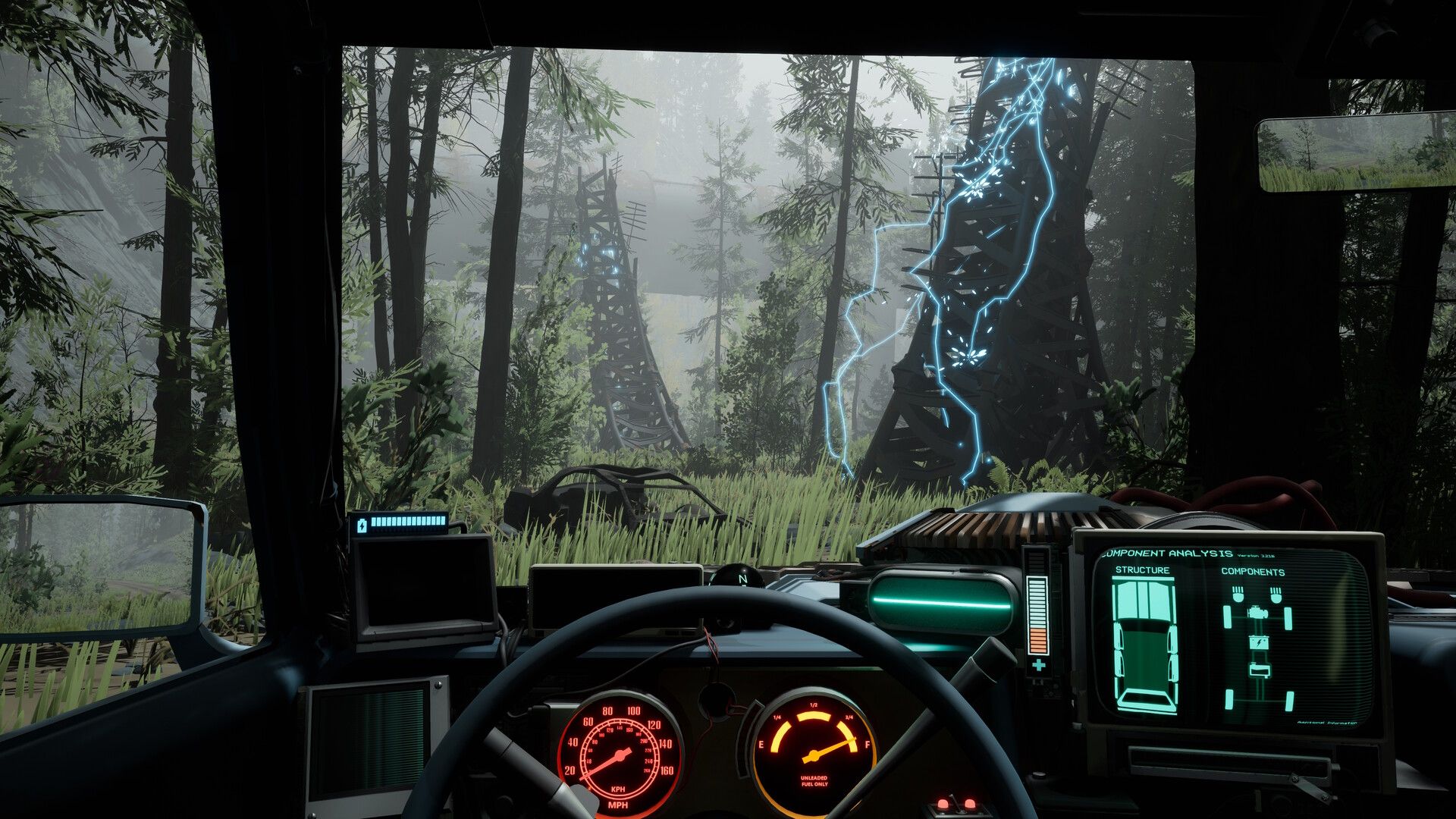
Pick this when you want the vehicle to feel vulnerable. Pacific Drive is the strongest fit here for players who enjoy preparation, maintenance, and the relief of reaching safety with something worth repairing.
2. Forever Skies puts the base in the air
Forever Skies removes the long walk back to camp by making the airship both camp and transport. Rooms, engines, turbines, research stations, water systems, cooking equipment, and storage all live on the same structure that carries you across the ruined world. New blueprints do more than improve a static settlement. They change what the ship can reach and what it can support.
The building system keeps the idea readable. Rooms can be expanded across the hull and stacked vertically, while some equipment belongs inside and other machines need exterior space. That turns layout into a practical question: the ship has to function while still feeling like somewhere you chose to live.
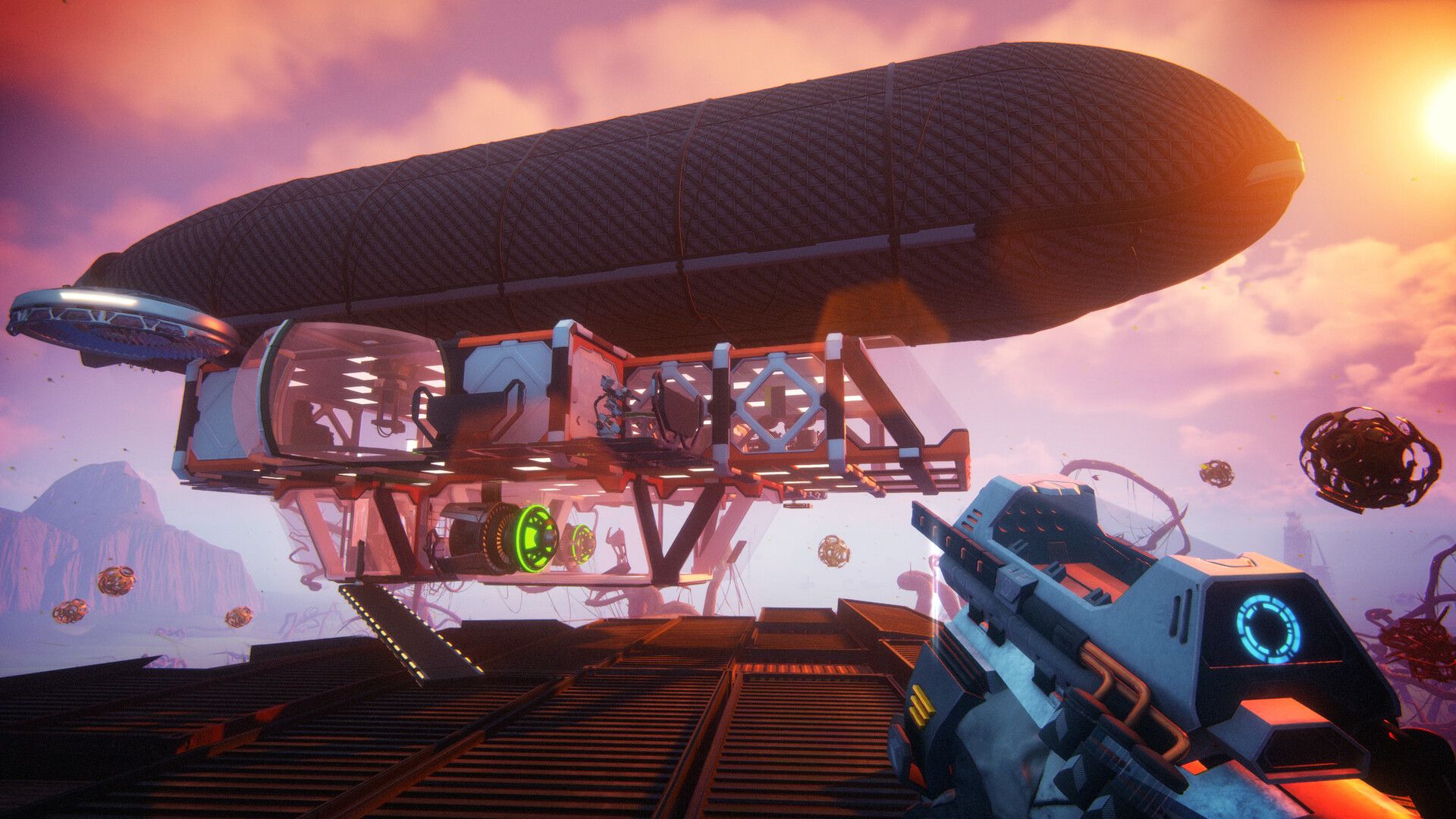
Combat and survival pressure are lighter than the airship systems suggest, so this is not the harshest pick on the list. It is the one for players who want to keep improving a mobile workshop and never feel that exploration has taken them too far from home.
3. FAR: Lone Sails makes the machine the journey
FAR: Lone Sails strips the idea down. There is no sprawling crafting tree and no warehouse of spare parts. You feed fuel into the landship, operate its machinery, vent pressure, stop it, repair it, and add the tools needed to keep moving through a dried-out world.
The side-on cutaway view is crucial. You can see the small pilot running between stations inside a machine that fills most of the screen. When you step outside for fuel or a puzzle, the camera keeps the vehicle present. The scale sells the dependence between person and machine: neither gets very far alone.
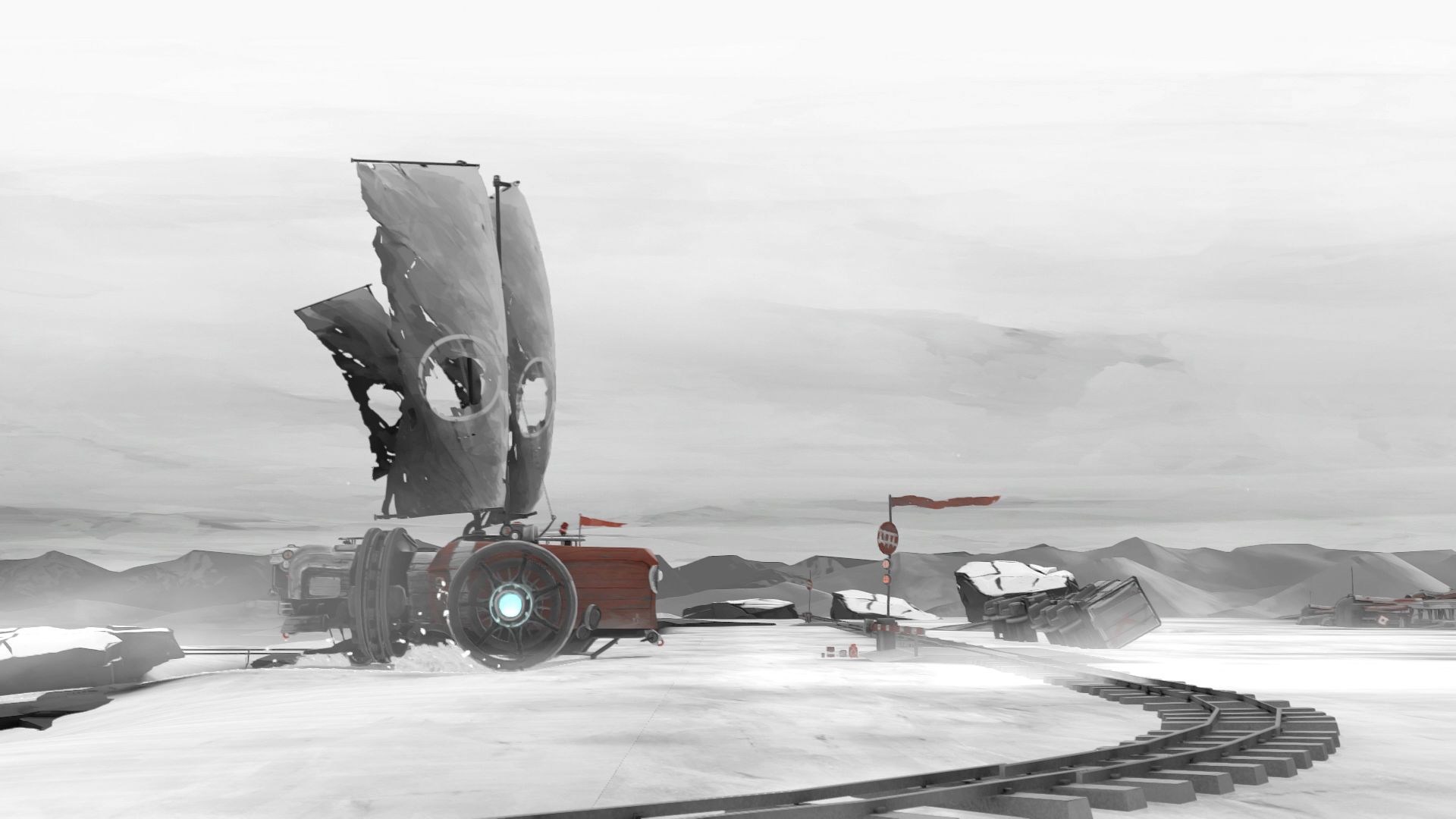
This is the shortest and most directed game here. Choose it when you want the vehicle-home idea without a long survival campaign. Its landship is less customizable than the other picks, but few games make caring for a machine feel this closely tied to moving forward.
4. Raft lets the floor plan grow under your feet
Raft begins with a tiny platform, a hook, and an ocean full of debris. That scrap becomes flooring, storage, food production, water equipment, sails, engines, defenses, and eventually a floating structure that can look nothing like the square that started the run. Expansion is survival because every new system needs somewhere to sit.
The raft also changes the usual base-building relationship with the world. Islands and story locations are temporary stops. The persistent object is the structure waiting offshore, carrying the resources and layout decisions made across the whole campaign. In co-op, that history becomes shared. One player remembers the corner that always needed repairs while another insists the extra crop plot was essential.
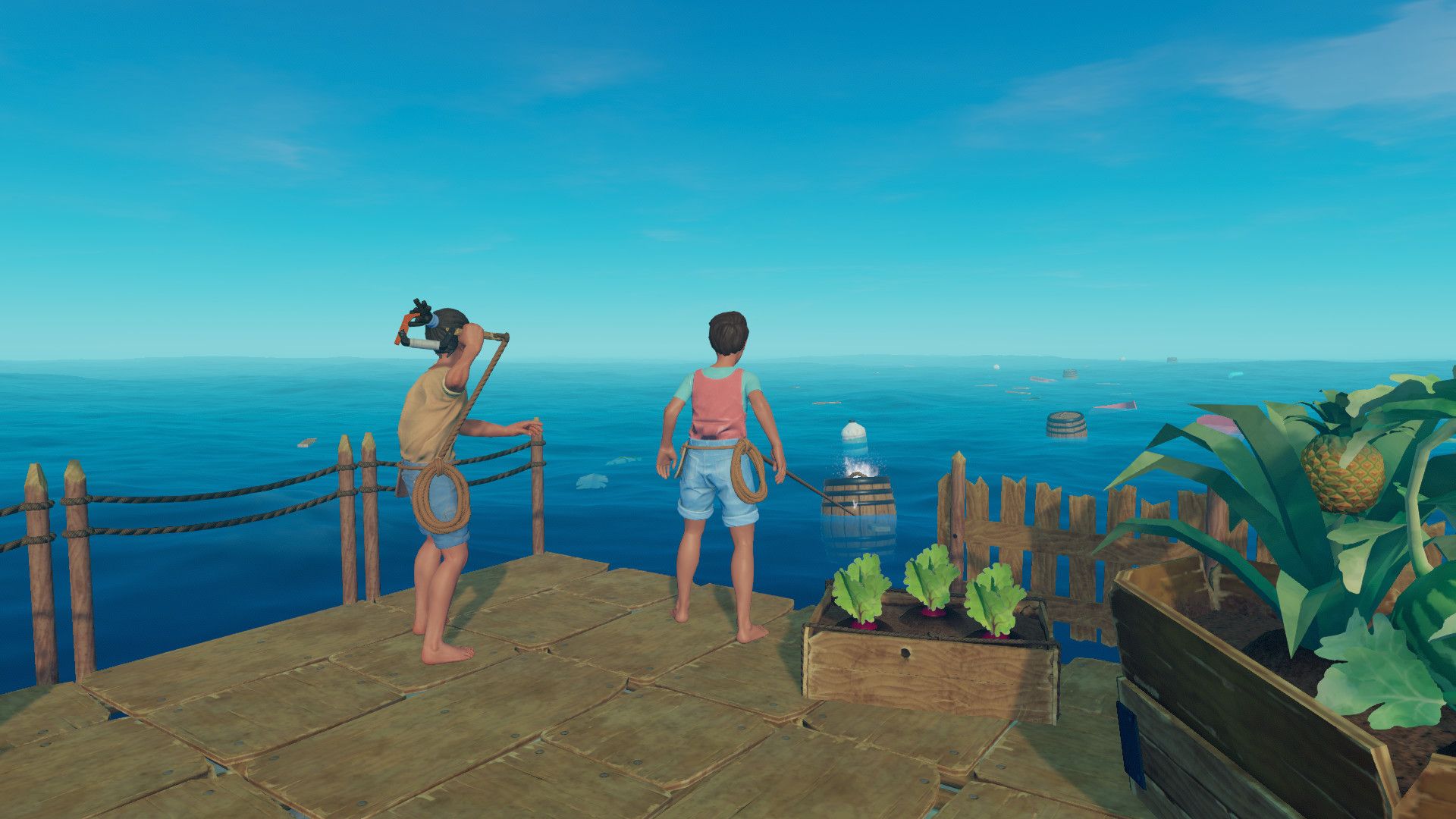
Pick Raft for a home that grows visibly. Its building is more open-ended than FAR and more communal than Pacific Drive, with enough survival friction to make each expansion feel earned.
5. Spiritfarer turns the boat into a record of everyone aboard
Spiritfarer uses a ferry as a home for people who will eventually leave it. You build rooms and facilities for different spirits, arrange them on the deck, cook, farm, gather materials, and sail between the places needed to finish their stories. The boat expands mechanically, but its real weight comes from who occupies each room.
That makes departure visible. A structure remains after its owner is gone, so the layout becomes a record of relationships rather than a clean progression grid. The ferry grows larger while the reason for building it becomes more complicated.

This is the least survival-driven pick. Choose it for management, platforming, and a story about care. The vehicle is a home because of the people aboard, and the empty spaces matter as much as the upgrades.
6. Zompiercer makes the train your fallback plan
Zompiercer puts a customizable train at the center of a zombie survival loop. Cars can become living space, storage, crafting areas, and protected positions while the locomotive carries the entire setup between scavenging stops. Leaving the train means taking a risk. Returning means bringing supplies back to a base that can move before the area is picked clean.
The train changes how expansion feels. A wall or workbench is not tied to one patch of land; it becomes part of the convoy. New cars increase capacity, but they also stretch the space you need to organize and defend. The result is rougher and more direct than Forever Skies, with the appeal of an improvised armored home instead of a polished flying workshop.
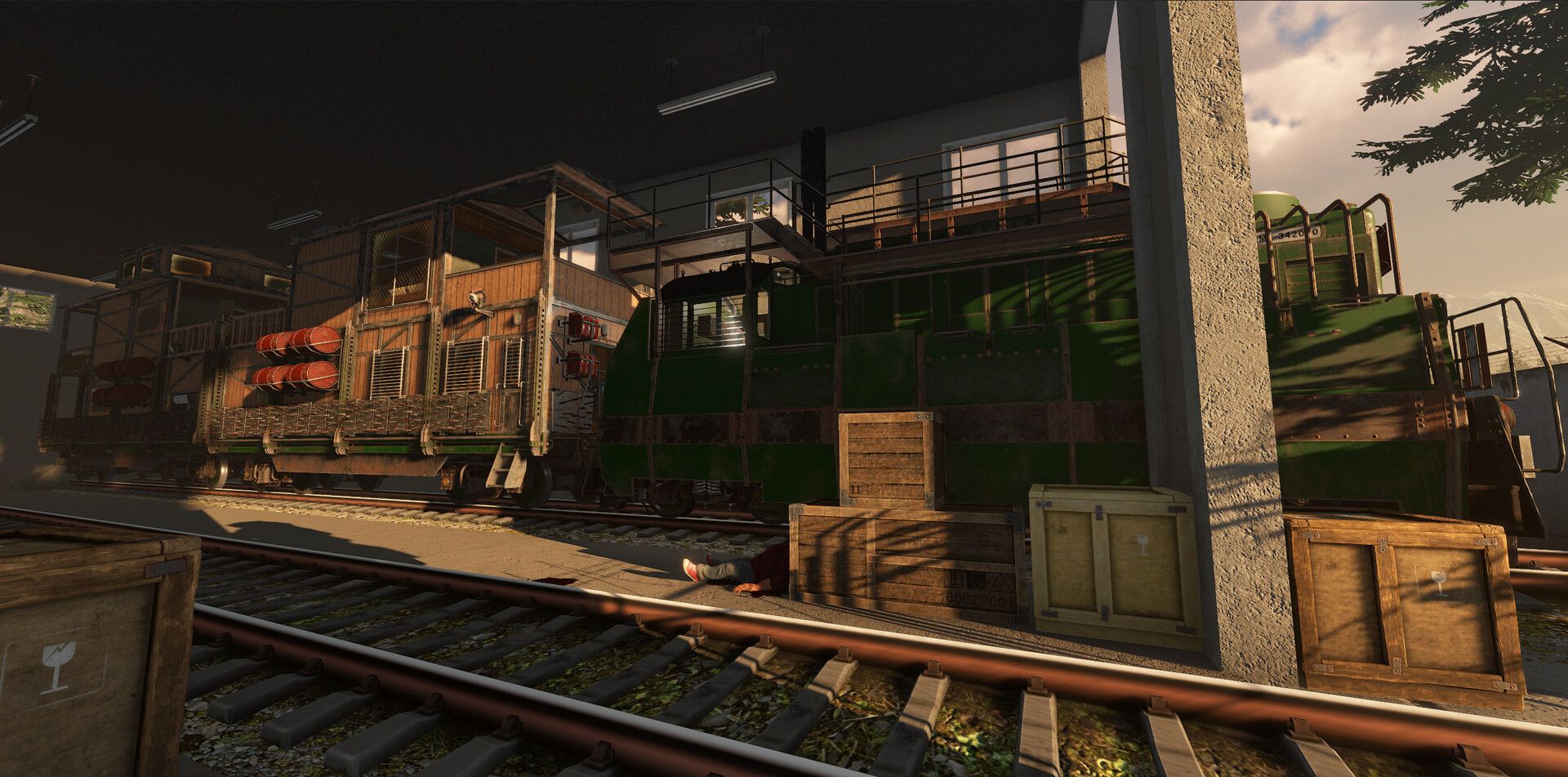
Pick this when the fantasy is not simply traveling. It is having a heavy, noisy fallback point waiting on the rails when the scavenging run turns bad.
Choose the kind of home you want to maintain
Start with the relationship you want. Pacific Drive makes the vehicle fragile and personal. Forever Skies makes it a building project. FAR: Lone Sails makes it an instrument you operate. Raft lets it grow from nothing. Spiritfarer fills it with people. Zompiercer turns it into a rolling refuge.
The best version of this idea makes every upgrade carry two meanings. It solves a problem, and it changes the place you return to. That is when a vehicle stops feeling like a mount or menu and starts feeling like home.