
Ace Combat 8: Eight Habits for Cleaner Sorties
Eight Ace Combat 8 campaign tips for buying complete loadouts, choosing carrier aircraft, directing wingmen and improving missile shots.
A new fighter can leave you short of credits for the weapon you actually wanted. A missile lock can still end in a miss. Ace Combat 8: Wings of Theve gives you plenty to manage before and during a sortie, and several early frustrations start with those small assumptions.
Start with the mission, then decide what to buy and how to fly it. These eight campaign tips cover the decisions worth slowing down for, from choosing a loadout to breaking off a bad attack run.
Pick the special weapon after reading the briefing
Check what the mission expects you to destroy before choosing your special weapon. A weapon built for ground targets will not solve an air battle just because it can lock onto several targets at once. The target category matters as much as the number of locks.
For a sortie with mixed threats, think about what your standard missiles and wingmen can cover alongside your special weapon. A ground attack loadout can make sense without being the answer to every enemy that appears. Read the briefing, then make the choice.
Look for the anchor before committing to an aircraft
Carrier operations restrict which aircraft you can bring. Check the anchor symbol in the aircraft tree when deciding what to buy, particularly if your next unlock would use most of your credits.
Keep a carrier-capable option available instead of assuming every new plane can launch from the Endurance. This is a compatibility check, not a reason to avoid the rest of the tree. It stops an otherwise useful purchase from becoming the wrong choice for the next sortie.
Budget for the weapon as well as the plane
Buying an aircraft does not automatically buy all its special weapons. Before spending your MRP, look at the cost of the plane and the weapon that made you want it in the first place. Leave room for that second purchase.
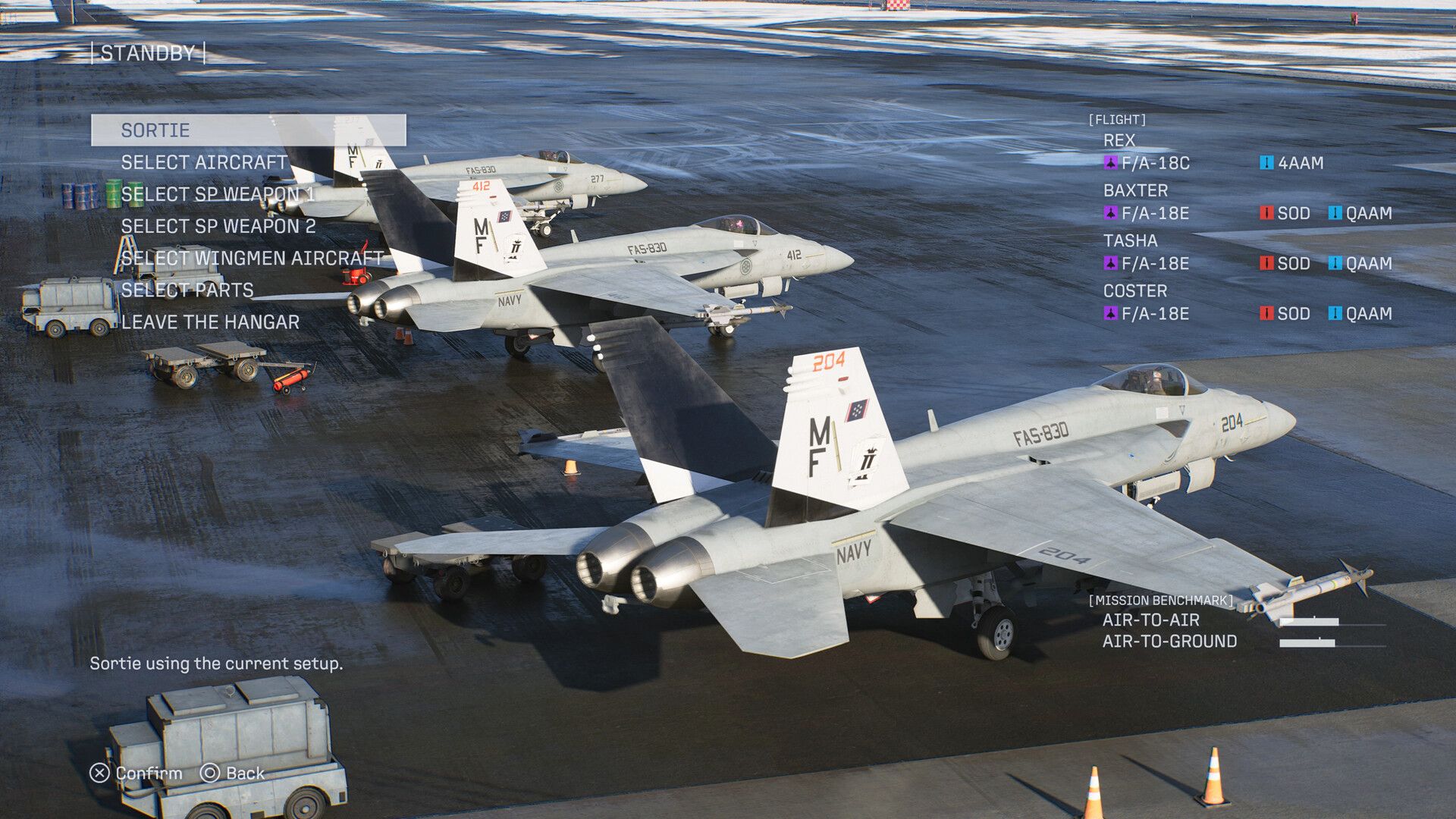
Wingman aircraft add another spending decision. Additional copies cost less than the first, but that does not mean you need to buy a whole squadron immediately. Start with the jobs you need covered. A familiar aircraft with the right equipment can remain useful while you save for a complete replacement loadout.
Change wingman orders when the job changes
Joker Flight can attack your target, spread out to attack, cover you, or receive clearance to use special weapons. Use those commands deliberately instead of leaving the squad on one instruction throughout a mission.
If you are concentrating on a ground target while fighters pressure you, cover is worth considering. If one enemy needs focused attention, direct the squad at it. Reassess after that threat is gone; the order that helped with the last objective may be a poor fit for the next one.
Use high-G turns in short bursts
Holding the acceleration and deceleration inputs while turning lets you pull a tighter high-G turn. The cost is speed. Keeping it held through a long chase can leave you slow and close to a stall while the enemy pulls away.
Use the sharper turn to correct your angle, then release the maneuver and accelerate again. Practice that transition in training, with altitude to spare. Learn how the aircraft responds before trying the same correction close to terrain.
Check the radar when a missile warning starts
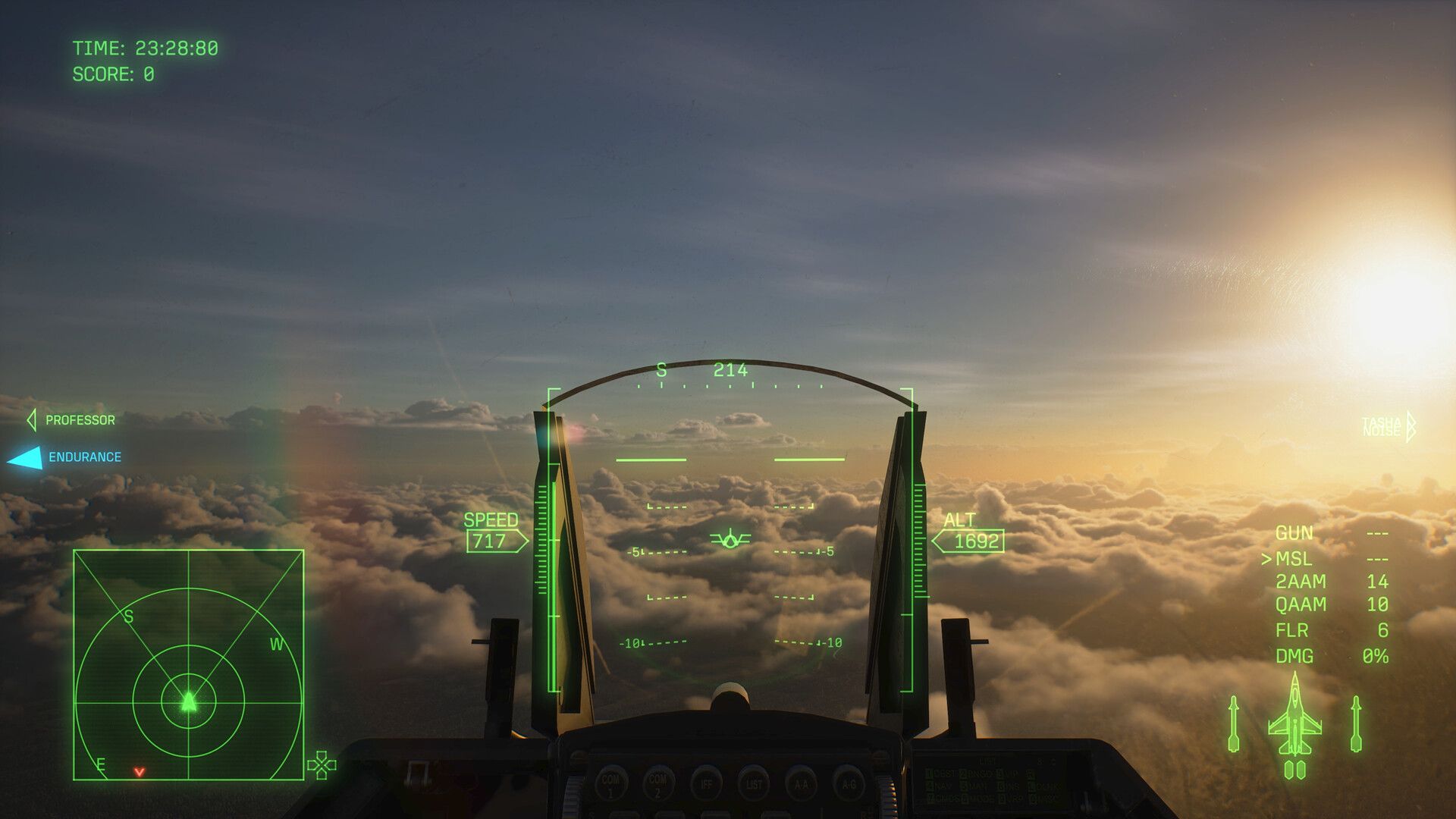
The warning sound tells you there is a threat. The incoming missile lines on the radar help you judge where it is approaching from. Use that information alongside the view ahead rather than making the same blind turn whenever the alarm sounds.
Change your direction with the missile's approach in mind and keep checking your speed and altitude. A high-G turn can help reposition the aircraft, but it is not a guaranteed dodge. Repeated braking also leaves you with less speed for the next threat.
Improve the firing angle before spending another missile
A lock means you can launch; it does not promise a hit. A fighter crossing sharply in front of you gives a missile a difficult turn to make. Firing again from the same poor angle may produce the same miss.
Work toward the target's rear and close the distance when it is safe, then take the shot. If a chase is dragging you away from the objective or down toward the ground, break off. A better firing position matters more than immediately emptying another pair of missiles.
Clear the obstruction, then leave room to pull up
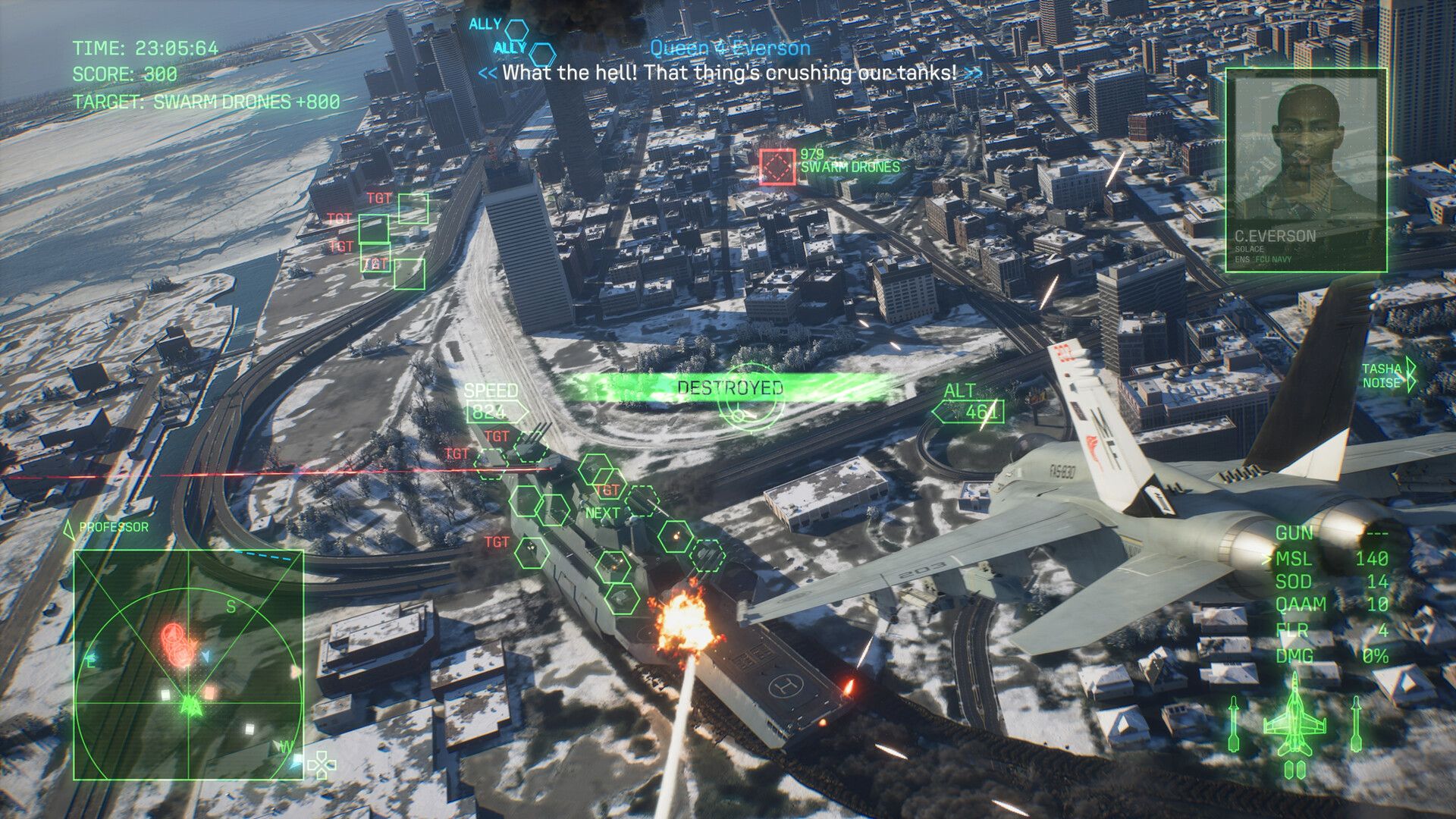
Watch the target outline on ground attacks. A dotted outline can indicate that terrain or a building is obstructing the shot. Reposition until you have a clear firing line rather than launching straight into the obstacle.
Once you fire, start planning the exit. You do not need to stay pointed at the target to watch the impact. Pull away with enough height and space to turn back for another pass. If the approach is already too low or cramped, abandon it early. The extra attack run is a better trade than losing the aircraft for one more shot.