
Monster Hunter Wilds Review: Excellent Weapons, Weak Resistance
Capcom made its best entry point and one of its least demanding campaigns. The combat carries a game that explains too much and tests too little.
Monster Hunter Wilds is easier to enter than Monster Hunter World and less demanding than the series at its best. The faster story, mobile camp systems and clear weapon onboarding remove old friction. They also reduce the preparation and danger that made a successful hunt feel earned. The current game is still worth buying for its combat, monsters and co-op. Players looking for a difficult long-term endgame should wait until the Ascendance expansion proves it can supply one.
This is a research-based Game Pelt review using five long-form video sources, five written reviews, technical analysis, current patch information and broad player feedback. Game Pelt is not claiming a private playthrough or benchmark session. Repeated observations across independent sources carry the most weight. Launch defects that were patched are treated separately from design choices that remain.
The weapons still justify the whole game
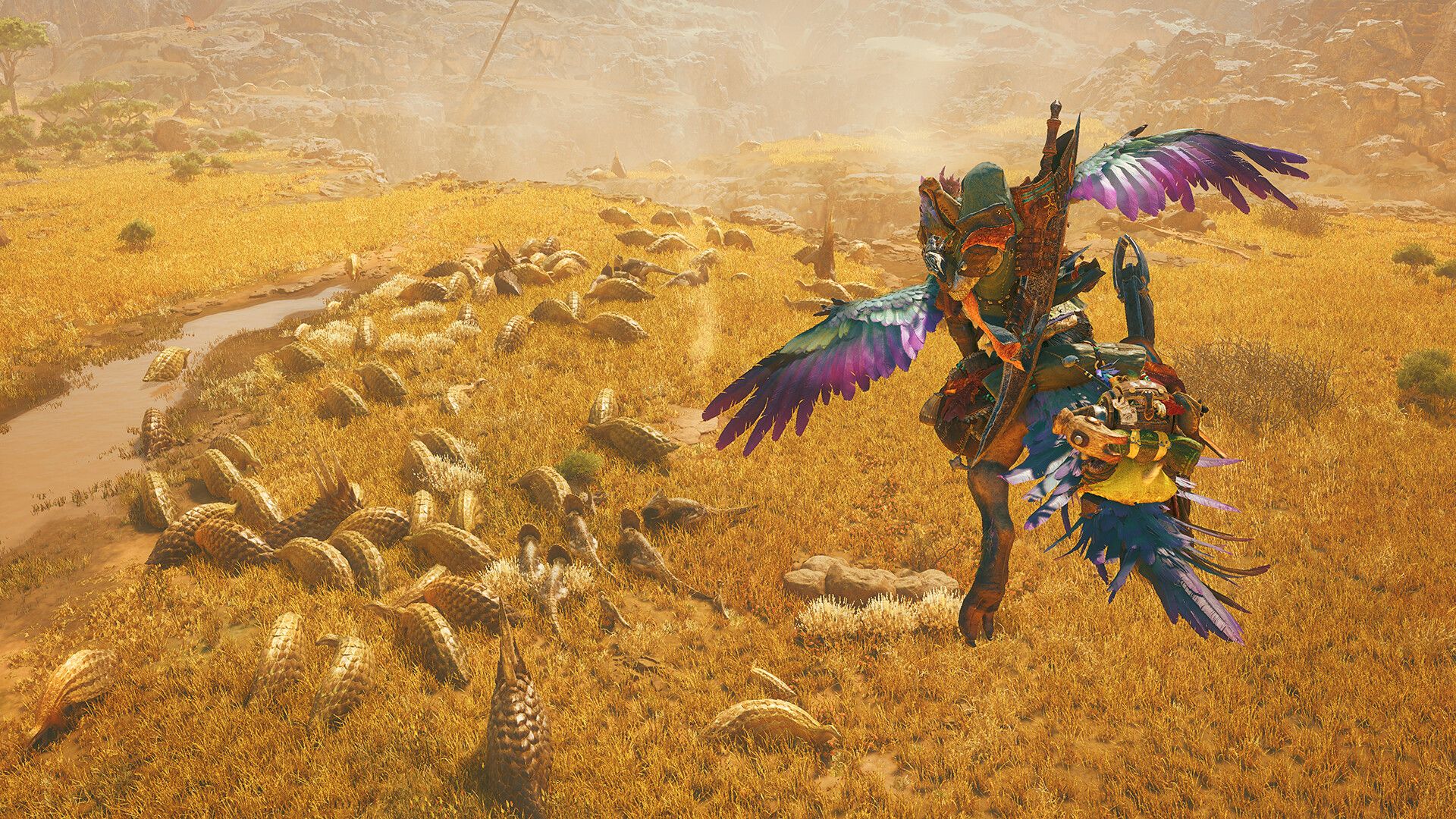
Wilds works because fourteen weapons produce fourteen different ways to read the same monster. Great Sword asks for prediction and commitment. Sword and Shield keeps movement flexible. Lance turns positioning into defense. Bowguns shift the problem toward distance, ammunition and weak points. That variety is not cosmetic. A player who changes weapons is learning a new timing model, resource loop and risk profile.
Focus Mode is the most useful addition. It gives precise control over attacks, makes wounds readable and reduces the frustration of committing a slow weapon in the wrong direction. ACG and several written reviews identified the combat as the strongest part of the package, even when they disagreed about difficulty and performance. That agreement matters because the weapons remain expressive after the story stops providing surprises.
Wounds add a short tactical objective inside the larger hunt. Repeated attacks damage a location, then a focused strike can cash that damage into a stagger or burst. The system rewards attention without forcing every build into the same combo. It also gives a co-op group a visible point of coordination when voice chat is absent.
The ecosystem is impressive, but hunts move too quickly
Large areas change through weather and abundance states, moving herds and opening different routes. Monsters interact with each other and with the environment more convincingly than they did in earlier entries. The world looks active even when the player is not attacking anything. That work supports tracking, gathering and photography as well as combat.
The problem is pace. Seikrets automate travel, camps reduce the cost of preparation, and the story regularly points straight at the next target. Those conveniences make the campaign easy to continue, but they also remove reasons to understand the map. A difficult expedition can become a sequence of fast rides between markers, with supplies available close enough to erase the consequences of poor planning.
Players who disliked World's long searches will prefer this. Players who valued hunting as preparation, tracking and adaptation may find the new flow too clean. The design chooses access over friction. That is a reasonable choice for the opening hours, but the game does not restore enough pressure later to balance it.
The campaign teaches well and rarely pushes back
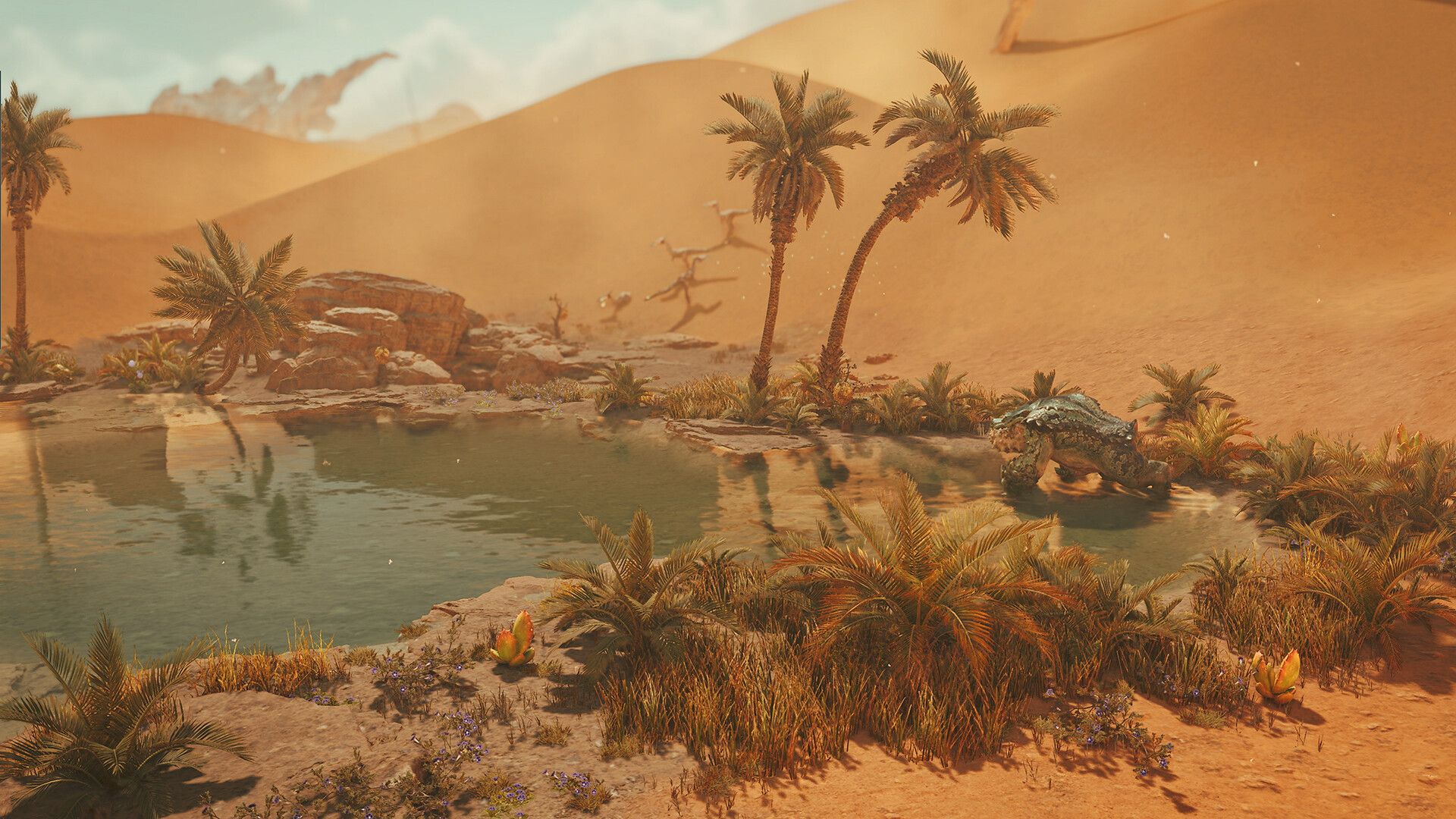
Wilds has the clearest campaign Capcom has built for the series. Characters travel with the player, objectives connect without repeated hub returns, and weapon concepts are introduced without demanding outside research. The result is a better first Monster Hunter. It is also a weaker test for players who already understand armor skills, elemental matchups and monster tells.
The story uses ecological conflict rather than treating every creature as a target list. It gives the new regions a purpose and provides context for major hunts. The cast is functional, and the presentation is far better than the old structure of text boxes around urgent assignments. The writing still explains simple ideas too often and interrupts control when the next objective is obvious.
Difficulty is the central disagreement in the review evidence. Some outlets praised the smoother progression because it keeps the focus on weapon mastery. Specialist players argued that generous supplies, frequent camps and forgiving monsters delayed meaningful challenge for too long. The second argument carries more weight for long-term value. Accessibility and low resistance are not the same thing; the game can explain itself clearly without making most of the campaign easy.
Equipment progression has breadth without enough urgency
Crafting remains readable and satisfying. A monster's materials lead into weapons and armor that communicate their origin, and set skills encourage a player to think beyond a simple defense number. The tree provides enough visible goals to support repeated hunts, especially for anyone learning more than one weapon.
Wilds weakens that loop when campaign gear stays effective for too long. If a target falls comfortably, there is little reason to rebuild around resistance, status or a specific skill. Players can engage with the system because it is interesting, not because the hunt demands it. That distinction matters. Monster Hunter is strongest when preparation solves a real problem rather than decorating an already reliable build.
Later updates added harder quests and randomized talisman rewards. They give experienced players more to optimize, but random rolls are not a substitute for varied encounters. A good endgame needs monsters and objectives that test different tools, not only a longer search for the ideal skill combination.
Co-op is better once the story gets out of the way
Joining ordinary hunts is straightforward, and the shared combat is excellent when players cover different jobs. A hammer user creates openings, a ranged hunter pressures weak points and support items can rescue a bad position. Four hunters can also overwhelm routine targets so quickly that the monster barely demonstrates its move set.
Story progression has historically made Monster Hunter co-op harder than it should be. Wilds improves the flow but does not remove every awkward transition, cutscene requirement or lobby explanation. Players buying specifically for a group should agree on assignment progress and expect occasional administrative pauses. Once everyone reaches repeatable hunts, the game is much easier to recommend as a co-op routine.
The community is large enough to make public help useful, but experienced players can trivialize early assignments. New hunters who want to learn should run a target alone once or play with similarly equipped friends before calling in a highly optimized group.
PC performance damaged the launch
The launch PC build was too demanding for the image quality it delivered. Digital Foundry documented heavy CPU pressure, inconsistent frame pacing and compromises across console modes. PC analysis from established technical outlets reached the same broad conclusion: the RE Engine was being asked to manage dense environments and simulation at a scale that exposed weaknesses not present in smaller Capcom games.
Patches improved stability and performance, but hardware variation remains important. The current Steam sentiment is healthier than the launch period, yet negative reviews still repeatedly mention frame rate, crashes and visual noise. Those complaints are not universal and should not be presented as if every system fails. They are common enough that PC buyers should use the benchmark or refund window instead of assuming the recommended specification guarantees a stable experience.
Console players face clearer tradeoffs. Performance modes improve response but can reduce image stability, while quality modes preserve detail at a lower frame rate. A variable-refresh-rate display helps. The Switch 2 release will require another separate assessment because portability does not erase the importance of readable motion during a hunt.
The interface solves old problems and creates new clutter
Weapon tutorials, objective tracking and map information are easier to understand than in older entries. Players can find materials, compare equipment and return to a hunt with less menu research. That is real progress. The screen can also become crowded with icons, prompts, damage information and route guidance, especially before settings are adjusted.
The useful approach is to disable information once it becomes familiar. Keep monster state, essential item feedback and co-op information. Reduce automatic guidance that replaces observation. Wilds provides enough options to improve readability, but the default presentation tries to prevent every possible misunderstanding at the same time.
Value depends on what happens after the credits
A player who wants to learn several weapons, craft complete sets and hunt with friends can spend a great deal of useful time in Wilds. The combat supports repetition because each monster and weapon pairing changes the problem. A player who uses one reliable build and follows only assigned targets will see a shorter, easier and less varied game.
The announced Ascendance expansion is therefore important. Teostra, new weapon actions and a larger content plan can address the current shortage of demanding long-term encounters. They can also make the base campaign's restraint look more deliberate in retrospect. Until the expansion is available, buyers should judge the game that exists rather than prepaying confidence in the one Capcom is promising.
Who should buy it
Buy Monster Hunter Wilds if this is a first entry, if weapon mastery is the main attraction, or if a regular co-op group wants a polished hunt loop with low setup friction. The combat remains excellent, the monsters are readable and expressive, and the world supports more than a sequence of arenas.
Wait for a sale if difficulty, endgame variety or stable PC performance is the priority. Existing owners returning for Ascendance should wait for complete expansion details and technical testing. Skip it only if repeated boss-style fights and equipment crafting are fundamentally unappealing; the story is not strong enough to replace that loop.
Game Pelt verdict: 8/10. Monster Hunter Wilds is the best entry point in the series and one of its least demanding campaigns. Its weapons, monsters and co-op remain strong. Easy progression, over-guidance and uneven performance keep the current version from matching the depth of its best predecessors.