
The Guild 1 Remake: A Dynasty Managed Through Menus
Europa 1410 restores a detailed medieval business sim, but its menus, repetition and Early Access gaps keep the dynasty from feeling alive.
The Guild 1 Remake: Europa 1410 is good at showing why the original game still has supporters. It turns a small workshop into a family business, makes local prices matter and lets social rank open a route into politics. The problem is not a shortage of systems. The problem is how often those systems arrive through menus, notifications and repeated turn routines instead of a convincing medieval life.
This is an Early Access review based on the current PC release and broad research across established publications, creator coverage, developer material and player feedback. It is not presented as a Game Pelt playtest. The consensus is unusually consistent even when verdicts differ: the economic layer has real depth, while the interface and abstraction decide whether that depth feels absorbing or exhausting.
A Business Sim Before A Life Sim
The name creates an expectation that deserves clearing up. Europa 1410 is much closer to the first Guild than The Guild 2. You are not directly walking a character through town, entering buildings and physically performing every interaction. You manage the dynasty through a strategic layer, choose actions, assign work and move through turns.
That choice removes some of the pathfinding trouble and downtime associated with older entries. It also removes much of their everyday texture. A marriage can become a sequence of selections. A political move can feel like a panel rather than a public act. Characters technically occupy the city, but the player often experiences them as portraits attached to decisions.
PC Gamer's demo assessment was openly negative about this distance, describing a repetitive, menu-driven routine that failed to create the life-sim fantasy expected from later games in the series. InGameNews reached a similar structural conclusion with a less absolute verdict: this is a complex trading simulation, not the free-moving medieval RPG suggested by some screenshots.
That is not a small preference. It is the main purchase question. Players who want a board-game-like economic simulation can adapt to the abstraction. Players who want to inhabit a medieval citizen will spend much of the game looking through the city rather than living inside it.
The Economy Gives Decisions Weight
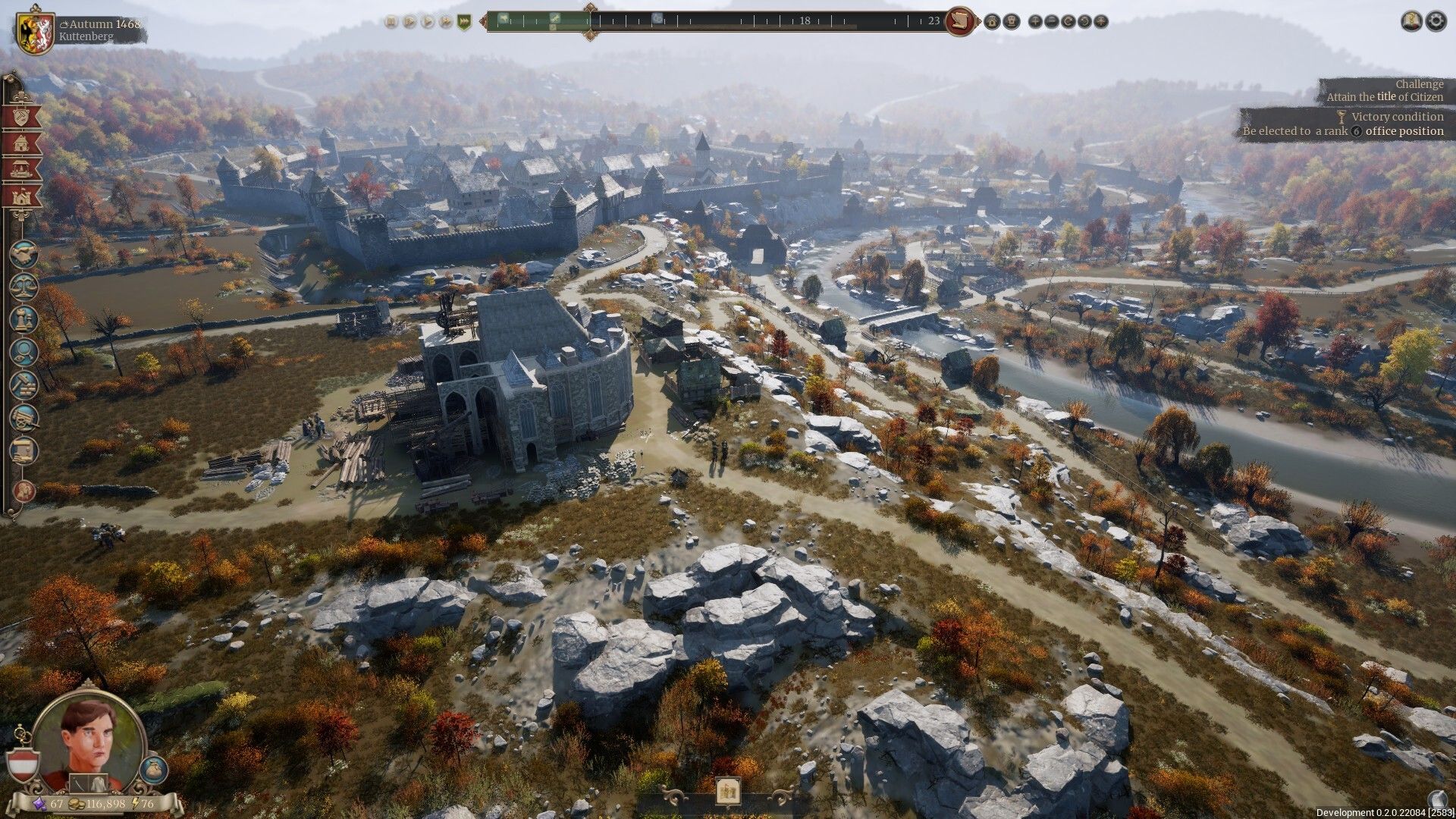
Europa 1410 is at its best when the workshop is under pressure. Inputs cost money. Finished goods need buyers. Staff, transport and production timing affect the margin. Local prices move, so the most obvious product is not always the best use of a turn.
The game benefits from forcing tradeoffs instead of handing out a clean optimization puzzle. Money used on a house upgrade cannot fund the next production step. Goods sold quickly may keep the business alive but lose the value of waiting for a stronger market. Expanding the workforce creates capacity and expense at the same time.
Several creator reviews are more positive than the harshest written previews because they find satisfaction in this loop. Win Or Bin approaches the remake from affection for The Guild 3, while The Scarlet Seeker and Captain Collins focus on whether the current Early Access structure offers enough decision-making for the price. The Singleplayer Squad's verdict is closest to the middle: the game is good despite obvious flaws.
That middle position fits. The numbers are not decorative. A poor chain of purchases can leave the business unable to exploit an opportunity. A sensible production line creates momentum that feels earned. When Europa 1410 asks the player to read a market and plan two turns ahead, it is doing exactly what a historical business sim should do.
Repetition Arrives Before The Dynasty Matures
The economic loop does not change shape quickly enough. Orders, staffing, production and sales remain important, but the act of managing them can settle into repeated checks. Notifications interrupt without always adding a decision. Events can be strange or funny, yet they do not consistently reshape the city around the family.
Crit Pick's demo review gave the early version a cautious 4/10, pointing to promising production and house systems trapped behind an interface that made the short slice feel thin. GamingShogun found more promise in the macro-management and argued that removing direct character movement also removes old pathfinding and pacing problems. Those positions are not contradictory. The streamlined structure solves friction from earlier games, then creates a different friction through abstraction.
The Early Access release offers more than the demo, including another map and expanded guild play, but the same design question remains. A dynasty game needs its routines to generate stories. Europa 1410 often generates better accounting than stories.
Family And Politics Need More Presence
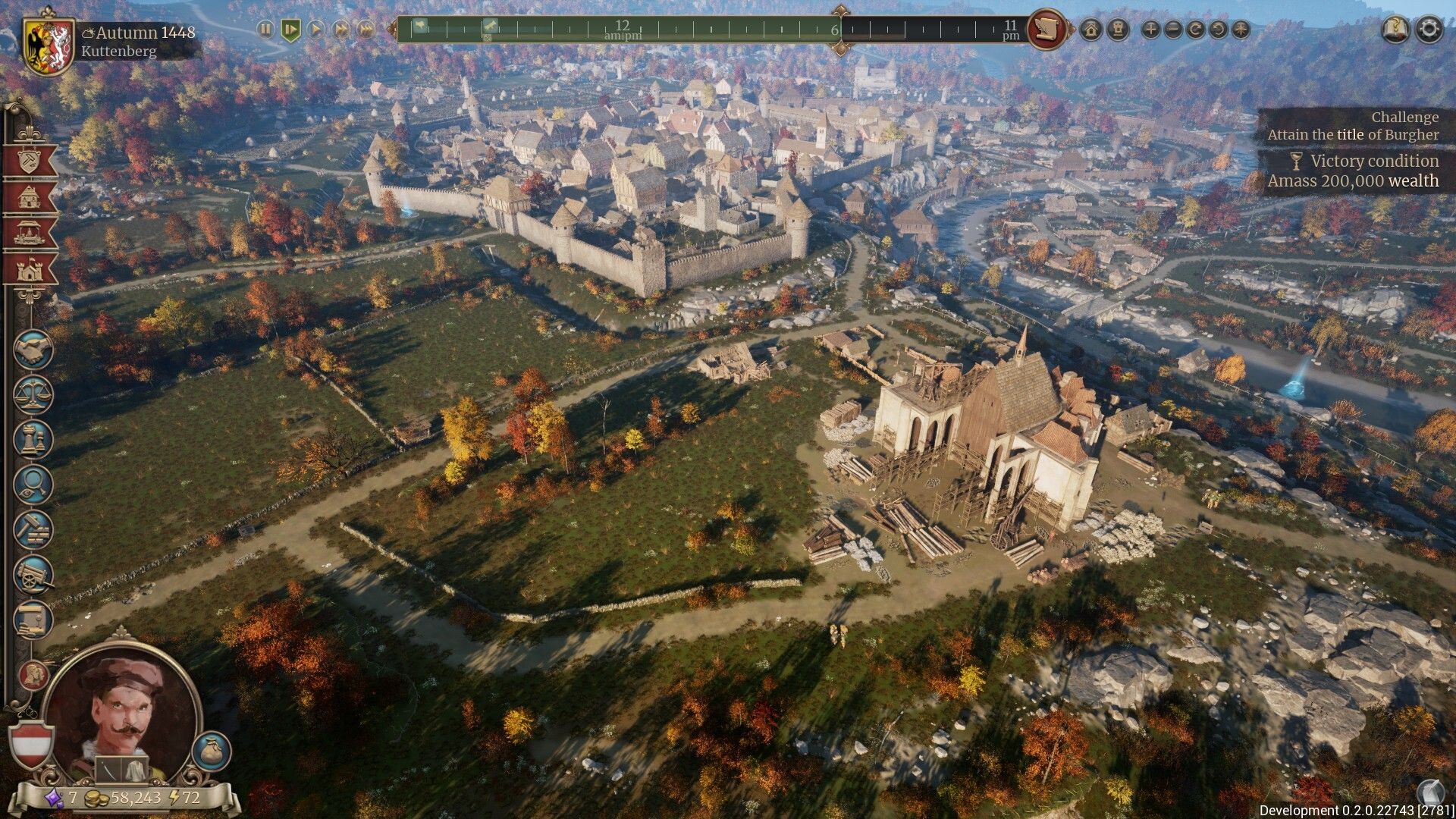
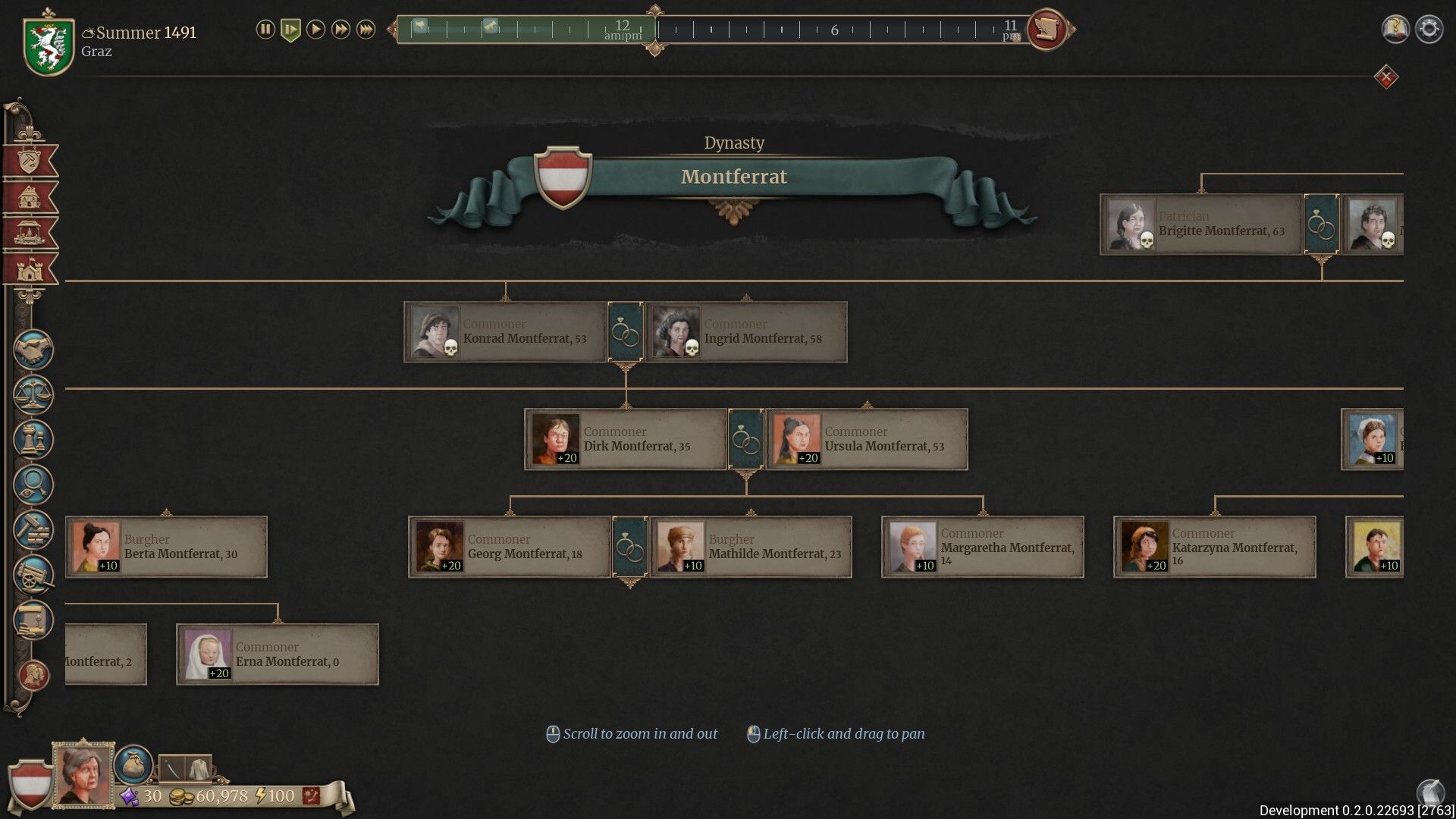
Marriage, heirs and social advancement give the campaign a longer horizon. The family is not simply a cosmetic profile because succession matters. Politics can also move the player beyond workshop management and into rules that affect the city.
These systems are conceptually strong. They create reasons to pursue wealth beyond a larger balance. A successful business can buy status, status can create political access, and political access can protect or expand the family's position.
The weakness is presentation. Important relationships can feel transactional because the interface compresses them into choices and outcomes. The people involved rarely develop enough presence between decisions. An heir matters mechanically before that heir matters as a character.
This is where comparisons with The Guild 2 become difficult for the remake. Direct movement was slow and often broken, but it gave schemes a physical location and made rivals visible in the same streets. Europa 1410 is cleaner about intent and poorer at making the result feel personal.
The Interface Explains A Lot And Still Obscures Too Much
There are tooltips, hotkeys and pause controls intended to make the simulation readable. They help, especially once a player understands the turn structure. The problem is the volume of information spread across panels and the number of routine actions competing for attention.
A good economic interface should reveal cause and effect. Europa 1410 sometimes shows the result without making the reason obvious enough. Price changes, city conditions and production performance can be understood, but the player may need to inspect several screens to build that understanding.
This is not a complaint that the game is too complex. Complexity is the appeal. The complaint is that the interface does not always distinguish a strategic decision from administrative maintenance. Too much of the player's attention goes to finding and confirming the action instead of evaluating it.
The issue becomes sharper over a long session. A market decision can justify opening several panels because the outcome may change the business. Reassigning the same worker or clearing another low-value alert does not deserve equal friction. Europa 1410 currently presents both with similar visual weight. Better filters, clearer price history and stronger separation between urgent events and routine notices would preserve the simulation without flattening it. The game does not need fewer systems. It needs to make the important system visible before the player becomes tired of servicing the interface around it.
Early Access Changes The Recommendation
Europa 1410 entered Early Access on September 17. That label matters because the developer is still expanding content and responding to feedback. It also means the current game should be judged on what it sells now, not on a future road map.
Series fans who specifically miss the first Guild have the clearest reason to buy. The remake understands the original emphasis on production, social rank and dynasty planning. Strategy players who enjoy deliberate, menu-led simulations may also accept the repetition because the economic choices are substantial.
Everyone else should wait. Players drawn by the city screenshots or by memories of directly controlling characters in The Guild 2 are likely to find the experience more distant than expected. Players with little patience for repeated administration will not be rescued by the setting.
The current Steam player response is more positive than the most critical previews, which suggests the game is reaching an audience that understands what it is. That does not erase the complaints. It clarifies the split. The people enjoying Europa 1410 often value the exact macro-management that other players experience as lifeless menu work.
Verdict
The Guild 1 Remake: Europa 1410 has a real simulation under its awkward surface. Building a workshop, reading the market and turning profit into status creates a strong strategic spine. Family and politics promise a campaign larger than a production chain.
The game does not yet make those systems feel alive often enough. Repetitive turns arrive early, relationships remain abstract and the interface turns too many ordinary actions into paperwork. The remake is faithful to the first game's priorities, but that faithfulness will disappoint players who wanted the physical role-playing of its sequels.
This is a qualified Early Access recommendation for patient economic-sim players and established fans of the original. The systems are already interesting. The experience around them needs more clarity, more variation and more human presence before Europa 1410 becomes easy to recommend beyond that audience.