
The Guild Europa 1410: Build One Boring Business Before You Chase Power
The clean opening is not a political speedrun. It is one workshop, a reliable supply line, and enough spare energy to solve the next problem.
The Guild: Europa 1410 is happy to let you dream about offices, rivals, romance, and a family dynasty before your first employee has finished a shift. That is how a clean opening turns into six half-started projects and no money.
Your first goal is smaller: make one business boring. Inputs arrive, workers produce, goods sell, and the shop does not need an emergency visit every morning. Once that loop holds, the rest of the game opens without feeling like unpaid admin.
Choose the supply chain, not the costume
Blacksmith, alchemist, and innkeeper starts all work. The useful question is not which fantasy sounds best. It is which chain you understand well enough to repeat: what the business consumes, where those materials are cheapest, and what customers actually buy.
Do not open a second property because the button lit up. Run the first shop long enough to see its real bottleneck. If stock vanishes, solve supply. If goods pile up, solve sales. If workers stand idle, solve inputs or staffing before buying another roof.
Energy is the budget that lies to you
Gold is visible, so it gets blamed for every bad decision. Energy is quieter and more dangerous. Monitoring production, taking civic work, building relationships, and handling personal business all draw from the same pool.
Pick the day's job before spending energy. If production is the priority, supervise the workshop. If citizenship or office is the priority, accept the slower business day on purpose. Trying to push every track at once leaves the character tired and the shop unimproved.
Buy close to the source
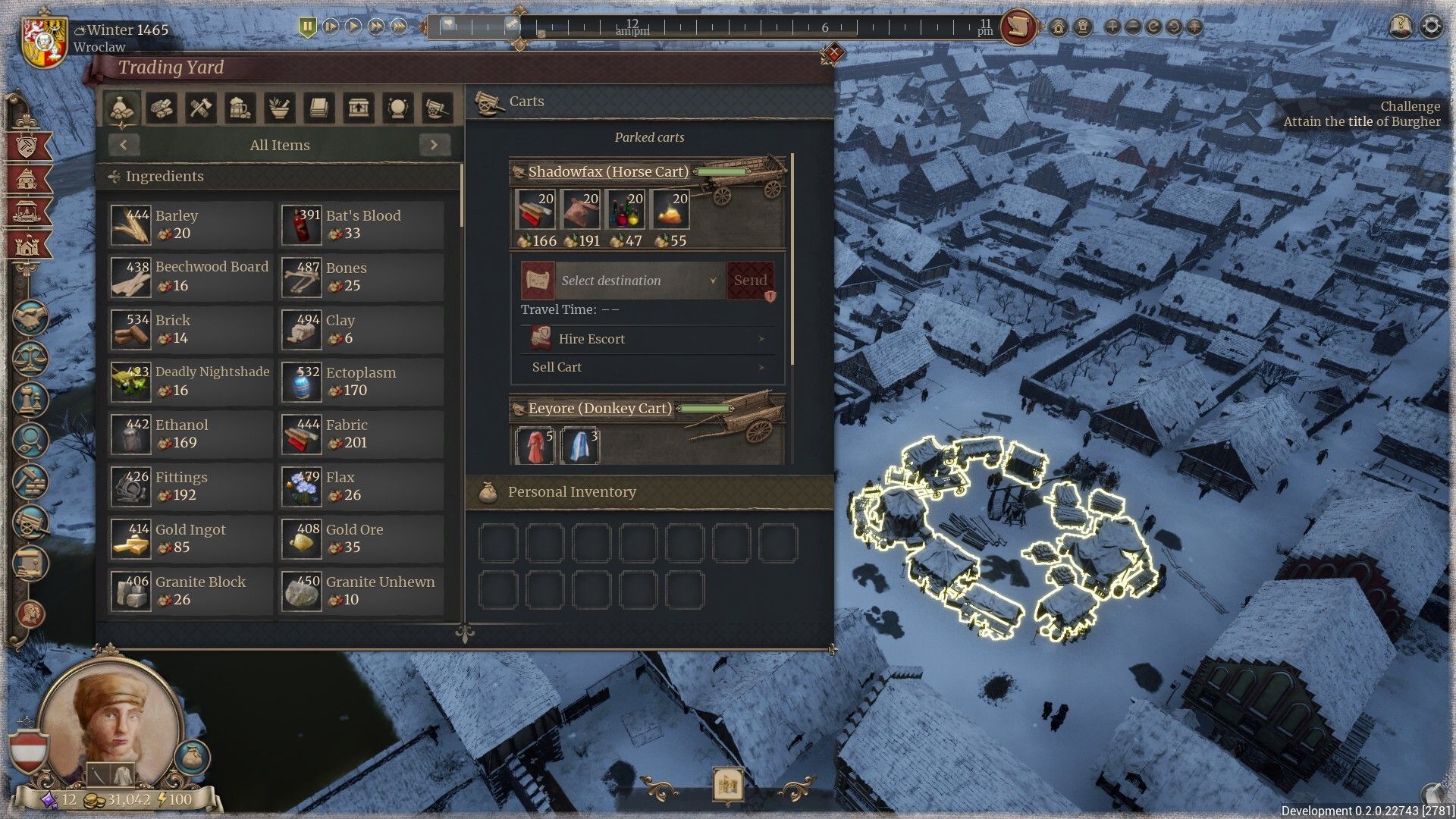
The central market is convenient, but convenience is a tax. When possible, buy raw materials from the producer and let the cart carry a real load. Even modest savings matter because they repeat through every production cycle.
That also makes cart capacity more valuable than it first appears. A larger run means fewer trips and fewer interruptions. The upgrade is good when transport is the bottleneck, not because every upgrade menu needs to be cleared.
Pay workers enough to keep the machine moving
A cheap worker who slows production or creates constant friction is not cheap. Early profit matters, but reliable output matters more. Keep staffing simple, pay attention to performance, and make changes when the shop can absorb them.
Repairs belong in the same calculation. Spending energy on maintenance can save gold, while paying for repairs protects your energy. There is no universal answer. Use the resource that is less important to today's plan.
Politics comes after cash flow
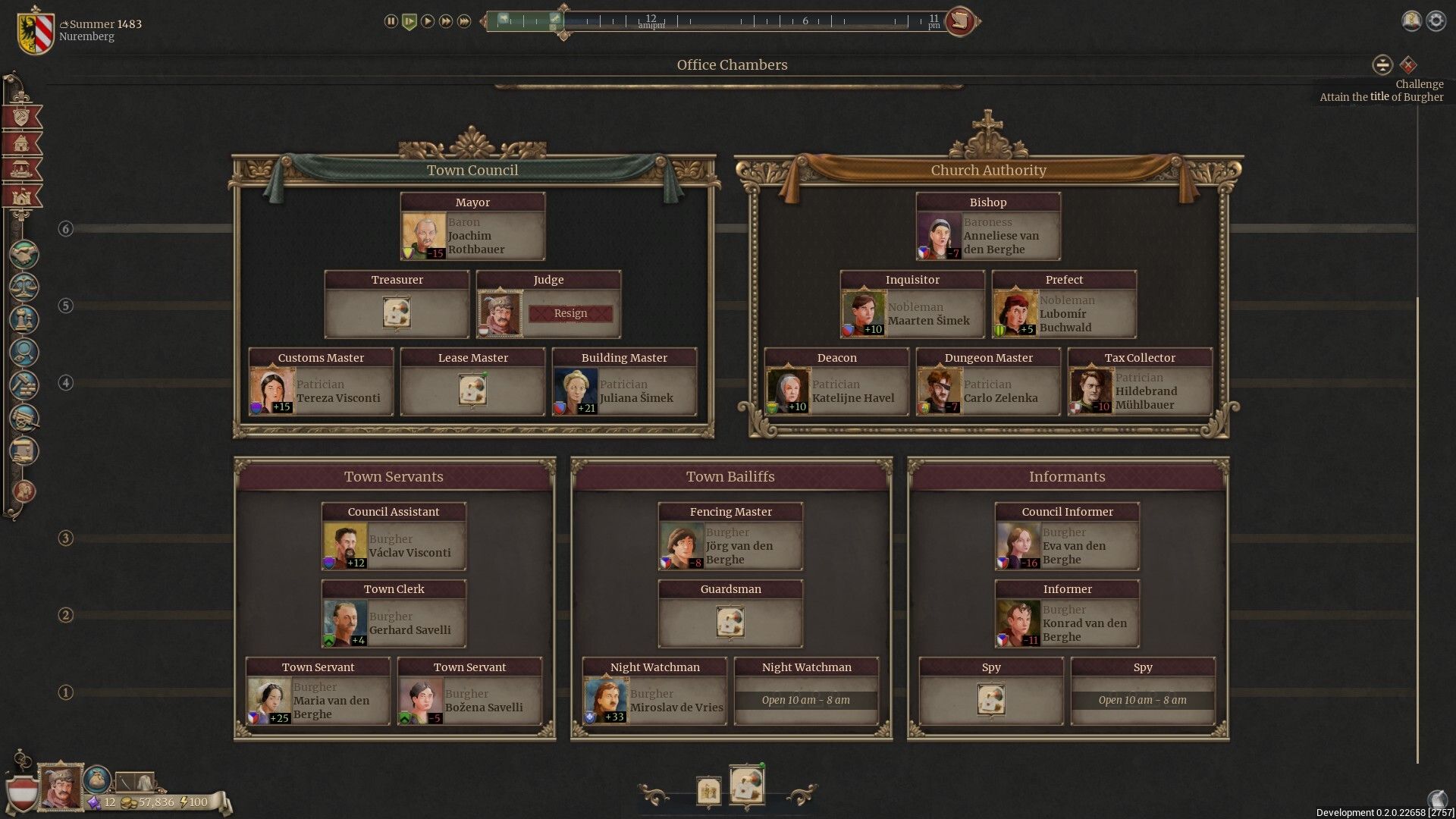
Government positions pay and eventually give you leverage over the city, but they also ask for rank, reputation, time, and attention. Treat politics as a second business. Do not start it until the first one can produce through a day you spend elsewhere.
The clean opening
Pick one profession. Learn one input route. Hire only enough help to keep production moving. Upgrade the bottleneck you can point at. Keep a cash reserve. Then choose one ambition outside the shop.
That route is not glamorous. It is also the route least likely to turn your medieval dynasty into an expensive walking simulator between three broken businesses.