
007 First Light Review: A Strong Bond Game With Shallow Stealth
IO Interactive gets the spy fantasy right, but the campaign is longer and less systemic than its best ideas can support.
007 First Light is a good Bond game and a limited stealth game. IO Interactive understands the fantasy: enter a secure place in a clean suit, read the room, use a gadget, improvise when the cover fails, then leave through an expensive action sequence. The campaign is confident when it controls that rhythm. It is less convincing when it invites comparison with Hitman and then removes most of the systemic freedom that made those games special.
This is a research-based Game Pelt review. It combines five established video reviews, six written reviews, technical testing, current player feedback and official update notes. Game Pelt is not claiming a private playthrough or benchmark session. Points repeated across independent sources carry more weight than one score, and launch problems fixed by update 1.2.1 are separated from issues that remain in the design.
The Bond fantasy works
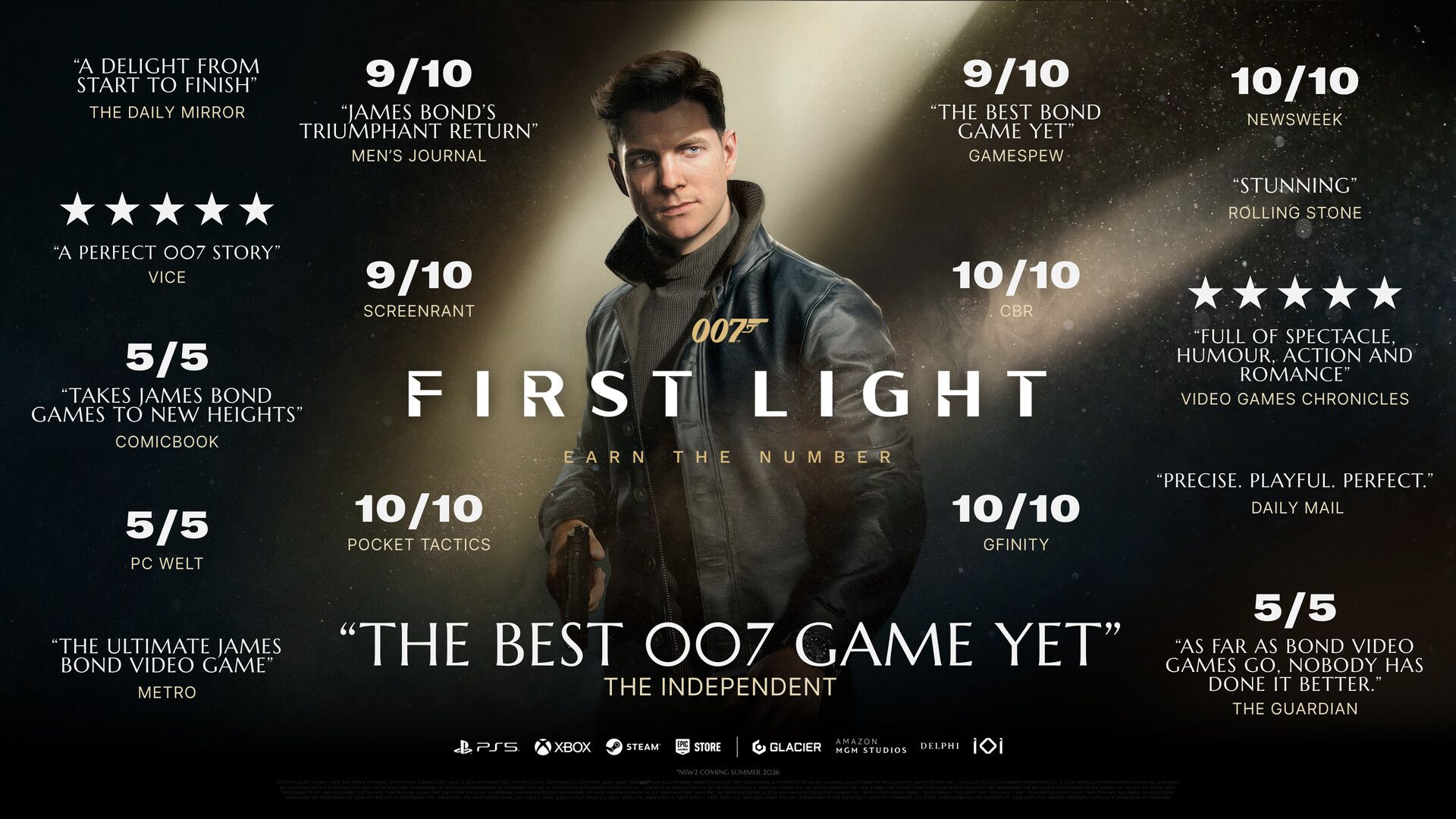
The strongest missions give Bond a social space before they give him a firefight. Guards have routines, restricted doors need an excuse, and a useful item can be more valuable than a silenced weapon. Those sections understand that Bond should look as if he belongs until the moment he no longer does. IGN, The Guardian and RogerEbert.com all responded to that shift between charm, investigation and violence. It is the clearest reason this does not feel like a generic third-person shooter wearing a licence.
Bond himself is young enough to make mistakes without becoming incompetent. The story treats his confidence as a problem that training has not solved. That choice gives the campaign a useful arc and lets supporting characters challenge him instead of simply delivering mission instructions. The writing is not subtle, but it is coherent, and the cast gives the quieter scenes enough energy to carry the next objective.
Gadgets are practical rather than decorative. A camera can gather information, a small tool can open a route, and environmental interactions let Bond solve minor problems without reaching for a gun. The game rarely makes one gadget the only answer. It usually provides a direct route, a social route and a messy route, then asks the player to choose how much trouble is acceptable.
It is not Hitman with Bond dialogue
The comparison with Hitman is unavoidable because the same studio built both games, but it can produce the wrong expectation. 007 First Light borrows readable spaces, disguises and contextual opportunities. It does not offer the same density of simulations, target routines or absurd contingency plans. Most missions have a preferred direction, and many alternatives rejoin the same objective quickly.
PC Gamer's criticism is useful here. The stealth is often competent but ordinary once the presentation is removed. Guards can be manipulated, routes can be opened and suspicion can be managed, yet the systems rarely interact deeply enough to produce the stories players tell about Hitman. A failed plan usually becomes a conventional cover shooter rather than a new social puzzle.
That limitation is not fatal because Bond needs pacing that Agent 47 does not. A chase, a collapsing location or a scripted escape can be appropriate in a Bond story. The problem appears when the campaign spends several minutes presenting a sandbox that cannot support much experimentation. Players who exhaustively test a level will find the walls faster than players who follow its intended rhythm.
The action is effective, then overused
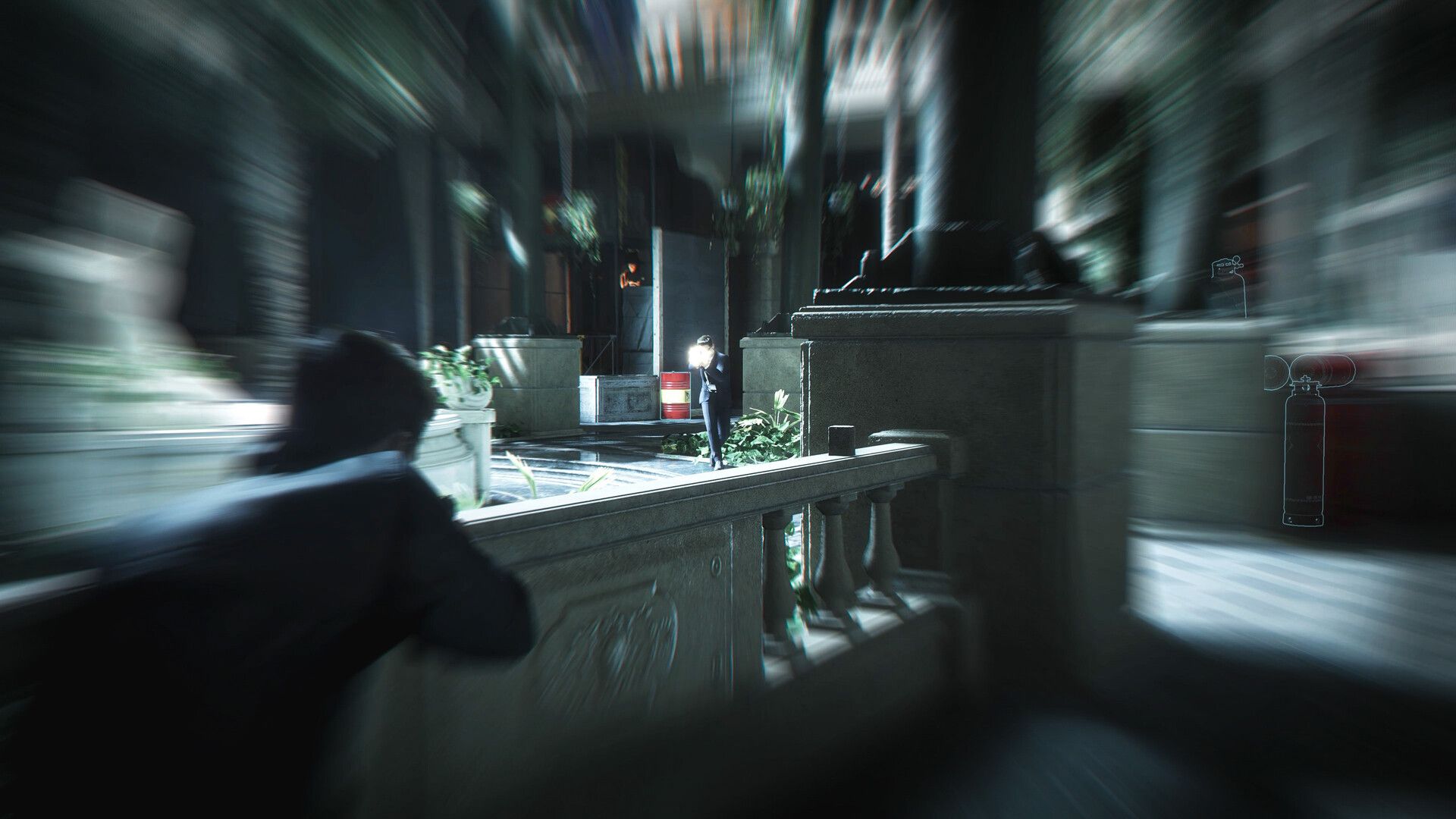
Gunfights are readable and responsive. Bond can move between cover, disable nearby threats and use the environment to keep pressure on a room. The shooting is built to rescue a failed infiltration, and in that role it works. It becomes less interesting when a mission abandons stealth completely and asks for another extended sequence against waves of enemies.
Several reviewers identified the same pacing problem. The opening takes too long to expose the full toolset, and the back half adds length where a shorter campaign would have landed harder. Skill Up's review described a satisfying spy thriller but argued that a tighter ten-to-twelve-hour structure would suit it better than the padded fifteen-to-twenty-hour route. That is a persuasive diagnosis. The campaign is not short of ideas; it is slow to discard the ones that have finished their job.
Difficulty settings change how quickly open combat punishes a mistake, but they do not make the stealth simulation substantially deeper. Higher settings are useful for players who want detection to carry a real cost. They cannot add routes, routines or social options that a mission does not contain. The best challenge is therefore one that preserves improvisation without turning every failed disguise into a long shooting gallery.
Vehicle sections produce the expected spectacle and control well enough to avoid becoming a punishment. They also reveal how carefully authored the game is. There is usually a correct lane, target or timing window. Players who want a cinematic Bond sequence will get it. Players looking for systemic driving or broad routes will not.
Presentation carries weaker stretches
The locations do a large amount of work. Hotels, compounds and public events are dressed with the detail needed for observation, and the contrast between formal interiors and destructive exits fits the licence. Facial animation is strongest in major conversations, while incidental characters repeat more quickly than the crowd size suggests.
Music and sound are disciplined. The score knows when to suggest the familiar Bond language without leaning on it every minute. Weapons have enough weight to make open combat readable, while stealth cues communicate suspicion without turning the screen into a warning panel. The result is polished even when an individual encounter is mechanically simple.
Nintendo Switch 2 necessarily gives up image quality and crowd detail, while the stronger console and PC versions preserve the intended presentation. The game remains understandable on the portable hardware, but this is one release where the lighting, material detail and populated spaces are part of the appeal. Buyers with a choice should prefer the more powerful platform.
PC performance is improved, not settled
The PC version launched with enough technical variation to make hardware-specific reports important. DSO Gaming found demanding settings and uneven path-tracing costs, while later patches improved stability and exposed better scaling. Update 1.2.1 addresses crashes, mission blockers and presentation defects. The separate path-tracing update adds a premium option rather than fixing the base image.
Path tracing is not a sensible default for most players. It can improve reflections and indirect light, but the performance cost is substantial and the gains are easiest to see in selected interiors. A stable frame rate helps aiming, driving and camera movement throughout the campaign. The practical choice is to establish a reliable target first, then test advanced lighting if the GPU has room.
Steam feedback is broadly positive, which supports the view that the current build is healthy enough to recommend. It does not erase reports of stutter, crashes or mission bugs on individual systems. Buyers on PC should still update drivers, use the current patch and avoid treating the maximum preset as a requirement.
The campaign is strongest when it trusts restraint
The best 007 First Light mission does not need the largest explosion. It needs a clear objective, a public space, several suspicious people and enough tools to let the player form a plan. The game repeatedly proves it understands that structure, then interrupts it with action because a Bond production is expected to escalate.
That push and pull defines the whole review. IO Interactive has built a convincing character, a strong visual identity and a useful set of spy mechanics. It has not built a Hitman-sized simulation, and it has not edited every action sequence with the same confidence. The result is better than a licence exercise and less flexible than the studio's best work.
Who should buy it
Buy 007 First Light if a authored Bond campaign with stealth, gadgets and major set pieces is the attraction. The story is easy to follow, the central performance works, and the current patched version offers a polished route through the fantasy. It is especially suitable for players who prefer directed missions with optional approaches rather than fully open sandboxes.
Wait for a sale if Hitman's systemic freedom is the standard, or if another long action campaign already feels like work. Skip it if the only interest is a deep stealth simulation. The game can support quiet play, but it regularly chooses spectacle and prescribed pacing over experimentation.
Game Pelt verdict: 8/10. 007 First Light understands Bond better than it understands restraint. The spy fantasy, cast and production are strong. Shallow stealth interactions, a slow opening and padded action keep it below IO Interactive's best games.