
Which of These 4 Core Keeper Travel Options Fits Your Route?
Mount, Hookshot, boat or minecart? Pick a Core Keeper travel option by terrain, setup effort and whether you will use the same route again.
Use a mount for a connected land route, a Hookshot for a small gap, a boat for open water and a minecart for a railway you expect to reuse. Core Keeper gives these options different jobs, so picking one by speed alone misses the more useful question: can it handle the route?
These four choices are unranked and cover ordinary travel in version 1.3, including Riders of the Underground. This is a comparison of routes and setup, not a complete crafting or unlock guide. It assumes you have acquired the relevant item; portals, waypoints and racing builds are outside its scope.
1. Saddled cattle for a connected land route
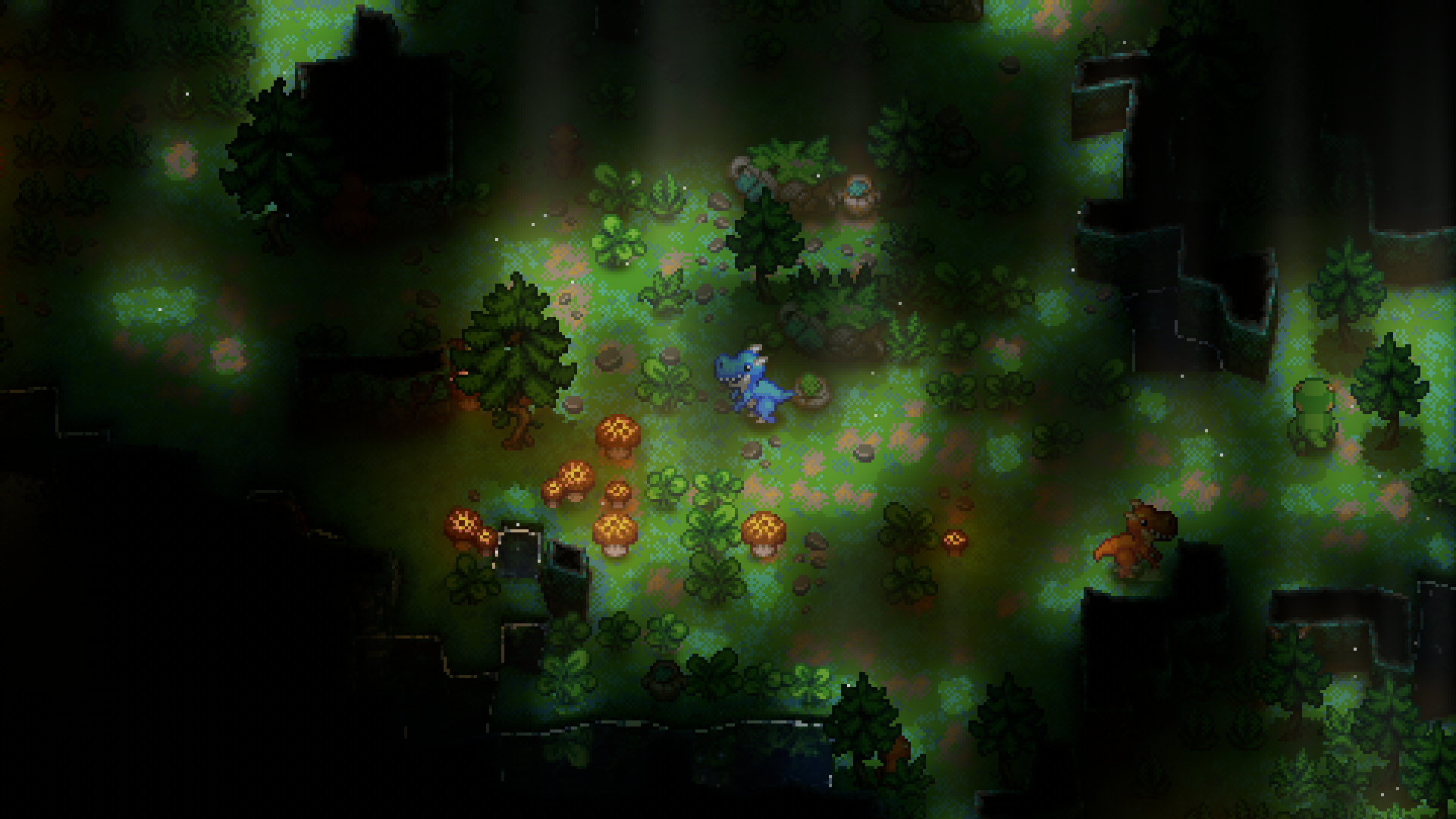
Use a Saddle on cattle to turn the animal into a mount. Every cattle type is rideable in 1.3. The mount menu lets you rename it and choose whether it stays, roams or follows when you are not riding; removing the Saddle returns it to cattle status.
Choose a mount when the route already has connected ground and you want to ride without building a railway first. Think of the ground you actually need to cross, including any breaks in the path. The Saddle does not remove the need to plan the rest of a journey that includes pits or water.
2. Hookshot for a small pit with an attachment point
The Hookshot is an offhand item for crossing small chasms. It needs something to hook onto, so check for a usable target across the gap before relying on it. Its value is clearing an interruption in your exploration without constructing a bridge for that particular crossing.
Keep bridge materials available. The developer explicitly says the Hookshot does not entirely remove the need for bridges, and a gap without a usable attachment point is the obvious reason to have another plan. Treat it as a crossing tool rather than a replacement for every other travel option.
3. Boat for a journey across open water
Place the boat on water, then interact with it to board. For a water route, that avoids building a walking path across the entire surface before you can explore. Plan a place to disembark onto ground when the water leg ends.
A boat earns its place when water is the obstacle. It does not continue your journey over land, so an expedition with several different terrain types can still need more than one travel item. If the next outing is mainly overland, there is less reason to make the boat its centerpiece.
4. Minecart for a railway you will travel repeatedly
Place a minecart on a rail tile and interact with it to get aboard. The cart depends on a connected railway, so the useful investment is the route as well as the vehicle. Check the line when travel stops instead of assuming the cart can continue across a missing section.
This is the option to consider for an established connection between destinations you revisit. Repeated journeys give you a reason to spend time laying the line. A route that keeps changing is a weaker case for that construction effort; a mount or ordinary walking leaves you more freedom to change direction.
One returning-player detail matters for both boats and minecarts: the 1.3 release notes say that dying while seated transfers the vehicle to your inventory. Older advice that leaves it at your grave is outdated. The same notes also require line of sight to use cattle, boats and minecarts, so get a clear approach if boarding is not working.
For the next trip, choose the obstacle you need to solve before adding more infrastructure. Our Core Keeper page collects the other guides.
The early materials worth keeping list helps decide what to retain while changing your equipment.